Address
Building 1, No. 22, Shexi Yongping Road,
Dongguan, Guangdong, China
Work Hours
Monday to Friday: 7AM - 7PM
Weekend: 10AM - 5PM
Address
Building 1, No. 22, Shexi Yongping Road,
Dongguan, Guangdong, China
Work Hours
Monday to Friday: 7AM - 7PM
Weekend: 10AM - 5PM
A useful warranty covers manufacturing defects in the bond between skin and core, dimensional tolerance and the declared material ... Ask Mingskye for a sample.
A useful warranty covers manufacturing defects in the bond between skin and core, dimensional tolerance and the declared material composition, and it states the remedy and the claim evidence required. It usually excludes crushing from overloading, damage from unsuitable adhesives, UV exposure beyond the stated limit and normal wear across reuse cycles. Read those exclusions first, because they describe the real conditions of use.
This page covers protection panel warranty in six sections: What a warranty should and should not cover; Service levels and what happens when something goes; Dimensional tolerance and why it matters when panels; Delamination and how to tell it from a; Inspecting a consignment on arrival; Negotiating the commercial terms of a supply agreement. Each section answers one practical question and can be read on its own.
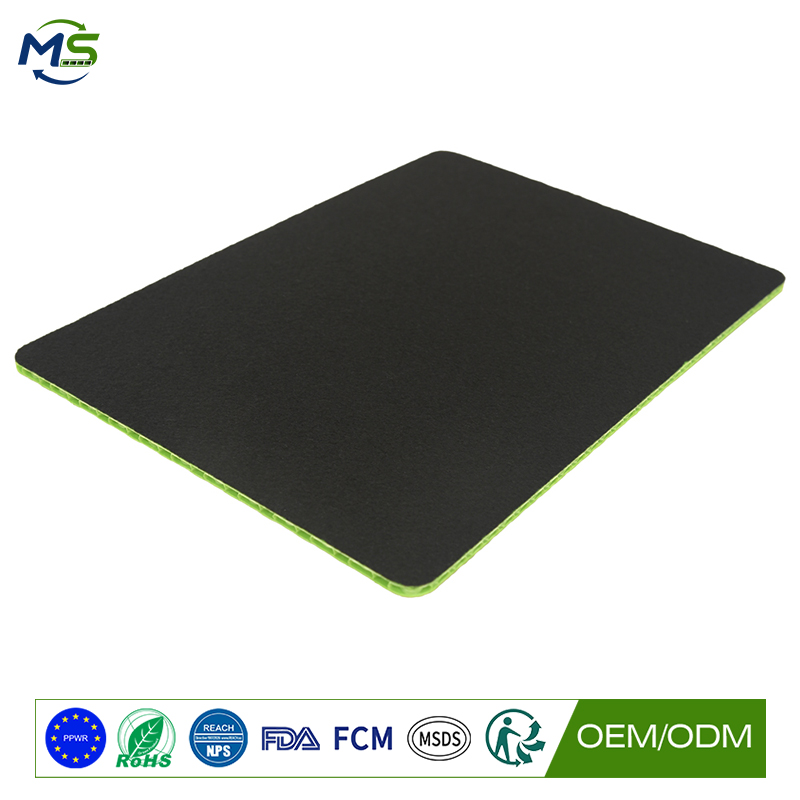
A meaningful warranty covers the product against manufacturing failure and the performance claims made about it, and it says how long it applies and how it is claimed against.
What it should cover: the stated load capacity at the stated deflection for the stated product, and any manufacturing defect such as a delamination or a defective core. What it should not cover is damage from a load beyond the rating, from misuse, from improper storage or from a third party’s installation.
The period matters. A warranty period measured in months is of little use to a fleet that is expected to survive several projects, so a longer period tied to the cycle count is more meaningful than a short period tied to the calendar.
The claim process matters as much as the period. A warranty that requires the panel to be returned to the factory, at the customer’s cost, for a two hundred kilogram pallet of boards is a warranty that will not be used, and therefore is effectively absent.
The service level that matters on a protection supply is the replacement lead time for a damaged batch and the response time for a technical query.
A protection fleet that loses a grade mid-project has a problem that gets worse daily, because the remaining panels are worked harder and the damage rate rises. A replacement stock held locally, or a guaranteed dispatch within a stated period, is worth more than a discount.
The technical query response matters at the specification stage and at the point of failure. Having an engineer who can answer a question about working deflection within a working day prevents the site from choosing a panel that is too soft, and prevents a wrong choice being repeated across a project.
A third service element is the defect route. If a batch is suspect, there should be an agreed route for quarantining it, for the supplier to inspect, and for a decision to be made quickly. Without a route, suspect panels stay on site because removing them is somebody else’s problem.
For terminology and test-method context see ISO standards catalogue. The guidance on this page is practical site guidance, not a test report or a certificate.
Nominal length and width carry a tolerance, and a tolerance wider than the fitting method can absorb will produce gaps, lifted corners and trip edges.
Extruded and cut honeycomb panels vary slightly in length because the core is cut at a fixed angle to create the vertical walls, and that cut introduces a small dimensional error that accumulates along the panel. A tolerance of a few millimetres over the full length is normal.
Where panels are butted tightly and taped, a length error turns into a step at the end of the run. Where panels are cut to fit a fixed dimension, an undersized panel leaves a gap that collects dirt and a trip hazard.
Ask for the length tolerance and whether panels can be supplied oversize for site trimming. Oversize panels that are cut down on site fit better than undersize panels that have to be forced, and a site saw cut takes about a minute per panel.
| Supplier question | Short answer | Evidence to request | In this guide |
|---|---|---|---|
| What a warranty should and should not cover? | A meaningful warranty covers the product against manufacturing failure and the performance claims made about it … | What it should cover: the stated load capacity at the stated deflection for the stated … | Section 1 |
| What should be checked about service levels and what happens when … | The service level that matters on a protection supply is the replacement lead time for a … | A protection fleet that loses a grade mid-project has a problem that gets worse daily … | Section 2 |
| What should be checked about dimensional tolerance and why it matters … | Nominal length and width carry a tolerance, and a tolerance wider than the fitting method can … | Extruded and cut honeycomb panels vary slightly in length because the core is cut at … | Section 3 |
| What should be checked about delamination and how to tell it … | Delamination is the separation of a face sheet from the core, and it is confirmed by … | A scratch on the facing is superficial and changes nothing structural. A delamination shows a … | Section 4 |
Delamination is the separation of a face sheet from the core, and it is confirmed by looking at the edge of the separated area rather than the surface.
A scratch on the facing is superficial and changes nothing structural. A delamination shows a lifting skin with a visible gap beneath it, and the panel flexes differently under hand pressure in that area compared with the sound part of the panel.
Adhesive-bonded panels are more susceptible, particularly in warm, wet conditions, because the adhesive line is the part of the panel with the least tolerance for differential movement. Welded-bond panels rarely delaminate because the failure would require tearing the material itself.
A delaminated panel should be withdrawn from use in the affected area, because the lifting skin is a trap for grit and the panel has lost stiffness locally. It is also a useful diagnostic: repeated delamination in the same product points to a bonding process issue rather than to site misuse.
A goods-in inspection takes twenty minutes and determines whether a defect is found now or after it has been laid.
Check the pallet count against the packing list and confirm the marks and the batch references match. Photograph any visible transit damage before the pallets are broken down, because the packaging condition is part of the evidence.
Break down one pallet per production batch and check the actual panel: the thickness, the facing, the edge condition and the bond. Check a cut-off edge in section if the bond method matters to the application.
Record the findings on the delivery paperwork before signing, and note any shortage or damage specifically rather than a general remark. A consignment signed with a general remark is very difficult to claim against later, and the claim is easier to make at the point of delivery than three weeks afterwards.
The technical specification should be settled first, because the price is only comparable once both suppliers are quoting the same product.
The negotiation then has three parts: the price against a confirmed specification, the delivery and packaging against the confirmed logistics, and the terms against the payment cycle. Each has a different lever and a different timescale.
The most useful lever on price is volume, and it is worth offering a forecast across projects rather than a single order. A supplier who can see the year ahead can plan production and will price differently from one filling a single order.
The most useful lever on terms is the payment cycle, and it should be traded against price rather than given away. The second is the packaging, because a returnable packaging arrangement has a real cost to the supplier and is often cheaper for both parties than disposable packaging on a repeat order.
A meaningful warranty covers the product against manufacturing failure and the performance claims made about it, and it says how long it applies and how it is claimed against. What it should cover: the stated load capacity at the stated deflection for the stated product, and any manufacturing defect such as …
The service level that matters on a protection supply is the replacement lead time for a damaged batch and the response time for a technical query. A protection fleet that loses a grade mid-project has a problem that gets worse daily, because the remaining panels are worked harder …
Delamination is the separation of a face sheet from the core, and it is confirmed by looking at the edge of the separated area rather than the surface. A scratch on the facing is superficial and changes nothing structural. A delamination shows a lifting skin with a visible gap beneath …
The technical specification should be settled first, because the price is only comparable once both suppliers are quoting the same product. The negotiation then has three parts: the price against a confirmed specification, the delivery and packaging against the confirmed logistics, and the …
References checked by publisher and title on 2026-11-06. Standards and regulations are cited by name only; no performance values are attributed to them. General material-property figures in the text are indicative reference values for polypropylene and should be verified against your supplier’s current data sheet. Confirm applicability and current versions for your own project before relying on any of them.
For a quotation, a sample panel or help matching a thickness and facing to your site conditions, contact service@mingplastics.com or WhatsApp +86 189 3887 1524. Include the surface type, floor area, the trades working overhead and the expected duration so the recommended specification can be confirmed before you order.
For protection panel warranty, Ask for the evidence behind each claim and a production-batch sample before committing. The technical specification should be settled first, because the price is only comparable once both suppliers are quoting the same product.


