Address
Building 1, No. 22, Shexi Yongping Road,
Dongguan, Guangdong, China
Work Hours
Monday to Friday: 7AM - 7PM
Weekend: 10AM - 5PM
Address
Building 1, No. 22, Shexi Yongping Road,
Dongguan, Guangdong, China
Work Hours
Monday to Friday: 7AM - 7PM
Weekend: 10AM - 5PM
A useful site trial fixes the area, the traffic, the duration, the installation method and the pass criteria before the panels ... Ask Mingskye for a sample.
A useful site trial fixes the area, the traffic, the duration, the installation method and the pass criteria before the panels arrive. Record laying and lifting time, the number of panels damaged, seam failures, any floor marking and the condition after cleaning. Photograph the floor before and after. Without those measurements a trial produces opinions, and opinions cannot be used to compare suppliers.
This page covers protection panel site trial in six sections: Running a site trial that produces information rather; Making a switching decision between suppliers; Recording the condition of the floor before protection; Inspection: what to check and how often; Sampling before a full order; Acoustic and thermal effects of laying protection over. Each section answers one practical question and can be read on its own.
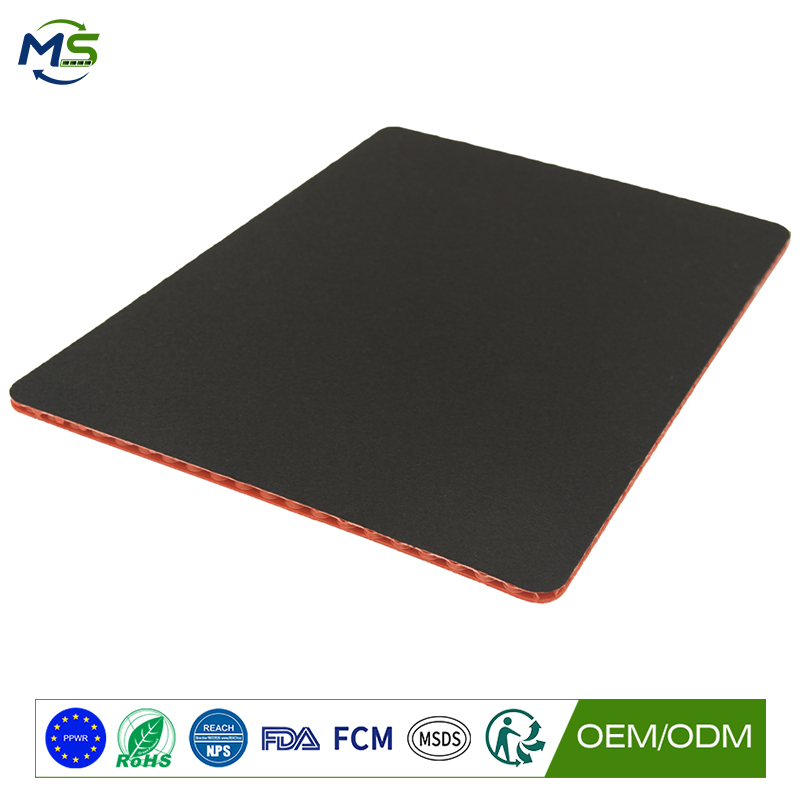
A trial should be set up to answer specific questions, and the questions should be written down before the panels are delivered.
Decide in advance what is being tested. Usually it is three things: whether the panel holds its geometry under the actual load, whether the layout and the panel size work for the crews, and how the labour time compares with the existing method.
Instrument it lightly. Time the laying of a defined area, count the panels used and the offcuts, record every damage event with the cause, and ask the crews which areas they chose to protect and why. The last of these is usually the most informative.
Agree in advance what result would change the decision. A trial without a decision rule tends to produce a general impression, and an impression does not survive a procurement meeting.
Switching a protection supplier mid-project costs more than it appears, so the decision should be made on evidence rather than on a single disappointment.
The real cost of switching is the disruption. A new supplier means new panel handling habits for the crews, a new collection point, a new stock system and a period during which the protection on site is neither the old product nor properly deployed.
A better response to a specific problem is usually to fix that problem with the current supplier. A quality complaint about a batch is a defect route conversation; a weight complaint is a specification conversation; a supply failure is a service level conversation.
The moment to change is when the pattern shows that the product is not fit for the application across several areas and several deliveries, and when the cause is in the product rather than in one batch. At that point the switching cost is worth paying, and the transition should be planned so that the old fleet is used up in the areas already protected rather than discarded.
For terminology and test-method context see ISO standards catalogue. The guidance on this page is practical site guidance, not a test report or a certificate.
A condition record made before protection is laid settles every later question about who caused what.
The record should cover the floor type and finish, the visible condition including any pre-existing marks, and the state of the areas most likely to be damaged. Photographs taken at the same positions and angles as the handover record are the most useful form.
This is not about assigning blame. It is about establishing a baseline, so that a mark discovered at handover can be compared with the baseline and the discussion can be about what happened in between rather than about whose word is believed.
The cost is a few minutes of photography at the start of the protection. The benefit is that it is almost impossible to argue with a dated and located image.
| Supplier question | Short answer | Evidence to request | In this guide |
|---|---|---|---|
| What should be checked about running a site trial that produces … | A trial should be set up to answer specific questions, and the questions should be written … | Decide in advance what is being tested. Usually it is three things: whether the panel … | Section 1 |
| What should be checked about making a switching decision between suppliers? | Switching a protection supplier mid-project costs more than it appears, so the decision should be made … | The real cost of switching is the disruption. A new supplier means new panel handling … | Section 2 |
| What should be checked about recording the condition of the floor … | A condition record made before protection is laid settles every later question about who caused what. | The record should cover the floor type and finish, the visible condition including any pre-existing … | Section 3 |
| What should be checked about inspection: what to check and how … | A short inspection on a fixed cycle finds a damaged panel before it damages the floor … | Check for puncture first, especially where equipment stands, and look for any area where the … | Section 4 |
A short inspection on a fixed cycle finds a damaged panel before it damages the floor, which is the whole purpose of the protection.
Check for puncture first, especially where equipment stands, and look for any area where the facing is broken or the core is exposed. A puncture is the point at which the substrate below is exposed, and it should be repaired or the panel replaced immediately.
Then check for deformation. A panel that shows a permanent indentation under a load that used to be within its rating has lost capacity and should come out of service, even if it still looks intact.
Then check the seams and edges, because these fail before the panel does. A lifted seam traps grit and the grit causes the scratching. A final check should be made after each trade has finished with an area and before the area is handed over.
A sample panel should be tested for the things that will actually fail on the site, and a general product sample rarely tests any of them.
The most valuable sample test is simply to lay the panel on the actual floor and walk on it the way the site will. That reveals grip, movement under traffic, whether the surface marks, and how the seams behave, none of which appear in a datasheet.
A second test is the point-load test: put a loaded tool case or a scaffold base plate on the panel for an hour and measure the indentation and the residual deformation. A small even indentation is acceptable, a sharp permanent impression is not.
A third test is the wet test in a corner: wet the panel and check whether the facing holds and whether the core absorbs water at the edges. This is quick and it is where failures tend to originate later on.
Protection boards laid over a finished floor change how that floor sounds and how heat moves, and both effects matter in occupied buildings and in heated spaces.
A hollow-core panel laid over a hard floor introduces an air gap and a resilient layer, which raises impact sound levels compared with walking on the bare floor. In an occupied building, or in a hotel or hospital refurbishment where floors are in use at night, this is worth checking with the acoustic requirement for the project.
In the opposite direction, the same air gap reduces conductive heat transfer, which is a benefit over a floor above a heating system and a minor penalty in a space that needs to be heated from below. The effect is modest in most cases but worth noting where floor heating is part of the design.
Neither effect can be judged from a product datasheet. If acoustics or underfloor heating performance is in scope, the sensible step is a small sample laid in the actual location and tested, which is faster and cheaper than a full installation that then has to be removed.
A trial should be set up to answer specific questions, and the questions should be written down before the panels are delivered. Decide in advance what is being tested. Usually it is three things: whether the panel holds its geometry under the actual load …
Switching a protection supplier mid-project costs more than it appears, so the decision should be made on evidence rather than on a single disappointment. The real cost of switching is the disruption. A new supplier means new panel handling habits for the crews, a new collection …
A short inspection on a fixed cycle finds a damaged panel before it damages the floor, which is the whole purpose of the protection. Check for puncture first, especially where equipment stands, and look for any area where the facing is broken or the core is …
Protection boards laid over a finished floor change how that floor sounds and how heat moves, and both effects matter in occupied buildings and in heated spaces. A hollow-core panel laid over a hard floor introduces an air gap and a resilient layer, which raises impact sound levels compared …
References checked by publisher and title on 2026-11-06. Standards and regulations are cited by name only; no performance values are attributed to them. General material-property figures in the text are indicative reference values for polypropylene and should be verified against your supplier’s current data sheet. Confirm applicability and current versions for your own project before relying on any of them.
For a quotation, a sample panel or help matching a thickness and facing to your site conditions, contact service@mingplastics.com or WhatsApp +86 189 3887 1524. Include the surface type, floor area, the trades working overhead and the expected duration so the recommended specification can be confirmed before you order.
For protection panel site trial, Ask for the evidence behind each claim and a production-batch sample before committing. Protection boards laid over a finished floor change how that floor sounds and how heat moves, and both effects matter in occupied buildings and in heated spaces.


