Address
Building 1, No. 22, Shexi Yongping Road,
Dongguan, Guangdong, China
Work Hours
Monday to Friday: 7AM - 7PM
Weekend: 10AM - 5PM
Address
Building 1, No. 22, Shexi Yongping Road,
Dongguan, Guangdong, China
Work Hours
Monday to Friday: 7AM - 7PM
Weekend: 10AM - 5PM
Roof membranes are not trafficable. This guide covers thickness from 2 mm to 12 mm, wind restraint, drainage and a roof access trial plan.
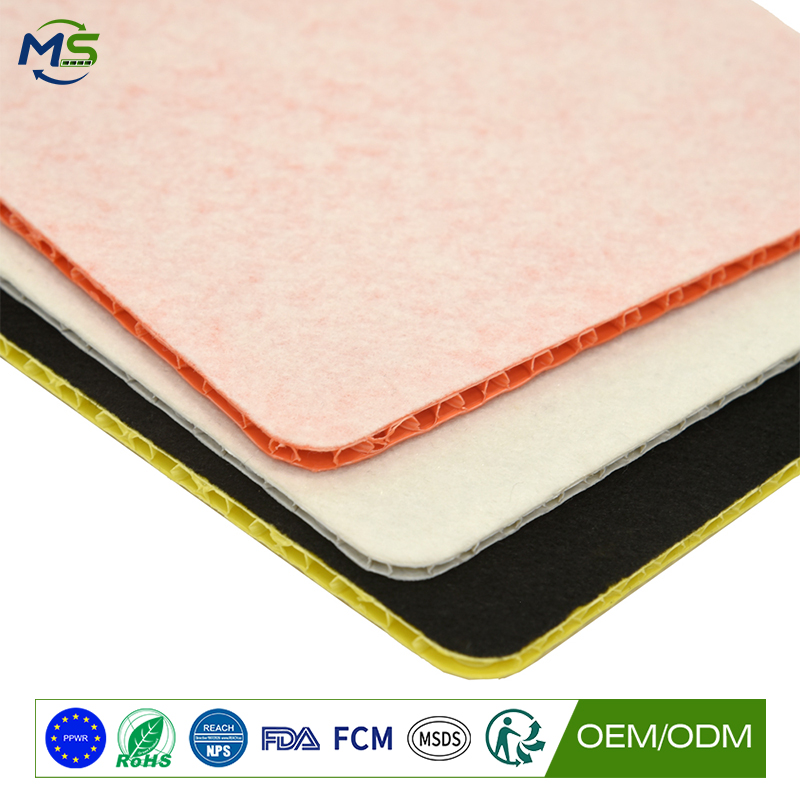
Roof plant access routes carry maintenance traffic and equipment across a membrane that was never designed for it. Every crossing is a puncture risk, and the consequence is a leak into the building. This article looks at protecting roof surfaces during plant installation and maintenance. The focus is puncture resistance, wind uplift and keeping routes safe at height.
Most single-ply and felt roof systems are designed for weather, not for repeated foot traffic or equipment. A temporary access route changes that loading, and without protection it damages the membrane.
A rigid PP honeycomb protection board spreads foot and equipment loads and resists puncture from tools and components set down on the route.
Because the panels are light, they can be carried to the roof without exceeding access limitations, and they can be lifted for inspection.
Roof routes carry maintenance footfall, tools and occasionally equipment components, so the middle to upper part of the 2 mm to 12 mm range is typical.
For foot traffic a mid thickness is usually sufficient. Where components are set down or equipment is wheeled across the roof, thicker boards give the puncture and load resistance needed.
| Board group | Typical thickness | Where it earns its place | Watch-outs |
|---|---|---|---|
| Light-duty panel | 2-3 mm | Light maintenance footfall on roof routes | Insufficient where components are set down |
| General roof panel | 4-6 mm | Maintenance routes with tool and foot traffic | Restrain against wind without penetrating |
| Heavy-duty panel | 8-10 mm | Plant components and equipment wheeled on the roof | Confirm membrane tolerance and roof capacity |
| Maximum protection | 12 mm | Heavy plant installation over the roof | Confirm the roof structure can take the load |
Restraint is a safety requirement on a roof: loose panels become flying debris. Use a restraint method that does not penetrate the membrane.
Keep the route clear of drainage outlets, gutters and falls so water still drains, and so panels are not sitting in standing water.
Inspect after high wind and after any weather event, and re-secure or retire panels that have moved or been damaged.
Plywood is the traditional roof walkway but absorbs water, delaminates and is heavy to carry to height.
Purpose-made roof walkway products are the correct permanent solution, but they are designed for fixed routes and are costly for temporary works.
Plastic sheeting is unsafe on a roof: it slides and offers no puncture resistance. A PP honeycomb board is light, rigid and reusable, which suits temporary plant access routes.
Define and protect one access route, leaving a comparable route on the current method. Inspect after each maintenance visit and after high wind.
Run a set-down test with the heaviest component that will be carried, then lift and inspect the membrane beneath.
Record restraint performance and any water trapped underneath, because on a roof those two factors decide the method.
State the roof membrane type, the route layout, what will cross the roof and the wind exposure. Ask for the recommended thickness for puncture resistance and for guidance on restraint without penetration.
Confirm fire performance if required, and ask about custom sizes for standard plant access routes.
For a quotation or sample panel, contact service@mingplastics.com or WhatsApp +86 189 3887 1524. Include the surface type, floor area, trades on site and expected duration so the recommended thickness, facing and fire performance can be confirmed before you order.
On roofs, spread loads, restrain panels against wind without penetrating the membrane, keep drainage clear and inspect after every weather event.


