Address
Building 1, No. 22, Shexi Yongping Road,
Dongguan, Guangdong, China
Work Hours
Monday to Friday: 7AM - 7PM
Weekend: 10AM - 5PM
Address
Building 1, No. 22, Shexi Yongping Road,
Dongguan, Guangdong, China
Work Hours
Monday to Friday: 7AM - 7PM
Weekend: 10AM - 5PM
Trade show floor charges come from build and breakdown. This guide covers thickness from 2 mm to 12 mm, set-down points and a booth trial plan.
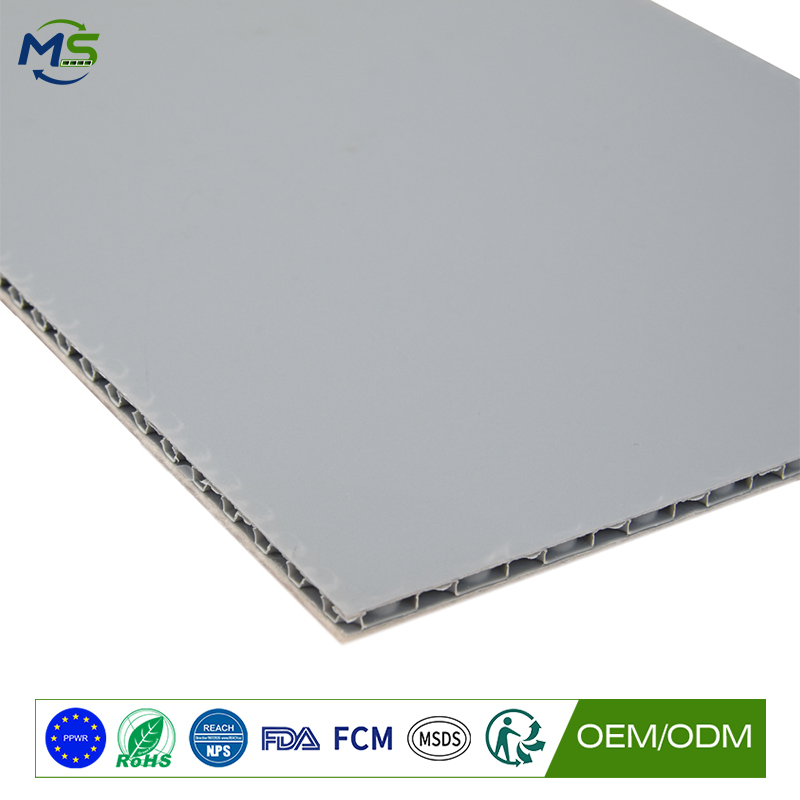
Trade show booths are built and struck in a couple of days on a show floor that the organiser will charge for. The damage happens at the same points every show: set-down, dragging and breakdown. This article looks at protecting show floors during booth build. The focus is fast build cycles, set-down points and organiser charges.
An organiser inspects the floor after breakdown, and the charges that follow are usually for damage caused during build and strike rather than during the show itself.
A rigid PP honeycomb protection board protects the floor where booth components are set down and dragged, which is exactly where those charges originate.
Because the panels are light and reusable, an exhibitor or contractor can carry them from show to show.
Booth build involves crates, cases and components moved by hand and trolley, so the middle part of the 2 mm to 12 mm range is typical.
For pedestrian build traffic a mid thickness is enough. Where crates and heavy components are set down, thicker boards spread the loads.
| Board group | Typical thickness | Where it earns its place | Watch-outs |
|---|---|---|---|
| Light-duty panel | 2-3 mm | Pedestrian areas inside the booth | Compresses under crate corners |
| General booth panel | 4-6 mm | Booth footprints under build traffic | Protect set-down areas first |
| Heavy-duty panel | 8-10 mm | Crate and heavy component set-down | Lift rather than drag where possible |
| Maximum protection | 12 mm | Heavy exhibit structures and machinery | Confirm show floor capacity |
Protect the set-down area first: components are placed there repeatedly while the booth is assembled.
Avoid dragging: even with protection, dragging a crate edge concentrates load. Lift and place where possible, and widen protection where dragging is unavoidable.
Work to the build window: protection must be placed and cleared within the organiser’s schedule, so handling speed matters.
Cardboard is the usual exhibitor choice and it compresses immediately under crate corners, which is where the damage happens.
Moving blankets protect booth components, not the floor, and they slide rather than spreading load.
Plywood works but is heavy to transport between shows. A PP honeycomb board travels with the stand and is used every time.
Protect one booth footprint and leave a comparable booth on the current method. Inspect after build and again after breakdown.
Run a crate set-down test on a sample panel, then lift and check the floor beneath.
Record any organiser charge across several shows, because that number is the real return on carrying protection.
State the show floor type, the crate weights, the booth size and the build and breakdown windows. Ask for the recommended thickness and confirm fire performance for the venue.
Ask for guidance on transporting panels between shows and about custom sizes for standard booth footprints.
For a quotation or sample panel, contact service@mingplastics.com or WhatsApp +86 189 3887 1524. Include the surface type, floor area, trades on site and expected duration so the recommended thickness, facing and fire performance can be confirmed before you order.
For booths, protect the set-down area, avoid dragging, and carry reusable protection between shows so organiser charges stop recurring.


