Address
Building 1, No. 22, Shexi Yongping Road,
Dongguan, Guangdong, China
Work Hours
Monday to Friday: 7AM - 7PM
Weekend: 10AM - 5PM
Address
Building 1, No. 22, Shexi Yongping Road,
Dongguan, Guangdong, China
Work Hours
Monday to Friday: 7AM - 7PM
Weekend: 10AM - 5PM
Garage floors fail under jack loads and fluids. This guide covers thickness from 2 mm to 12 mm, fluid resistance and a garage trial plan.
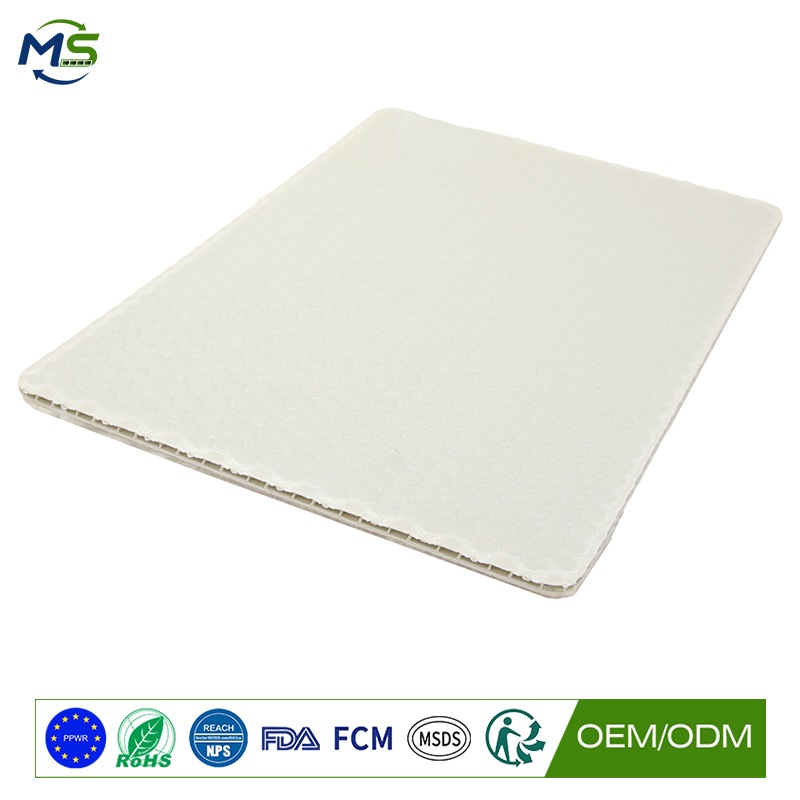
Garage and workshop floors take jack loads, dropped tools, oil and hot tyres, often on a sealed or painted surface that lifts under point loads and chemicals. This article looks at protecting garage and workshop floors. The focus is jack and stand loads, fluid resistance and protecting a coating.
The two things that damage a sealed garage floor are concentrated loads from jacks and stands, and fluids that attack the coating. Both are predictable and both are manageable.
A rigid PP honeycomb protection board spreads jack and stand loads so the coating is not loaded at a single point, and it resists oil and fuel rather than absorbing them.
Because the panels are light, they can be placed under a vehicle and removed again without heavy handling in a confined space.
Garage loads are concentrated but localised, so the middle to upper part of the 2 mm to 12 mm range is typical under jacking points and stands.
For pedestrian and storage areas a mid thickness is enough. Under axle stands and jacks, the thicker boards give the spreading that protects a coating from lifting.
| Board group | Typical thickness | Where it earns its place | Watch-outs |
|---|---|---|---|
| Light-duty panel | 2-3 mm | Storage and pedestrian areas in workshops | Not for jacks or stands |
| General garage panel | 4-6 mm | Garage floors under foot traffic and tool drops | Clean spills promptly |
| Heavy-duty panel | 8-10 mm | Jack and axle stand loads | Check coating tolerance |
| Maximum protection | 12 mm | Vehicle storage and heavy workshop equipment | Confirm floor capacity |
Confirm resistance to oil, fuel and brake fluid, and clean spills promptly even on a non-absorbing board, because prolonged contact is what damages coatings.
Consider hot tyres: if vehicles are driven onto the protection straight after use, confirm suitability with the supplier rather than assuming.
Keep edges finished in a working space, and inspect after any heavy job rather than on a calendar.
Cardboard absorbs oil, becomes a contamination and fire issue and offers no load spreading.
Plywood spreads load but absorbs oil and water, and it splinters under repeated use in a workshop.
Matting works for standing areas but not under jacks. A PP honeycomb board resists fluids and spreads loads at a weight one person can place.
Protect one bay and leave a comparable bay on the current method. Inspect after each heavy job and after any spill.
Run a jack and stand load test on a sample panel, then lift and check the coating.
Record fluid behaviour and coating condition, because in a garage those determine whether the protection is worth using.
State the floor coating, the jack and stand loads, the fluids present and whether hot tyres are a factor. Ask for the recommended thickness and confirm oil and fuel resistance.
Ask for guidance on suitability with heat and about custom sizes for standard bay dimensions.
For a quotation or sample panel, contact service@mingplastics.com or WhatsApp +86 189 3887 1524. Include the surface type, floor area, trades on site and expected duration so the recommended thickness, facing and fire performance can be confirmed before you order.
In garages, use the thick end of the range under jacks and stands, confirm oil and fuel resistance, and clean spills before they attack the coating.


