Address
Building 1, No. 22, Shexi Yongping Road,
Dongguan, Guangdong, China
Work Hours
Monday to Friday: 7AM - 7PM
Weekend: 10AM - 5PM
Address
Building 1, No. 22, Shexi Yongping Road,
Dongguan, Guangdong, China
Work Hours
Monday to Friday: 7AM - 7PM
Weekend: 10AM - 5PM
Decorating damage comes from spills and ladder points. This guide covers thickness from 2 mm to 12 mm, spill containment, ladder loads and a decorating trial plan.
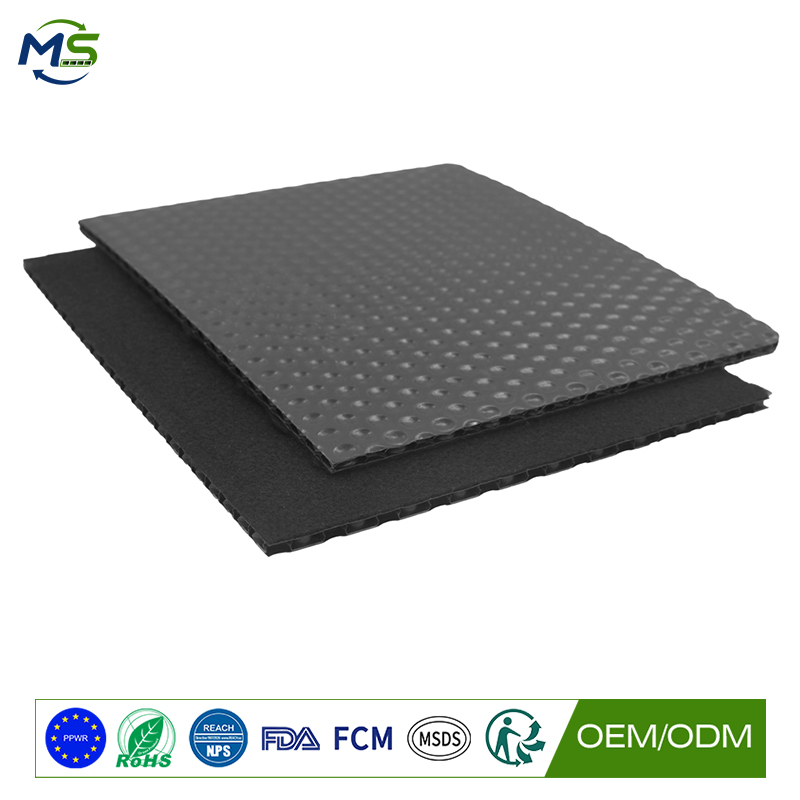
Decorating damage is rarely dramatic: it is a paint spill on a finished floor, a ladder foot through a soft surface or a roller tray set down on timber. Small incidents, expensive remediation. This article looks at protecting floors and surfaces during painting and decorating. The focus is spill containment, ladder and trestle loads, and protection that decorators will actually keep in place.
Most redecoration damage comes from liquids and from equipment set down carelessly, not from heavy plant. A board that resists liquids and stays put solves both.
A rigid PP honeycomb protection board does not absorb paint or water, so a spill sits on the surface where it can be wiped rather than soaking through to the floor.
Because it is a panel rather than a sheet, it does not slide when a ladder is dragged across it, which is where film protection fails.
Decorating loads are modest: ladders, trestles, paint tins and foot traffic. The thinner to middle part of the 2 mm to 12 mm range is usually sufficient.
Where scaffolding or access equipment is used inside, or where paint and materials are stored on the protected area, a thicker board prevents the dents that appear under concentrated storage loads.
| Board group | Typical thickness | Where it earns its place | Watch-outs |
|---|---|---|---|
| Light-duty panel | 2-3 mm | Painting and decorating over finished floors | Not for scaffold or stored material loads |
| General decorating panel | 4-6 mm | Rooms with ladders, trestles and daily traffic | Tape seams against paint runs |
| Heavy-duty panel | 8-10 mm | Stored materials and indoor access equipment | Heavier to move room to room |
| Maximum protection | 12 mm | Long programmes with material storage on the floor | More than standard decorating needs |
Spread ladder and trestle feet: even with protection, point loads should be distributed. Use boards under feet rather than relying on the floor alone.
Tape seams so paint cannot run between panels, and turn up the perimeter where liquids are being mixed or poured. A small edge detail prevents the most common decorating claim.
Clean spills promptly even on a non-absorbing board, because dried paint on the surface becomes grit that can scratch the floor when panels are moved.
Cotton dust sheets are the decorator’s default and they fail on liquids: paint soaks straight through onto the floor. They also bunch under ladders.
Plastic sheeting resists liquid but slides dangerously on a hard floor and tears at ladder feet. Paper absorbs spills and needs replacing constantly.
A PP honeycomb board resists liquid, stays put under ladders and is re-usable across rooms and phases, which is why it suits decorating better than any single-use covering.
Protect one room and decorate a comparable room with your current method. Inspect at the end of each day for spills, scuffs and dents.
Run a spill test: pour paint on a sample panel, leave it for the time it would realistically sit, then lift and check the floor beneath.
Record whether the decorators kept the protection in place, because a board that is moved aside for convenience is not protection at all.
State the floor finish, the rooms, whether scaffolding is used and what liquids are involved. Ask for the recommended thickness, facing and panel size, plus fire performance if required.
Ask for guidance on taping seams and turning up edges, and about custom sizes to reduce cutting in repeated room layouts.
For a quotation or sample panel, contact service@mingplastics.com or WhatsApp +86 189 3887 1524. Include the surface type, floor area, trades on site and expected duration so the recommended thickness, facing and fire performance can be confirmed before you order.
For decorating, choose liquid resistance and grip over raw thickness. Spread ladder feet, tape seams against paint runs and clean spills before they dry into grit.


