Address
Building 1, No. 22, Shexi Yongping Road,
Dongguan, Guangdong, China
Work Hours
Monday to Friday: 7AM - 7PM
Weekend: 10AM - 5PM
Address
Building 1, No. 22, Shexi Yongping Road,
Dongguan, Guangdong, China
Work Hours
Monday to Friday: 7AM - 7PM
Weekend: 10AM - 5PM
Office moves damage the vacated building too. This guide covers thickness from 2 mm to 12 mm, lift and threshold detailing and a move-day trial plan.
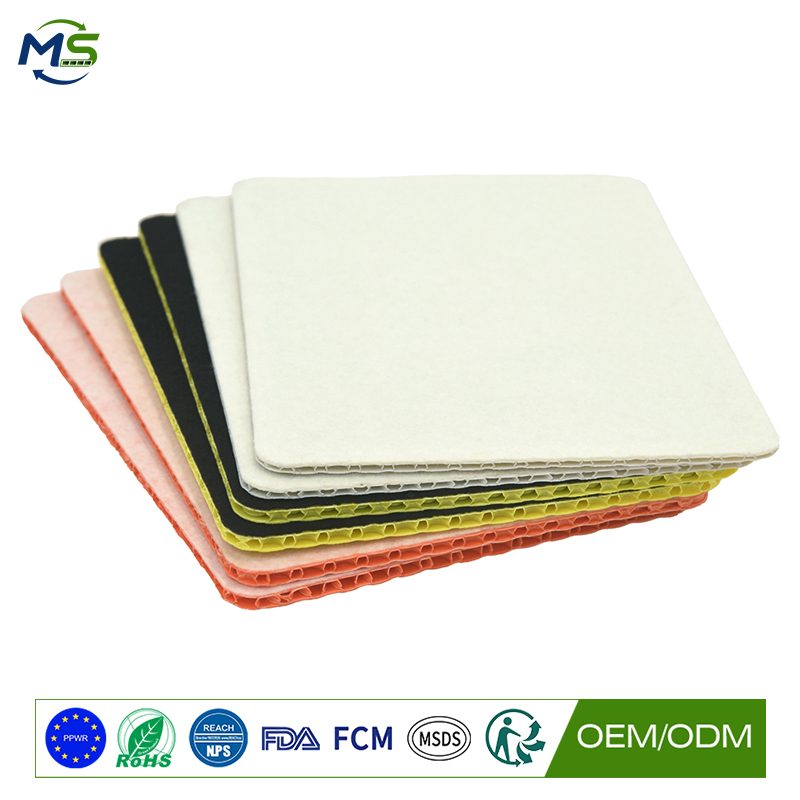
A relocation damages two buildings at once: the one being vacated, where the landlord’s dilapidations claim is waiting, and the one being occupied, which was just fitted out. This article looks at protecting floors and surfaces during office moves. The focus is both ends of the move, lift and threshold protection and a route that survives a single intense day.
Most move planning focuses on the destination, but the departure building is where the cost land: dilapidations claims routinely include scratched floors, damaged lift cars and chipped thresholds from move day.
Protect the vacating floor’s route as carefully as the destination’s, including the corridor, the goods lift and the loading bay.
A rigid PP honeycomb protection board can be laid at both ends and reused across multiple moves, which suits facilities teams that relocate teams regularly.
Move day loads are concentrated: crates on trolleys, furniture, IT equipment and server racks. The middle to upper part of the 2 mm to 12 mm range is usually right for routes.
For crate trolleys on castors a mid-to-heavy board is enough. Where racks and heavy furniture are moved, the thicker boards protect thresholds and lift sills from concentrated loads.
| Board group | Typical thickness | Where it earns its place | Watch-outs |
|---|---|---|---|
| Light-duty panel | 2-3 mm | Lift car wall lining and light pedestrian routes | Not for crate trolley wheels |
| General move panel | 4-6 mm | Corridor routes with crate trolleys | Secure edges before move day starts |
| Heavy-duty panel | 8-10 mm | Thresholds, lift sills and heavy furniture | Build transitions rather than dropping wheels |
| Maximum protection | 12 mm | Server racks and heavy equipment moves | Confirm floor capacity at both ends |
Protect lift cars and their sills at both ends, because that is where wheeled loads meet a finished surface at an edge, and where damage is most often charged.
Build transitions at every threshold rather than letting wheels drop over them, and protect the loading bay surface where crates are set down and sorted.
Tape seams and secure edges along the full route, because a move day has no slack for re-laying protection mid-operation.
Moving blankets protect furniture, not floors, and they do nothing for wheeled loads at thresholds.
Cardboard is cheap but crushes at exactly the points that matter: lift sills and door thresholds. Plywood protects well but is heavy to move between two buildings and awkward to cut for lift cars.
A PP honeycomb board is light enough to transport as part of the move, cuttable for lift cars and thresholds, and reusable for the next relocation.
Protect the full route at both ends before move day and do a dry run with loaded crates. Inspect thresholds and lift sills after the dry run.
On move day, inspect at the midpoint and again at completion, photographing the same points at both buildings.
Record any damage and where it occurred, because that tells you which detail to fix for the next move.
State the floor types at both ends, the lift dimensions, the crate weights and the loading arrangements. Ask for the recommended thickness for wheeled loads and for lift car lining.
Ask for guidance on threshold transitions and on transporting protection between buildings, plus custom sizes for lift cars.
For a quotation or sample panel, contact service@mingplastics.com or WhatsApp +86 189 3887 1524. Include the surface type, floor area, trades on site and expected duration so the recommended thickness, facing and fire performance can be confirmed before you order.
Protect both buildings, prioritise lift sills and thresholds, and do a dry run with loaded crates. Reusable boards pay back across repeated relocations.


