Address
Building 1, No. 22, Shexi Yongping Road,
Dongguan, Guangdong, China
Work Hours
Monday to Friday: 7AM - 7PM
Weekend: 10AM - 5PM
Address
Building 1, No. 22, Shexi Yongping Road,
Dongguan, Guangdong, China
Work Hours
Monday to Friday: 7AM - 7PM
Weekend: 10AM - 5PM
Cat B fit-out damage to landlord finishes becomes a retention claim. This guide covers thickness from 2 mm to 12 mm, shared routes, building rules and a trial plan.
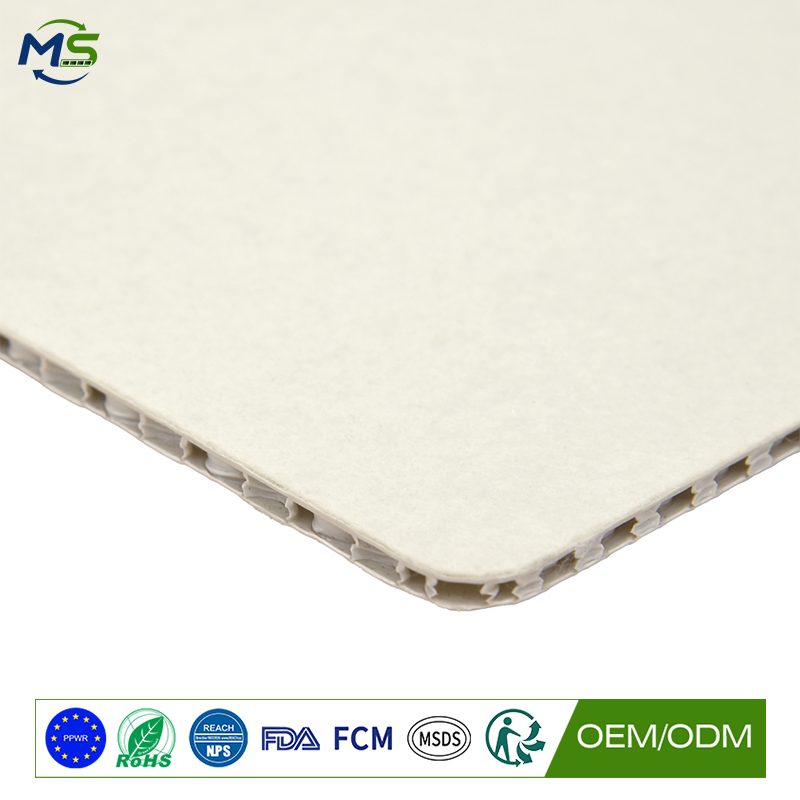
In a Cat B fit-out the contractor is usually responsible for landlord finishes: the lobby, the lift lobby, the core and the floors that were handed over as complete. Damage there becomes a retention issue rather than a snag. This article looks at protecting landlord finishes during office fit-out. The focus is handover condition, shared routes and meeting the building’s rules.
A scratched lobby floor or a chipped lift surround is usually charged against retention, and the repair is done by the landlord’s own contractor at the tenant’s cost. That makes protection a commercial decision rather than a housekeeping one.
Most damage happens on shared routes: the loading bay, the goods lift, the lift lobby and the corridor to the demise. Those are the areas to protect first.
A rigid PP honeycomb protection board lies flat and stays put on those routes, and because it is re-usable it can be moved from the loading bay through to the floor as the programme progresses.
Office fit-out routes carry material trolleys, partitions and furniture, so the middle to upper part of the 2 mm to 12 mm range is typically right for shared areas.
For the demised floor with foot traffic and light works, a mid thickness is enough. For the loading bay and goods lift route, thicker boards handle the wheeled loads and pallet deliveries.
| Board group | Typical thickness | Where it earns its place | Watch-outs |
|---|---|---|---|
| Light-duty panel | 2-3 mm | Demised floor areas with foot traffic only | Not for loading bay or trolley routes |
| General route panel | 4-6 mm | Core and lobby routes under daily material movement | Seams taped; edges finished |
| Heavy-duty panel | 8-10 mm | Loading bay, goods lift and pallet deliveries | Heavier to move between floors |
| Maximum protection | 12 mm | Heavy partition and plant deliveries | More than standard Cat B needs |
Read the building’s fit-out rules before specifying: they often set permitted routes, protection standards, working hours and fire performance. Compliance is usually a condition of access.
Protect the goods lift and its threshold, because that is where concentrated wheeled loads meet a finished surface and where damage is most often charged.
Keep the loading bay route continuous into the lift so loads are not set down on an unprotected surface between the two.
Paper and film are cheap but need replacing constantly along a route that is used for weeks, and they curl in a lobby where the appearance matters.
Plywood protects well but is heavy to move between floors and awkward to dispose of or store in a building with no site compound.
A PP honeycomb board is light, re-usable and presentable enough for a shared lobby, which is why it suits landlord-facing routes better than either alternative.
Protect the shared route from the loading bay to the floor and keep a comparable route on the current method. Inspect at each delivery milestone and photograph from fixed points.
Run a loaded trolley test from the bay into the goods lift over the panels, then lift and check both the floor and the lift threshold.
Record condition at handover against the photographs taken at the start, because that record is what settles retention discussions.
State the floor finishes, the shared route layout, the building’s fit-out rules and the fire performance required. Ask for the recommended thickness, facing and panel size.
Ask for guidance on goods lift thresholds, on moving protection between floors, and about custom sizes for repeated corridor and lift dimensions.
For a quotation or sample panel, contact service@mingplastics.com or WhatsApp +86 189 3887 1524. Include the surface type, floor area, trades on site and expected duration so the recommended thickness, facing and fire performance can be confirmed before you order.
Protect the shared routes first: loading bay, goods lift and core. Specify thickness for the heaviest delivery, comply with the building’s fit-out rules, and photograph condition at the start.


