Address
Building 1, No. 22, Shexi Yongping Road,
Dongguan, Guangdong, China
Work Hours
Monday to Friday: 7AM - 7PM
Weekend: 10AM - 5PM
Address
Building 1, No. 22, Shexi Yongping Road,
Dongguan, Guangdong, China
Work Hours
Monday to Friday: 7AM - 7PM
Weekend: 10AM - 5PM
Exhibition floors are damaged during build and breakdown. This guide covers thickness from 2 mm to 12 mm, organiser rules, routing and an exhibition trial plan.
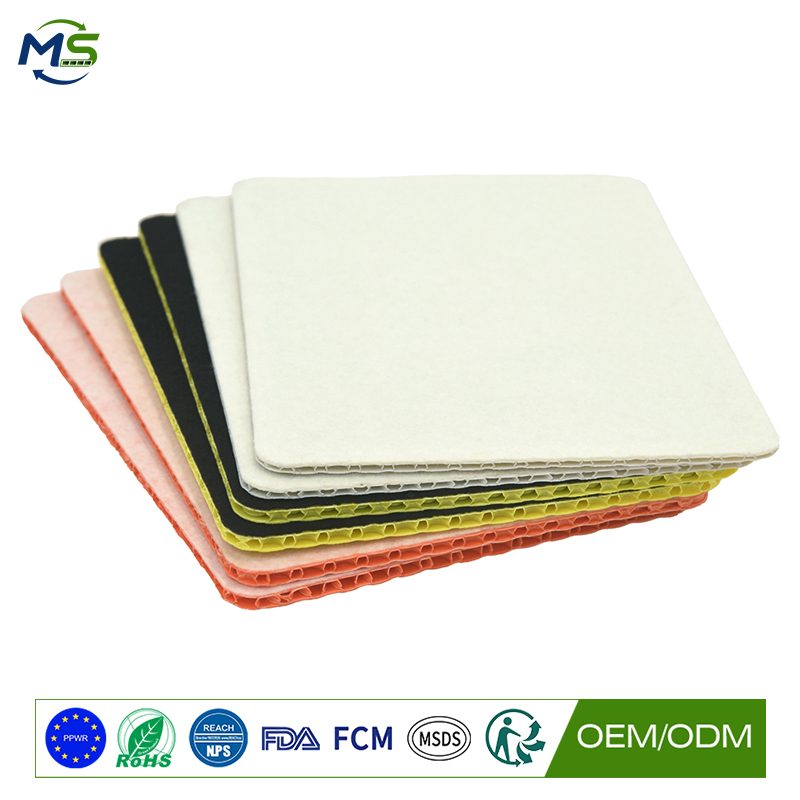
Exhibition halls are used hardest during build-up and breakdown, which are also the periods when the floor matters least to the people working on it. Organiser venues charge for floor damage, and the damage almost always happens in those two windows. This article looks at protecting exhibition floors. The focus is build and breakdown traffic, reusable protection across the events calendar and organiser requirements.
During an open show the floor is protected by normal use. During build-up and breakdown it carries pallet trucks, crates, forklifts and stand-fitting debris, usually on a tight schedule.
A rigid PP honeycomb protection board spreads those loads and resists the debris and impact that come with stand construction and strip-down.
Because the boards are re-usable, a venue or contractor can use the same protection across the whole events calendar rather than buying it per show.
Exhibition floors carry forklifts and palletised stand materials, so the middle to upper part of the 2 mm to 12 mm range is typical for build routes.
For foot traffic during build a mid thickness is enough. Where crates, pallet trucks and forklifts operate, thicker boards protect the hall floor from concentrated loads.
| Board group | Typical thickness | Where it earns its place | Watch-outs |
|---|---|---|---|
| Light-duty panel | 2-3 mm | Foot traffic during build and open days | Fails under pallet trucks and forklifts |
| General build panel | 4-6 mm | Build routes with pallet trucks and crates | Check venue rules before ordering |
| Heavy-duty panel | 8-10 mm | Forklift routes and set-down areas | Heavier to place within the build window |
| Maximum protection | 12 mm | Heavy stand structures and plant moves | Confirm hall floor load limits |
Check the venue’s rules before specifying: many organisers set permitted routes, load limits and protection standards, and compliance is a condition of access.
Plan routes from the loading doors through to each stand, and protect the turning and set-down areas where concentrated loads land.
Work to the turnaround: protection must be placed and cleared within the build and breakdown windows, so handling speed matters as much as performance.
Plywood is standard in venues but heavy to move across large halls, absorbs water and is often damaged beyond reuse in a single show.
Hired event matting performs well but costs per event and is usually limited in quantity.
Plastic sheeting slides under pallet trucks and offers no load spreading. A PP honeycomb board is lighter than ply, reusable across shows and gives genuine load spreading.
Protect one build route and keep a comparable route on the current method. Inspect after build-up and again after breakdown, photographing the same points.
Run a pallet-truck test over a sample panel for a set number of passes, then lift and check the floor.
Record placement and clearance times and how many shows each panel survived, because those numbers drive the venue’s business case.
State the hall floor type, the venue’s rules, the vehicle loads and the build and breakdown windows. Ask for the recommended thickness and confirm fire performance for the venue.
Ask for guidance on routing from loading doors and on turnaround handling, plus custom sizes for standard hall grids.
For a quotation or sample panel, contact service@mingplastics.com or WhatsApp +86 189 3887 1524. Include the surface type, floor area, trades on site and expected duration so the recommended thickness, facing and fire performance can be confirmed before you order.
Protect the build and breakdown windows, follow the venue’s rules, and choose reusable boards that can be placed and cleared within the turnaround.


