Address
Building 1, No. 22, Shexi Yongping Road,
Dongguan, Guangdong, China
Work Hours
Monday to Friday: 7AM - 7PM
Weekend: 10AM - 5PM
Address
Building 1, No. 22, Shexi Yongping Road,
Dongguan, Guangdong, China
Work Hours
Monday to Friday: 7AM - 7PM
Weekend: 10AM - 5PM
ESD floors are functional, so protection needs approval first. This guide covers thickness from 2 mm to 12 mm, static considerations and a trial plan.
Electronics manufacturing floors are usually static-controlled, and introducing any temporary material risks changing the very property the floor was built for. At the same time these facilities move equipment constantly. This article looks at protecting floors in electronics and ESD-controlled environments. The focus is static considerations, clean handling and protecting a functional floor rather than a decorative one.
An ESD floor controls static as part of the production process, so a covering that insulates it can affect the process itself. That is the first question to answer before any protection is specified.
Discuss the approach with the process or facilities engineer, and confirm whether protection is permitted in production areas at all, or only in routes and non-process zones.
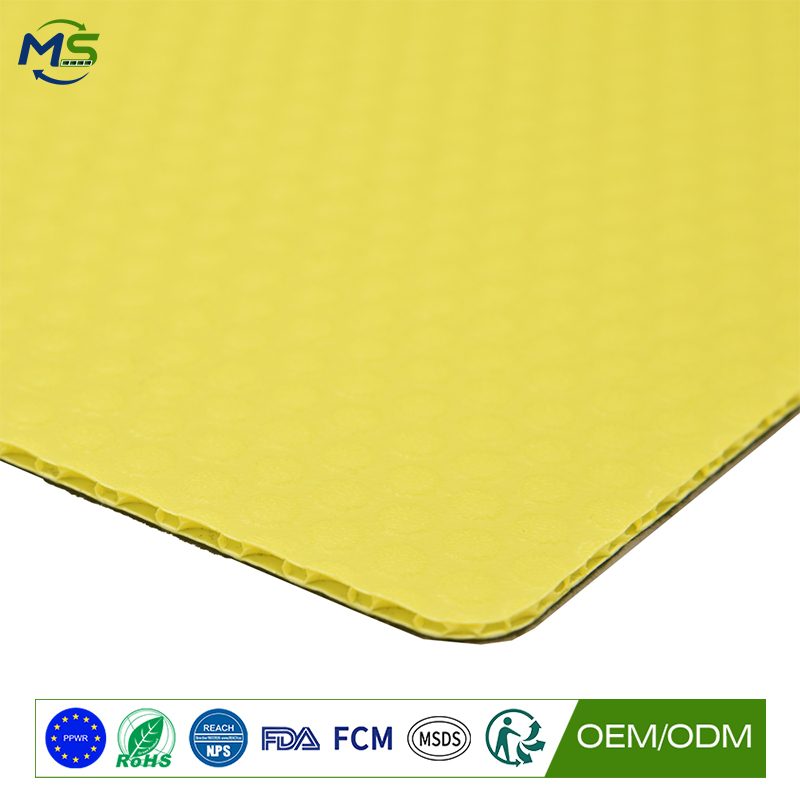
Where protection is permitted, a PP honeycomb protection board is non-shedding and cleanable, which suits the handling discipline of an electronics facility.
Electronics facilities move racks, trolleys and equipment, so the middle to upper part of the 2 mm to 12 mm range is typical for routes.
For pedestrian routes a mid thickness is enough. Where equipment and racks are moved, thicker boards protect the floor covering and its joints from concentrated loads.
| Board group | Typical thickness | Where it earns its place | Watch-outs |
|---|---|---|---|
| Light-duty panel | 2-3 mm | Pedestrian routes outside process areas | No load spreading for equipment |
| General route panel | 4-6 mm | Aisles with trolley traffic | Process approval required first |
| Heavy-duty panel | 8-10 mm | Equipment and rack moves | Confirm floor covering tolerance |
| Maximum protection | 12 mm | Heavy production equipment installation | Confirm slab capacity and static impact |
Confirm the static requirement for each area before specifying, and keep records of what was approved and where it was used.
Wipe panels before they enter production areas and clean them on the area’s schedule, because contamination control is continuous in these facilities.
Protect routes and set-down zones rather than whole floors, so the process area keeps its designed behaviour wherever work is not actually happening.
ESD films and matting are the correct answer where static control is the priority, but they are usually permanent or semi-permanent rather than temporary floor protection.
Plywood sheds particles, absorbs cleaning agents and is generally unsuitable in an electronics environment.
A PP honeycomb board is non-shedding and cleanable, and it adds the load spreading during equipment moves that a film or mat cannot provide.
Get process approval first, then protect one route and keep a comparable route on the current method. Inspect on the area’s cleaning schedule.
Run a test move with the equipment that will be used, then lift and inspect the floor covering and its joints.
Record the approval, the areas protected and the condition at lift, because in a controlled environment that record is part of process assurance.
State the floor type and its static specification, the equipment loads, the cleaning regime and the fire performance required. Ask for confirmation that the board is non-shedding and cleanable.
Ask for documentation supporting use in controlled environments, and about custom sizes for standard aisle widths.
For a quotation or sample panel, contact service@mingplastics.com or WhatsApp +86 189 3887 1524. Include the surface type, floor area, trades on site and expected duration so the recommended thickness, facing and fire performance can be confirmed before you order.
In electronics environments, get process approval before specifying, protect routes rather than process areas, and keep the handling and cleaning discipline intact.


