Address
Building 1, No. 22, Shexi Yongping Road,
Dongguan, Guangdong, China
Work Hours
Monday to Friday: 7AM - 7PM
Weekend: 10AM - 5PM
Address
Building 1, No. 22, Shexi Yongping Road,
Dongguan, Guangdong, China
Work Hours
Monday to Friday: 7AM - 7PM
Weekend: 10AM - 5PM
Carpet in occupied buildings is crushed by routes, not by impacts. This guide covers thickness from 2 mm to 12 mm, route discipline, cleaning access and a carpet trial plan.
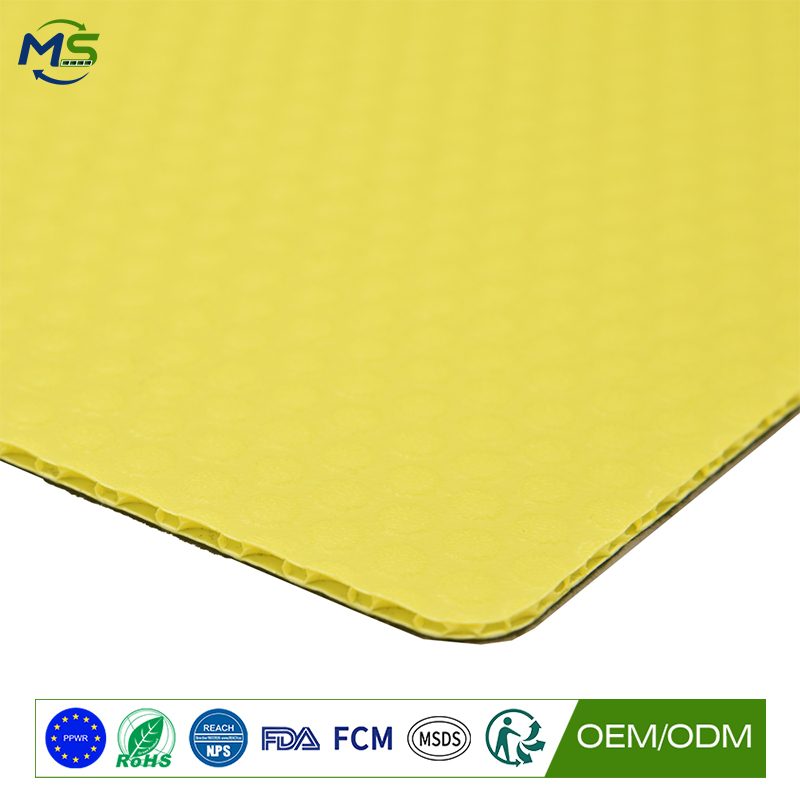
Protecting carpet sounds unnecessary until a phased project routes hundreds of crossings through an occupied floor, and the carpet is replaced at the client’s cost. Carpet also complicates protection because it compresses, so any board laid on it has to spread load without relying on a hard substrate. This article looks at temporary routes over carpet in live buildings. The focus is load spreading on a soft base, route discipline and handover condition.
On a hard floor, a board spreads load into a rigid substrate. On carpet, the substrate itself compresses, so a thin, flexible protection layer simply transmits the load into the pile and crushes it. That is why carpet routes need a rigid panel rather than a film.
A PP honeycomb protection board distributes a wheel or foot load across its own area before it reaches the pile, which keeps the carpet from being crushed along the route. The felt or fleece facing also stops the board from abrading the carpet surface.
Because the panels are light, they can be lifted frequently for cleaning, which matters on occupied floors where the carpet underneath still has to be maintained.
Carpet routes usually carry foot traffic and light trolleys, so the middle of the 2 mm to 12 mm range is typical. The right value depends on route length, duration and whether wheeled loads are involved.
For short-term pedestrian routes a mid thickness is usually enough. Where trolleys, carts or deliveries use the route daily, thicker boards prevent the permanent crush lines that otherwise remain after the carpet is cleaned.
| Board group | Typical thickness | Where it earns its place | Watch-outs |
|---|---|---|---|
| Light-duty panel | 2-3 mm | Short pedestrian routes over carpet tile | Crushes under wheeled loads |
| General floor panel | 4-6 mm | Daily foot traffic routes in occupied buildings | Seams must be taped; edges finished |
| Heavy-duty panel | 8-10 mm | Trolleys, carts and deliveries over carpet | Heavier panels; plan lifting for cleaning |
| Maximum protection | 12 mm | Long-duration heavy routes through live floors | More than pedestrian routes need |
Define the route, sign it, and keep it. Most carpet damage happens on the detours people take when the marked route is blocked, so keeping the route clear is part of the protection.
Tape seams and finish the edges so the panels do not trip anyone and so grit does not migrate underneath. On carpet, grit under a panel is pressed into the pile with every step.
Agree a cleaning and inspection schedule with the facilities team before work starts, and record the carpet condition at the start so handover discussions are based on evidence.
Self-adhesive carpet film is common but leaves residue and often lifts the pile when removed, especially after a long programme. Fabric runners cushion but compress and hold dirt.
Plywood protects but is heavy, and its weight crushes carpet at panel edges. It is also awkward to fit through occupied office layouts.
A PP honeycomb board is rigid, light and re-usable, and it lifts cleanly for cleaning. On an occupied floor that combination is usually what the facilities team will accept.
Lay the board on one route and leave a comparable route unprotected or on the current method. Inspect pile condition, seam integrity and any crush lines at set intervals, photographing from fixed positions.
Run a wheeled-load test with the heaviest trolley that will actually use the route, then lift and check the pile. This decides the thickness.
Record how often panels were lifted for cleaning and whether the route was kept clear, because on occupied floors discipline determines the outcome more than the board does.
State the carpet type, whether it is broadloom or tile, the route length and duration, and whether wheeled loads are expected. Ask for the recommended thickness, facing, panel size and fire performance required in an occupied building.
Ask for guidance on edge finishing and trip-risk, and confirm whether custom sizes and colours are available for marking routes. On live floors, colour coding often helps compliance.
For a quotation or sample panel, contact service@mingplastics.com or WhatsApp +86 189 3887 1524. Include the surface type, floor area, trades on site and expected duration so the recommended thickness, facing and fire performance can be confirmed before you order.
Carpet routes need a rigid panel because the substrate compresses. Specify thickness for the heaviest wheeled load, tape seams, keep the route clear and agree the handover condition up front.


