Address
Building 1, No. 22, Shexi Yongping Road,
Dongguan, Guangdong, China
Work Hours
Monday to Friday: 7AM - 7PM
Weekend: 10AM - 5PM
Address
Building 1, No. 22, Shexi Yongping Road,
Dongguan, Guangdong, China
Work Hours
Monday to Friday: 7AM - 7PM
Weekend: 10AM - 5PM
Bar and cafe fit-outs are tight and highly finished. This guide covers thickness from 2 mm to 12 mm, counter protection and confined-space handling.
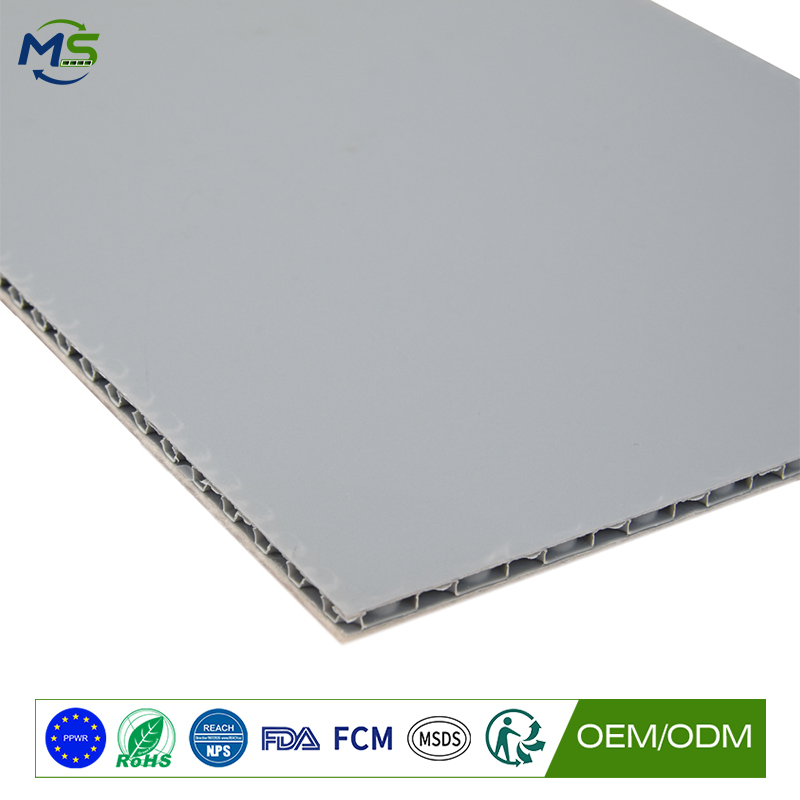
Bars and cafes are tight, highly finished and fitted with expensive counters and equipment. Works happen in a small footprint where there is nowhere to put anything, which makes protection a logistics problem as much as a specification one. This article looks at protecting front-of-house floors and counters during fit-out. The focus is confined spaces, counter protection and keeping the fit-out moving.
A bar or cafe packs a counter, equipment, seating and finished floors into a small area, so there is no space to stage materials and no room to work around damage.
Protection therefore has to be cut to fit and light enough to move repeatedly as the fit-out progresses through the space.
A PP honeycomb protection board can be cut on site and moved by one person, which suits a confined front-of-house area.
Bar fit-out involves counters, refrigeration and glassware, so the middle part of the 2 mm to 12 mm range is typical for floors.
For pedestrian works a mid thickness is enough. Where counters, fridges and equipment are moved into position, thicker boards protect the floor from concentrated loads.
| Board group | Typical thickness | Where it earns its place | Watch-outs |
|---|---|---|---|
| Light-duty panel | 2-3 mm | Counter and joinery protection, foot traffic only | Not for equipment moves |
| General front-of-house panel | 4-6 mm | Bar and cafe floors under fit-out traffic | Cut to fit; finish edges |
| Heavy-duty panel | 8-10 mm | Counters, refrigeration and equipment placement | Confirm floor tolerance |
| Maximum protection | 12 mm | Heavy equipment installation in a small space | Confirm slab capacity |
Protect the counter tops and fronts separately from the floor, using a faced board that will not mark finished surfaces, because the counter is usually the most expensive single item.
Plan the sequence so protection moves with the fit-out rather than being laid once and obstructing everything.
Keep edges finished in a space where staff will soon be working at speed, and inspect at the end of each day.
Cardboard is cheap but crushes and absorbs spills, which in a drinks environment means it is replaced constantly.
Moving blankets protect counters well but do nothing for floors and collect dust in a food service area.
Plywood is heavy and awkward in a confined space. A PP honeycomb board is light, cuttable and wipe-clean, which suits a tight front-of-house fit-out.
Protect the floor and counter in one zone and leave a comparable zone on the current method. Inspect at the end of each day, including the counter surface.
Run an equipment move over a sample panel, then lift and check the floor beneath.
Record how easily protection could be moved as the fit-out progressed, because in a confined space that determines whether it is used throughout.
State the floor and counter finishes, the equipment being installed, the available space and the programme. Ask for the recommended thickness for floors and a faced option for counters.
Ask for guidance on cutting to fit and on cleaning in a drinks environment, plus custom sizes for counter runs.
For a quotation or sample panel, contact service@mingplastics.com or WhatsApp +86 189 3887 1524. Include the surface type, floor area, trades on site and expected duration so the recommended thickness, facing and fire performance can be confirmed before you order.
In a bar or cafe, cut protection to fit, protect counters and floors separately, and move it with the fit-out sequence rather than laying it once.


