Address
Building 1, No. 22, Shexi Yongping Road,
Dongguan, Guangdong, China
Work Hours
Monday to Friday: 7AM - 7PM
Weekend: 10AM - 5PM
Address
Building 1, No. 22, Shexi Yongping Road,
Dongguan, Guangdong, China
Work Hours
Monday to Friday: 7AM - 7PM
Weekend: 10AM - 5PM
Hangar floors take jack loads and see fuel and oil. This guide covers thickness from 2 mm to 12 mm, fluid resistance and a hangar trial plan.
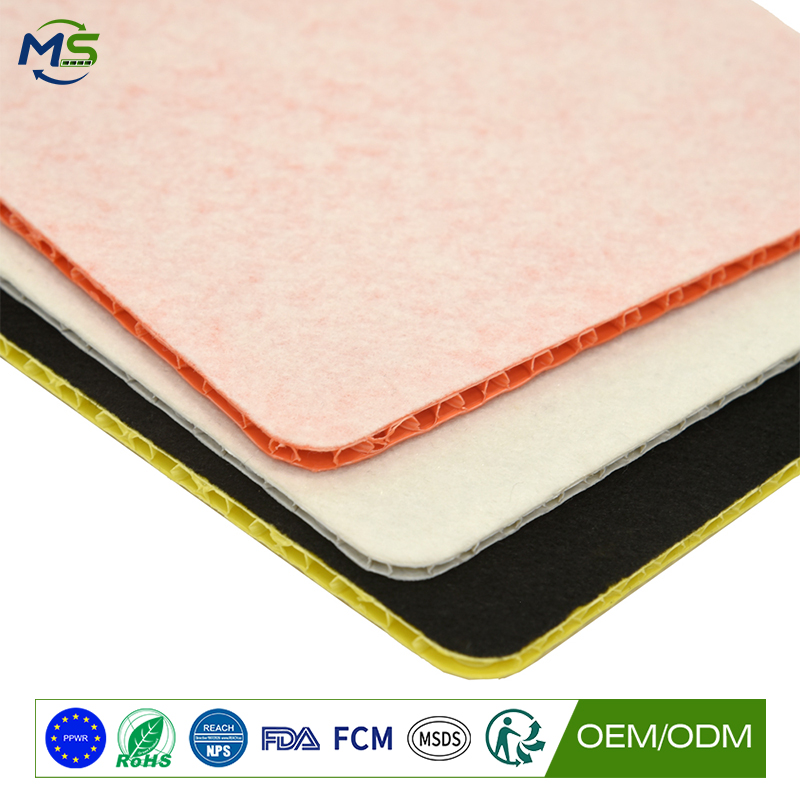
Hangar floors are large, flat and expensive, and during maintenance they carry jacks, platforms, tooling and vehicles. Damage is usually local but the repair is not, because hangar floor repairs affect operations. This article looks at protecting hangar floors. The focus is jack loads, large-area coverage and working around aircraft.
Aircraft jacking and platform equipment apply very high loads onto small contact areas. Without spreading, those points damage the slab surface and any coating.
A rigid PP honeycomb protection board spreads jack and platform loads across a wider area, protecting the slab at exactly the points where damage would start.
Because the panels are light relative to their area, they can be positioned under equipment quickly.
Hangar work involves the heaviest local loads of any building type, so the upper part of the 2 mm to 12 mm range is usually required under jacking points.
For pedestrian and trolley routes a mid thickness is enough. Under jacks, platforms and heavy tooling, the thickest boards give the spreading available.
| Board group | Typical thickness | Where it earns its place | Watch-outs |
|---|---|---|---|
| Light-duty panel | 2-3 mm | Pedestrian walkways in hangars | Not for jacks or platforms |
| General hangar panel | 4-6 mm | Hangar floors under trolley and tooling traffic | Confirm fluid resistance |
| Heavy-duty panel | 8-10 mm | Platform equipment and heavy tooling | Check coating tolerance |
| Maximum protection | 12 mm | Jacking points and heaviest maintenance loads | Use steel plate for the very highest loads |
Confirm resistance to fuel, oil and hydraulic fluid, because hangar floors see all three and an absorbent covering becomes a contamination issue.
Keep drainage and any fuel-separator channels clear, and do not cover them.
Plan protection around aircraft movements: panels must be placed and cleared without delaying the maintenance schedule.
Steel plate is the traditional answer under jacks and remains correct for the highest loads, but it is heavy and slow to place.
Plywood absorbs oil and hydraulic fluid and crushes under jack loads. Matting works for walkways but not for jacking points.
A PP honeycomb board resists fluids and spreads load at a fraction of steel’s weight, which suits the areas around the heaviest points.
Protect one jacking or platform area and leave a comparable area on the current method. Inspect after loading and before aircraft movement.
Run a jack load test on a sample panel under controlled conditions, then inspect the slab and coating.
Record fluid resistance and placement time, because in a hangar the schedule is the constraint.
State the slab and coating type, the jack and platform loads, the fluids present and the fire performance required. Ask for the recommended thickness for jacking points.
Confirm fuel and oil resistance, and ask about custom sizes for large hangar areas.
For a quotation or sample panel, contact service@mingplastics.com or WhatsApp +86 189 3887 1524. Include the surface type, floor area, trades on site and expected duration so the recommended thickness, facing and fire performance can be confirmed before you order.
In hangars, use the thick end of the range under jacks and platforms, confirm fuel and oil resistance, and keep drainage and separator channels clear.


