Address
Building 1, No. 22, Shexi Yongping Road,
Dongguan, Guangdong, China
Work Hours
Monday to Friday: 7AM - 7PM
Weekend: 10AM - 5PM
Address
Building 1, No. 22, Shexi Yongping Road,
Dongguan, Guangdong, China
Work Hours
Monday to Friday: 7AM - 7PM
Weekend: 10AM - 5PM
Nursery floors need protection that is safe by design. This guide covers thickness from 2 mm to 12 mm, edge safety, hygiene and a nursery trial plan.
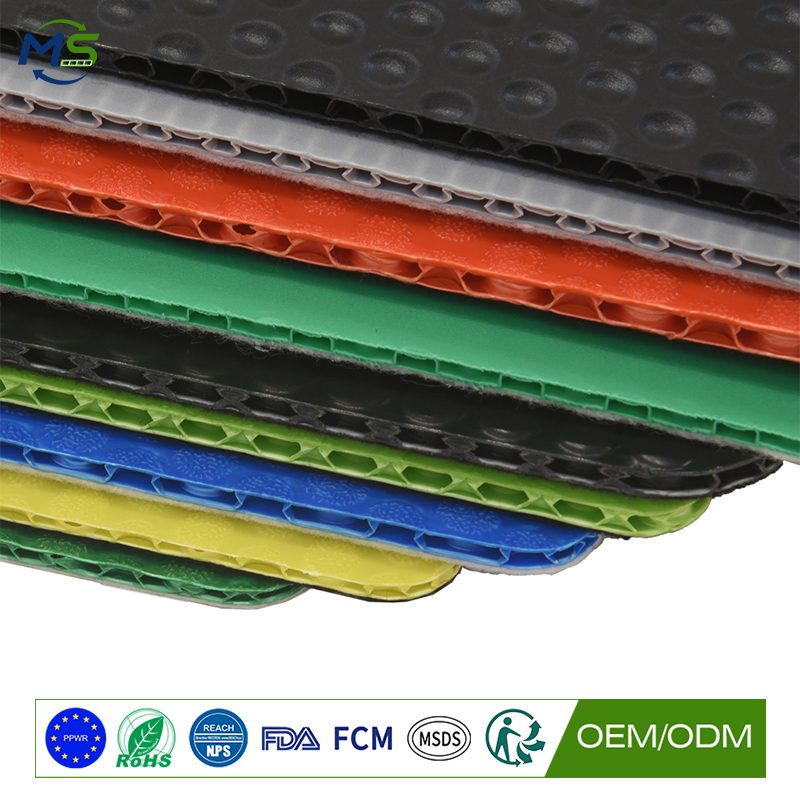
Nurseries and early years settings have the strictest safety expectations of any occupied building: children are close to the floor, move unpredictably and cannot be expected to avoid hazards. Protection has to be safe by design, not by supervision. This article looks at protecting floors in nurseries and early years settings. The focus is child safety, hygiene and works around occupancy.
In a setting with young children, anything loose, sharp or liftable is a hazard. Protection has to lie flat, have no liftable edges and stay in place under running and play.
A rigid PP honeycomb protection board lies flat and, when seams and edges are finished, presents nothing to trip on or pick at.
Because the boards are non-absorbing and wipe-clean, they meet the hygiene expectations of an early years environment better than fabric or paper products.
Nursery floors carry foot traffic, trolleys and furniture, so the thinner to middle part of the 2 mm to 12 mm range is usually appropriate, since low profile also reduces trip risk.
For decorating and light works a mid thickness is enough. Where furniture and equipment are moved, thicker boards protect the floor from concentrated loads.
| Board group | Typical thickness | Where it earns its place | Watch-outs |
|---|---|---|---|
| Light-duty panel | 2-3 mm | Decorating and light works in nursery rooms | Not for furniture and equipment moves |
| General nursery panel | 4-6 mm | Nursery floors under works traffic | Edges finished; inspect twice daily |
| Heavy-duty panel | 8-10 mm | Furniture and equipment moves | Higher profile; check trip risk carefully |
| Maximum protection | 12 mm | Heavy installation work, ideally out of hours | Avoid in areas children use |
Confirm the fire performance and any setting-specific material requirements before ordering, since early years provision is regulated.
Clean panels on the setting’s schedule and inspect them at the start and end of each day, because supervision cannot compensate for a lifted edge.
Where possible, carry out works outside opening hours and clear or fully secure protection before children arrive.
Paper and cardboard tear, curl and hold moisture, which is unsuitable in a setting where children are on the floor.
Foam mats are appropriate for play areas but do not protect against works traffic and are not a temporary floor covering.
Plywood is heavy and can splinter. A PP honeycomb board is light, wipe-clean and lies flat, which suits a supervised early years environment.
Protect one room or route and leave a comparable area on the current method. Inspect at the start and end of each day, checking edges and fixity.
Run a cleaning test with the setting’s usual agent, then check the floor beneath.
Record any lifted edges immediately and adjust, because in an early years setting that is a safety issue rather than a snag.
State the floor type, the setting’s regulations, the expected traffic and whether children are present during works. Ask for the recommended thickness and confirm fire performance.
Ask for guidance on edge finishing and cleaning, and about custom sizes for repeated room layouts.
For a quotation or sample panel, contact service@mingplastics.com or WhatsApp +86 189 3887 1524. Include the surface type, floor area, trades on site and expected duration so the recommended thickness, facing and fire performance can be confirmed before you order.
In early years settings, protection must be safe by design: low profile, finished edges, wipe-clean, inspected twice daily and confirmed against the setting’s regulations.


