Address
Building 1, No. 22, Shexi Yongping Road,
Dongguan, Guangdong, China
Work Hours
Monday to Friday: 7AM - 7PM
Weekend: 10AM - 5PM
Address
Building 1, No. 22, Shexi Yongping Road,
Dongguan, Guangdong, China
Work Hours
Monday to Friday: 7AM - 7PM
Weekend: 10AM - 5PM
Stadium concourses must be perfect on event day. This guide covers thickness from 2 mm to 12 mm, event preparation, storage and a concourse trial plan.
Stadium concourses carry enormous crowd loads on a few event days and almost nothing between them, which means works happen in long quiet windows and the floor has to be perfect on the day. This article looks at protecting concourse floors during works. The focus is crowd readiness, large-area coverage and reuse across a season.
A concourse is judged on a handful of days a year, and damage found then cannot be fixed before the crowd arrives. Protection is therefore about certainty rather than cost.
The works window between events is long, so protection has to stay in place for weeks without becoming a hazard in a space that is occasionally in use.
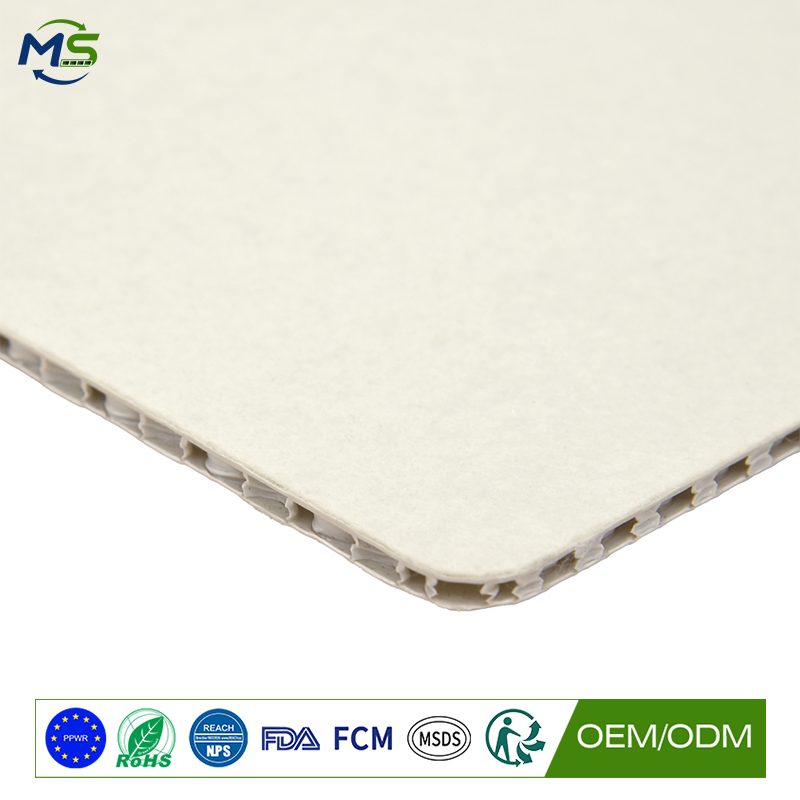
A PP honeycomb protection board lies flat for long periods and can be lifted for cleaning and event preparation, then re-laid afterwards.
Concourse works involve materials, seating and occasionally vehicles, so the middle to upper part of the 2 mm to 12 mm range is typical.
For pedestrian routes a mid thickness is enough. Where seating, staging or vehicles cross the concourse, thicker boards protect against the concentrated loads that crack large-format tiles.
| Board group | Typical thickness | Where it earns its place | Watch-outs |
|---|---|---|---|
| Light-duty panel | 2-3 mm | Pedestrian routes during quiet periods | Not for seating or vehicle loads |
| General concourse panel | 4-6 mm | Concourse works between events | Lift and clean before each event |
| Heavy-duty panel | 8-10 mm | Seating, staging and equipment moves | Check tile tolerance to point loads |
| Maximum protection | 12 mm | Vehicles and heavy plant on the concourse | Confirm structural capacity |
Before each event, lift the protection, clean the floor and inspect it, because event day leaves no room for remediation.
Keep routes clear and edges finished for any public access during the works window, since a stadium is rarely completely closed.
Store lifted panels flat and secure, because a large quantity of stacked boards in a concourse is both an obstruction and a security concern.
Plywood across a concourse is a large logistics exercise: heavy, slow, and costly to dispose of or store between events.
Matting performs well but is expensive at concourse scale and is usually hired rather than owned. Sheeting slides and traps moisture.
A PP honeycomb board is light enough to cover large areas, re-usable across a season and easy to lift for event preparation.
Protect one concourse section and leave a comparable section on the current method. Inspect before each event and photograph the same points.
Run a loaded trolley test over a sample panel for a set number of passes, then lift and check the floor.
Record lift, clean and re-lay time per section, because between events that cycle repeats throughout the season.
State the floor type, the concourse area, the works and event calendar and the fire performance required. Ask for the recommended thickness and about reusability across a season.
Ask for guidance on storage between events and on large-area handling, plus custom sizes for standard concourse widths.
For a quotation or sample panel, contact service@mingplastics.com or WhatsApp +86 189 3887 1524. Include the surface type, floor area, trades on site and expected duration so the recommended thickness, facing and fire performance can be confirmed before you order.
For concourses, protect continuously between events but lift, clean and inspect before every event day, and reuse the boards across the season.


