Address
Building 1, No. 22, Shexi Yongping Road,
Dongguan, Guangdong, China
Work Hours
Monday to Friday: 7AM - 7PM
Weekend: 10AM - 5PM
Address
Building 1, No. 22, Shexi Yongping Road,
Dongguan, Guangdong, China
Work Hours
Monday to Friday: 7AM - 7PM
Weekend: 10AM - 5PM
Power and utility works run to outage windows with heavy plant. This guide covers thickness from 2 mm to 12 mm, cable drum routes, safety rules and a trial plan.
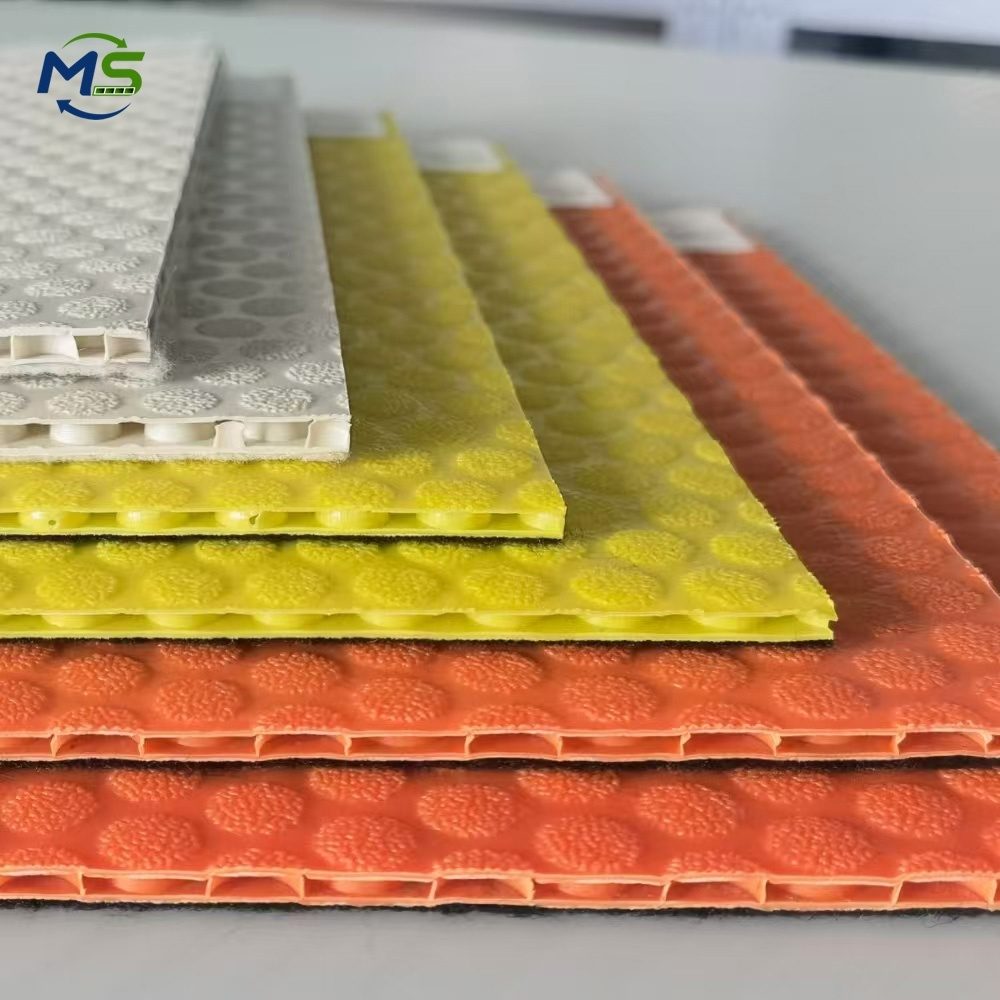
Power and utility buildings combine heavy plant movement with live electrical environments, where safety rules are strict and outages are scheduled to the hour. Protection has to be placed quickly, stay safe around live equipment and not interfere with earthing or access. This article looks at protecting floors in power and utility facilities. The focus is outage timing, electrical safety and heavy plant routes.
Works in power facilities are planned around outages, so protection must be placed and cleared inside tight windows without delaying the programme.
Live equipment imposes access and material rules: what can be brought into a switchroom, how close, and under what permit. Those rules decide the specification.
A PP honeycomb protection board is light enough to place quickly and is non-absorbing, which suits plant environments where cleaning and spill control matter.
Power facilities move transformers, switchgear and cable drums, so the upper part of the 2 mm to 12 mm range is often required for plant routes.
For pedestrian routes through turbine halls and switchrooms a mid thickness is enough. Under plant and cable drum loads, the thickest boards give the spreading that protects the floor.
| Board group | Typical thickness | Where it earns its place | Watch-outs |
|---|---|---|---|
| Light-duty panel | 2-3 mm | Pedestrian routes through turbine halls | Unsuitable for plant movement |
| General plant panel | 4-6 mm | Switchroom and hall routes with light equipment | Confirm material rules for live areas |
| Heavy-duty panel | 8-10 mm | Switchgear moves and equipment set-down | Check floor tolerance |
| Maximum protection | 12 mm | Cable drum routes and transformer moves | Confirm slab capacity before moving |
Cable drums are among the heaviest rolling loads in any building and they concentrate weight along a narrow line. Protect drum routes with the thick end of the range and plan the route before the pull starts.
Confirm what materials are permitted in switchrooms and near live apparatus, and keep the documentation with the permit.
Keep access routes and escape routes at their required width, and inspect after each plant movement.
Steel plate handles the loads but is slow and heavy, which is a problem in an outage window.
Plywood is common but absorbs water and oil and crushes under drum loads, leaving a surface that has to be replaced mid-programme.
A PP honeycomb board gives load spreading at much lower weight, resists oil and water and can be placed quickly, which suits outage work.
Protect one plant route and keep a comparable route on the current method. Inspect after each movement, focusing on drum and switchgear paths.
Run a drum-roll test over a sample panel, then lift and inspect the floor beneath.
Record placement time per metre and any panel damage, because in an outage those numbers decide the method.
State the floor type, the plant loads, whether cable drums are involved, the outage window and the electrical safety rules. Ask for the recommended thickness for rolling and point loads.
Confirm fire performance and ask about custom sizes for standard plant bay layouts.
For a quotation or sample panel, contact service@mingplastics.com or WhatsApp +86 189 3887 1524. Include the surface type, floor area, trades on site and expected duration so the recommended thickness, facing and fire performance can be confirmed before you order.
In power facilities, plan protection around the outage, confirm material rules for live areas, and use the thick end of the range under cable drums and switchgear.


