Address
Building 1, No. 22, Shexi Yongping Road,
Dongguan, Guangdong, China
Work Hours
Monday to Friday: 7AM - 7PM
Weekend: 10AM - 5PM
Address
Building 1, No. 22, Shexi Yongping Road,
Dongguan, Guangdong, China
Work Hours
Monday to Friday: 7AM - 7PM
Weekend: 10AM - 5PM
Fire escape stairs must stay usable during works. This guide covers thickness from 2 mm to 12 mm, clear width, fire performance and rapid removal.
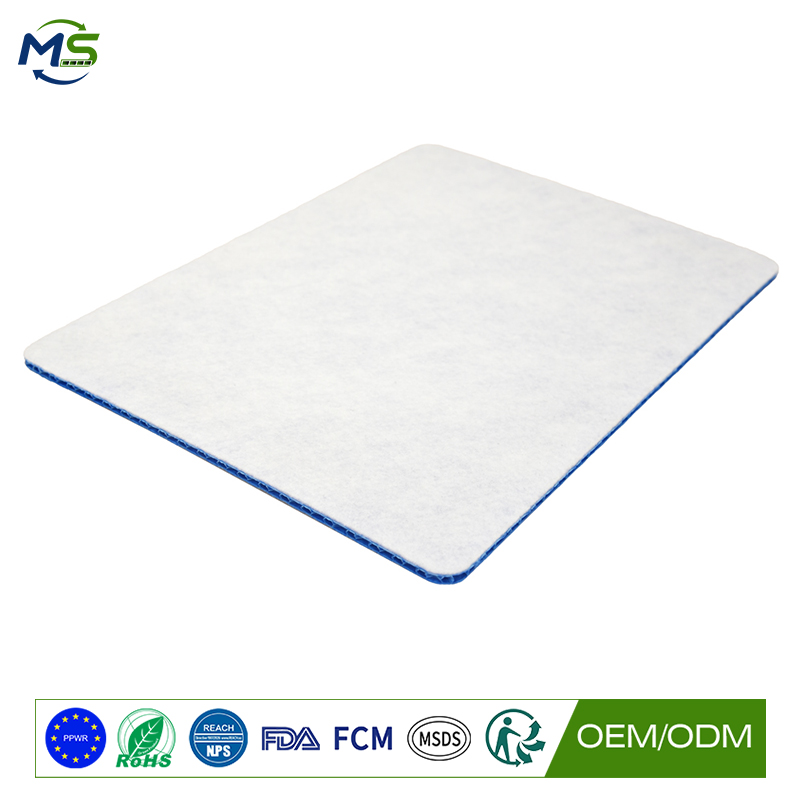
Fire escape stairs create a conflict: they need protection during works, but they must remain fully usable and compliant at all times. Any protection that obstructs or changes the stair is a safety failure, not a specification detail. This article looks at protecting escape stairs without compromising compliance. The focus is keeping the route usable, fire performance and protection that can be removed instantly.
An escape stair must remain usable, unobstructed and compliant throughout the works. If protection conflicts with that, protection loses.
That rules out anything fixed, anything that narrows the route below the required width, and anything that cannot be cleared immediately.
A loose-laid rigid PP honeycomb protection board can be lifted quickly if the route is needed, and it lies flat so it does not create a trip edge on a stair.
On an escape stair, thickness is constrained by the need to keep the going and the handrail clearance unchanged. The thinner end of the 2 mm to 12 mm range is usually appropriate.
Where materials must be carried up the escape stair, thicker boards protect treads but must be detailed so they do not alter the effective going or create an edge.
| Board group | Typical thickness | Where it earns its place | Watch-outs |
|---|---|---|---|
| Light-duty panel | 2-3 mm | Escape stairs where clearance is critical | Wears under carried materials |
| General stair panel | 4-6 mm | Protected treads where the route stays in use | Confirm clear width is unchanged |
| Heavy-duty panel | 8-10 mm | Material carrying up a protected escape stair | May alter the effective going; detail carefully |
| Maximum protection | 12 mm | Not normally appropriate on escape routes | Compliance risk; avoid on escape stairs |
Confirm the fire performance required for the route before specifying, and keep the documentation with the site’s fire plan.
Inspect daily, and after any use of the stair for materials, checking that panels have not shifted and that the full width remains available.
Agree a removal plan: who clears the protection, how fast, and where it goes, because on an escape route that plan is part of compliance.
Films and cardboard curl and tear on stair nosings, which is both a trip risk and an obstruction on a route that must stay clear.
Plywood protects treads but changes the effective going at the nosing and is slow to remove if the stair is needed in an emergency.
A PP honeycomb board is light, lifts quickly and lies flat, which makes it the safer choice where the route must stay usable.
Protect one flight and leave a comparable flight on the current method. Inspect daily and after any material movement, checking route width and panel fixity.
Time a full removal: clear the protection from the flight and record how long it takes, because that is the compliance measure.
Record fire performance documentation and keep it with the site fire plan.
State that the stair is an escape route, the tread material, the required clear width and the fire performance needed. Ask for the thinnest board that resists the expected load.
Ask for guidance on keeping the route unobstructed and on rapid removal, and about custom cuts for uniform treads.
For a quotation or sample panel, contact service@mingplastics.com or WhatsApp +86 189 3887 1524. Include the surface type, floor area, trades on site and expected duration so the recommended thickness, facing and fire performance can be confirmed before you order.
On escape stairs, compliance comes first: keep the route unobstructed, use a thin loose-laid board, confirm fire performance and be able to remove it instantly.


