Address
Building 1, No. 22, Shexi Yongping Road,
Dongguan, Guangdong, China
Work Hours
Monday to Friday: 7AM - 7PM
Weekend: 10AM - 5PM
Address
Building 1, No. 22, Shexi Yongping Road,
Dongguan, Guangdong, China
Work Hours
Monday to Friday: 7AM - 7PM
Weekend: 10AM - 5PM
Balcony damage means leaks, not just scratches. This guide covers thickness from 2 mm to 12 mm, drainage, upstands and a balcony trial plan.
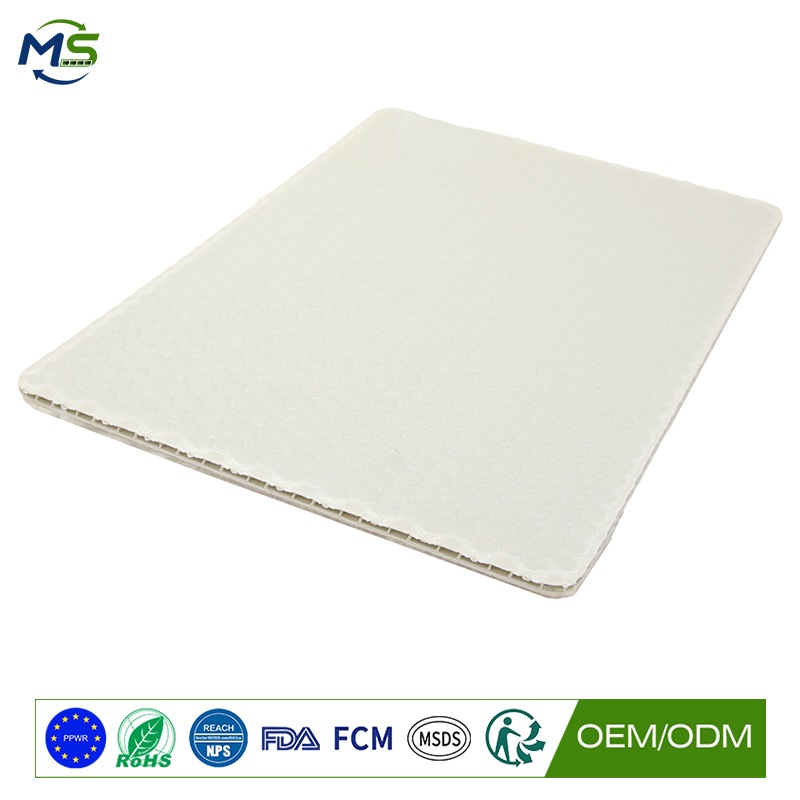
Balcony and terrace floors sit above occupied space, so the surface being protected is often a waterproofing membrane with a finish on top. Puncture or point loading there is not a cosmetic problem, it is a leak. This article looks at protecting balcony and terrace surfaces. The focus is membrane protection, drainage and working at the waterproofing interface.
Unlike a ground floor, a balcony or terrace has finishes laid over a waterproofing system. A point load that cracks a tile or punctures a membrane becomes a leak into the space below, which is far more expensive than the surface repair.
Protection therefore has to resist puncture and spread load, and it must not trap water against the membrane at the edges.
A rigid PP honeycomb protection board spreads loads and, because it does not absorb water, can be lifted and aired so the surface beneath stays dry.
Balcony and terrace work usually involves materials being set down and moved, so the middle to upper part of the 2 mm to 12 mm range is appropriate.
For light access and decorating a mid thickness is enough. Where planters, furniture or materials are placed on the surface, thicker boards prevent the point loads that crack finishes and stress membranes.
| Board group | Typical thickness | Where it earns its place | Watch-outs |
|---|---|---|---|
| Light-duty panel | 2-3 mm | Light access and decorating on finished balconies | Not for planters or stored materials |
| General balcony panel | 4-6 mm | Balcony surfaces under works traffic | Keep outlets clear; check for ponding |
| Heavy-duty panel | 8-10 mm | Planters, furniture and material set-down | Confirm finish and membrane tolerance |
| Maximum protection | 12 mm | Heavy items placed over waterproofed decks | Confirm the deck can take the load |
Keep protection clear of drainage outlets and channels. Covering a gully during works is a common cause of ponding, and ponding is what finds the weak point in a membrane.
Protect upstands and edge details as well as the flat surface, because the junction between horizontal and vertical is where membranes are most vulnerable.
Lift panels periodically and check for standing water underneath, especially after rain, and dry both surfaces before re-laying.
Plywood spreads load but absorbs water and can hold moisture at the membrane interface, which is the opposite of what a balcony needs.
Plastic sheeting traps water underneath and slides on a smooth finish, creating both a ponding risk and a slip hazard.
Timber offcuts are inconsistent and can puncture. A PP honeycomb board gives consistent load spreading, does not absorb water and lifts cleanly for inspection.
Protect one balcony or terrace bay and leave a comparable one on the current method. Inspect after rain and after any material delivery, checking for ponding and for finish damage.
Run a set-down test with the heaviest item that will be placed on the surface, then lift and inspect the finish and the upstands.
Record any water found under the panels, because on a balcony that is the signal that the method needs changing.
State the finish, whether there is a membrane beneath, the drainage layout and what will be placed on the surface. Ask for the recommended thickness for puncture and load resistance.
Confirm the board is non-absorbing, and ask for guidance on keeping outlets clear and on protecting upstands and edges.
For a quotation or sample panel, contact service@mingplastics.com or WhatsApp +86 189 3887 1524. Include the surface type, floor area, trades on site and expected duration so the recommended thickness, facing and fire performance can be confirmed before you order.
On balconies, protect the membrane: spread loads, keep outlets clear, check for ponding after rain and protect the upstands as well as the flat surface.


