Address
Building 1, No. 22, Shexi Yongping Road,
Dongguan, Guangdong, China
Work Hours
Monday to Friday: 7AM - 7PM
Weekend: 10AM - 5PM
Address
Building 1, No. 22, Shexi Yongping Road,
Dongguan, Guangdong, China
Work Hours
Monday to Friday: 7AM - 7PM
Weekend: 10AM - 5PM
Apartment common parts are finished early then used hardest. This guide covers thickness from 2 mm to 12 mm, phased occupation, lift lobbies and a trial plan.
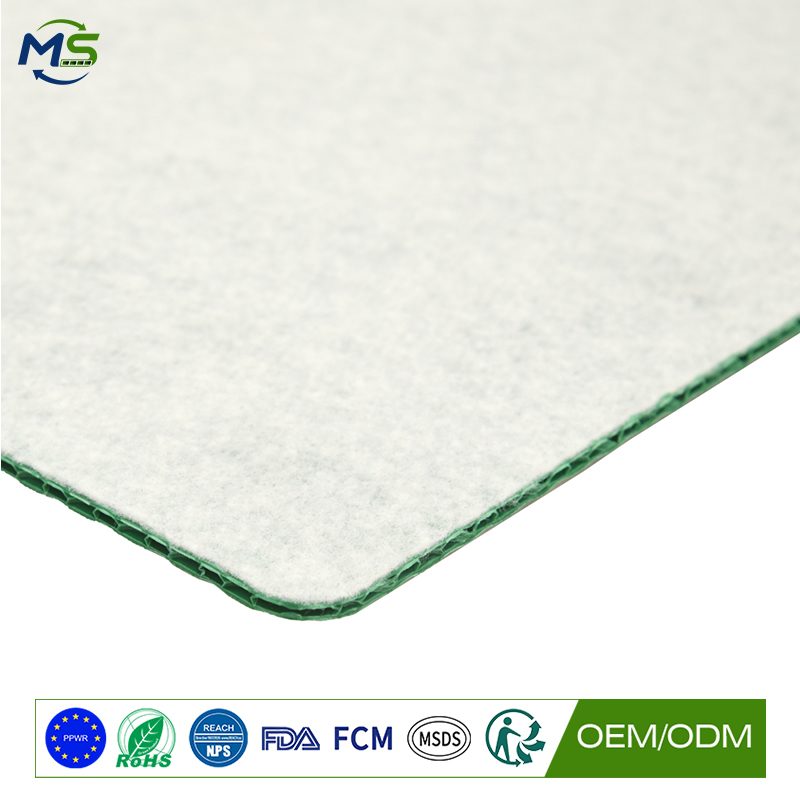
In apartment blocks the common parts are finished early and then used by every trade, every delivery and every resident who moves in. Damage to a lobby or corridor floor is a complaint from day one. This article looks at protecting common parts in residential developments. The focus is phased occupation, move-in traffic and protecting shared finishes.
Lobbies, corridors and lift lobbies are usually completed before the last units are finished, which means they carry the whole remaining programme plus residents moving in.
The result is a surface that is both finished and heavily used, with no realistic way to close it. Protection has to work in that condition.
A rigid PP honeycomb protection board lies flat and stays in place, so it can be used on a route that residents also use, and it can be lifted for viewings and handovers.
Common parts carry delivery trolleys, furniture and residents’ belongings, so the middle to upper part of the 2 mm to 12 mm range is typical.
For corridors with foot traffic only a mid thickness is enough. Where move-in trolleys and furniture cross lobbies daily, thicker boards prevent the chipped tiles and scuffed stone that generate complaints.
| Board group | Typical thickness | Where it earns its place | Watch-outs |
|---|---|---|---|
| Light-duty panel | 2-3 mm | Corridors with foot traffic only | Fails under furniture and delivery trolleys |
| General common-part panel | 4-6 mm | Corridors and lobbies under daily trolley traffic | Edges finished for resident safety |
| Heavy-duty panel | 8-10 mm | Move-in routes, lift lobbies, furniture deliveries | Heavier to move between floors |
| Maximum protection | 12 mm | Heavy deliveries during peak occupation | More than pre-occupation work needs |
Plan for two overlapping uses: construction traffic and residents. Keep the residents’ route clean and complete at all times, even while works continue elsewhere.
Protect lift cars and lobbies during the move-in peak, because that is when damage is most likely and most visible to new owners.
Tape seams and finish edges so nothing trips a resident, and inspect daily during peak move-in periods.
Films look tidy initially but lift at edges under trolleys and leave residue on stone and tile, which is hard to remove in an occupied lobby.
Paper is cheap but is replaced constantly along a route used for months, and it looks poor where residents are moving in.
Plywood protects but is heavy to move between floors and awkward to store on a tight site. A PP honeycomb board is light, reusable and presentable enough for an occupied common part.
Protect one floor’s corridor and lobby and leave a comparable floor on the current method. Inspect daily during move-in and photograph the same points.
Run a furniture trolley test over a sample panel for a set number of passes, then lift and check the floor.
Record complaints and any damage, because in residential work the complaint record is the measure that matters.
State the floor finishes, the common part layout, the expected move-in volume and whether residents are already occupying. Ask for the recommended thickness, facing and panel size.
Ask for guidance on edge finishing in occupied areas and on lift car protection, plus custom sizes for repeated corridor widths.
For a quotation or sample panel, contact service@mingplastics.com or WhatsApp +86 189 3887 1524. Include the surface type, floor area, trades on site and expected duration so the recommended thickness, facing and fire performance can be confirmed before you order.
Protect common parts for two overlapping uses: works and residents. Specify thickness for move-in traffic, finish edges, and inspect daily during peak occupation.


