Address
Building 1, No. 22, Shexi Yongping Road,
Dongguan, Guangdong, China
Work Hours
Monday to Friday: 7AM - 7PM
Weekend: 10AM - 5PM
Address
Building 1, No. 22, Shexi Yongping Road,
Dongguan, Guangdong, China
Work Hours
Monday to Friday: 7AM - 7PM
Weekend: 10AM - 5PM
Sports floors are engineered systems with load limits. This guide covers thickness from 2 mm to 12 mm, ventilation, event setup and a sports hall trial plan.
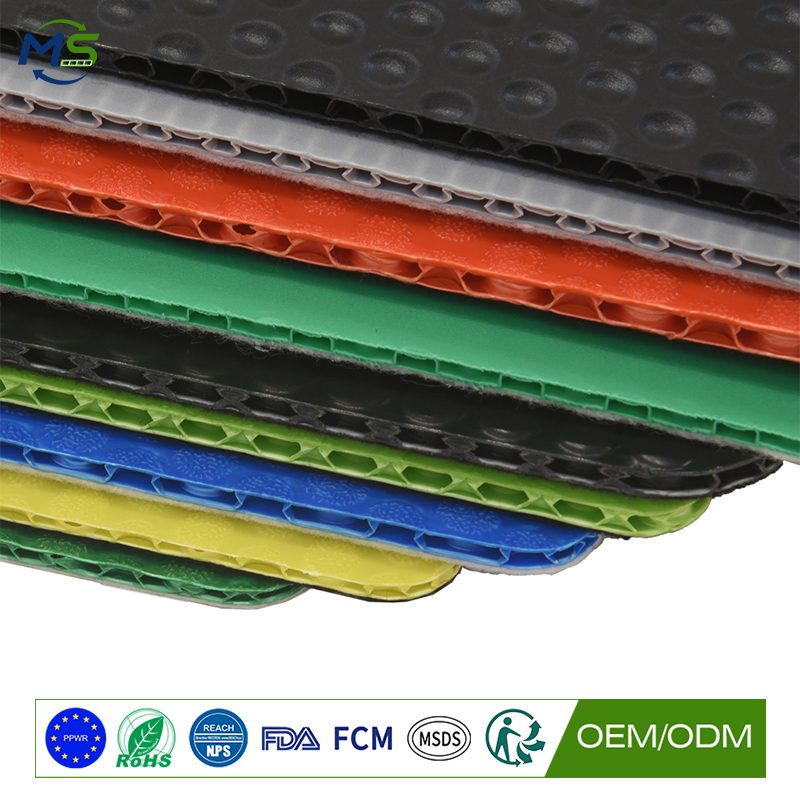
Sports floors are engineered systems: a sprung timber floor or a vinyl sports surface has specified shock absorption and deflection, and loading it incorrectly during works can damage the system rather than just the surface. This article looks at protecting sports halls during maintenance and events. The focus is load limits, ventilation beneath the floor and protecting a system rather than a covering.
Sprung floors are designed to deflect under load and return. Concentrated loads outside the design intent, or loads applied while protection traps moisture, can damage the structure underneath the visible surface.
That changes the specification logic: protection must spread load and must not seal the surface against ventilation for long periods.
A rigid PP honeycomb protection board spreads point loads across the floor and, because it does not absorb water, can be lifted and aired on a schedule that suits the floor system.
Sports hall work ranges from light maintenance to event setup with staging and seating, so the middle to upper part of the 2 mm to 12 mm range is typical.
For decorating and light access a mid thickness is enough. Where staging, seating or vehicles are brought into the hall, thicker boards spread the loads that would otherwise exceed the floor’s design.
| Board group | Typical thickness | Where it earns its place | Watch-outs |
|---|---|---|---|
| Light-duty panel | 2-3 mm | Decorating and light maintenance access | Not for staging or vehicle loads |
| General hall panel | 4-6 mm | Sports surfaces under maintenance traffic | Confirm load limits before setup |
| Heavy-duty panel | 8-10 mm | Staging, seating and equipment brought into the hall | Spreading does not raise the floor rating |
| Maximum protection | 12 mm | Vehicles and heavy plant inside the hall | Confirm the floor can take the load at all |
Confirm the floor’s load limits with the manufacturer before any heavy setup, and compare them with what the event or works actually impose. Protection spreads load; it does not raise the floor’s rating.
Lift and air the panels periodically, especially in a hall that is closed up between events, because trapped humidity affects timber floors.
Protect the routes used to bring equipment in as carefully as the hall floor itself, since door thresholds and corners are where concentrated loads land.
Plywood spreads load well but is heavy to move across a large hall and absorbs water, which is a problem on timber floors.
Event matting is designed for this and works, but it is expensive, heavy and usually hired per event rather than owned.
Plastic sheeting traps moisture and slides under load. A PP honeycomb board is light enough to cover a large hall, non-absorbing and reusable across the events calendar.
Agree load limits with the manufacturer first, then protect one zone and leave a comparable zone on the current method. Inspect at set intervals, including under the panels.
Run a loaded test with the heaviest item the hall will see, then lift and inspect both the surface and the panels.
Record deflection and any change in the surface after loading, because on a sprung floor that is the measurement that matters.
State the floor system, the manufacturer’s load limits, the works or event type and the duration. Ask for the recommended thickness for load spreading and confirm the board does not absorb water.
Ask for guidance on lift-and-air schedules for timber floors, and about custom sizes for large hall dimensions.
For a quotation or sample panel, contact service@mingplastics.com or WhatsApp +86 189 3887 1524. Include the surface type, floor area, trades on site and expected duration so the recommended thickness, facing and fire performance can be confirmed before you order.
On sports floors, confirm the manufacturer’s load limits first, spread loads with a thick board, and lift and air the panels to protect a timber system.


