Address
Building 1, No. 22, Shexi Yongping Road,
Dongguan, Guangdong, China
Work Hours
Monday to Friday: 7AM - 7PM
Weekend: 10AM - 5PM
Address
Building 1, No. 22, Shexi Yongping Road,
Dongguan, Guangdong, China
Work Hours
Monday to Friday: 7AM - 7PM
Weekend: 10AM - 5PM
Vacant properties are damaged by damp and neglect rather than traffic. This guide covers thickness from 2 mm to 12 mm, condensation control and inspection intervals.
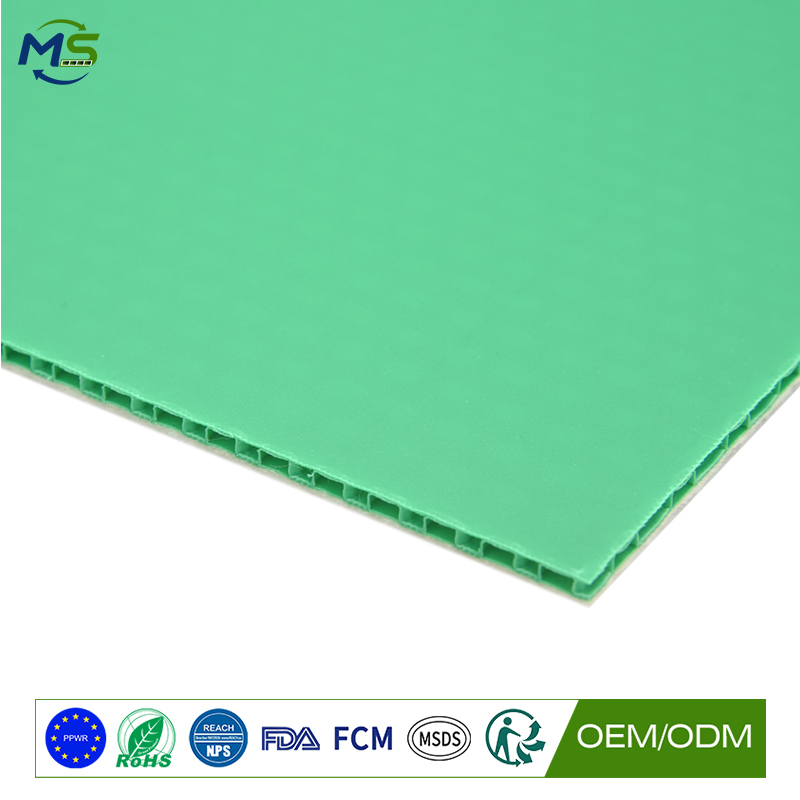
A vacant property has a different risk profile: there is no daily inspection, no cleaning regime and often no heating, so protection has to survive months of neglect and still lift cleanly. This article looks at long-term protection for empty buildings. The focus is moisture, inspection intervals and choosing a board that will not bond or degrade while it sits.
In an empty building the risks are damp, condensation, sporadic access by contractors and long periods with nobody looking. Damage is usually discovered at handover or on sale, long after the cause.
A board that absorbs water will hold it against the floor for months, which is the single most common cause of long-term floor damage in empty properties.
A PP honeycomb protection board does not absorb water and does not rely on adhesive, so it can sit for long periods without bonding to the surface or holding moisture.
For long-term protection, thickness is chosen for the sporadic loads the building will see: viewings, surveys, maintenance visits and occasional works. The middle of the 2 mm to 12 mm range is usually appropriate.
Where the building will be used for storage or where plant will be installed during the void, the thicker boards handle those loads better.
| Board group | Typical thickness | Where it earns its place | Watch-outs |
|---|---|---|---|
| Light-duty panel | 2-3 mm | Short voids with viewings only | Not for storage or plant installation |
| General void panel | 4-6 mm | Empty floors with periodic access and surveys | Inspect on a written schedule |
| Heavy-duty panel | 8-10 mm | Void used for storage or staged works | Confirm floor capacity for stored loads |
| Maximum protection | 12 mm | Plant installation during the void period | More than a straightforward void needs |
Confirm the heating and ventilation strategy for the void. A sealed, unheated building with covered floors can trap moisture regardless of what the covering is made of.
Set a written inspection interval and stick to it, even if the building is empty. Lift a panel each time and check the underside and the floor for condensation or staining.
Keep gutters, drainage and any water ingress under control, because protection cannot solve a leak.
Leftover carpet is often used in void properties and is the worst option: it holds moisture, harbours dust and can stain the floor beneath.
Plastic sheeting traps condensation against the floor and is a trip hazard for viewings. Plywood absorbs water at the edges and can stain where it sits for months.
A PP honeycomb board is non-absorbing, lifts cleanly after long periods and can be reused when the building is finally occupied or refurbished.
Protect one area and leave a comparable area on the current method, then inspect both on a fixed monthly schedule with photographs.
Check under the panels for condensation at each visit and record the readings if the building is sensitive.
Record the condition at lift, because a clean lift after months is the property that matters for long-term protection.
State the floor type, the expected void duration, the heating and ventilation arrangements and what access is expected. Ask for the recommended thickness and facing, and confirm that the board is non-absorbing and loose-laid.
Ask for guidance on inspection intervals and on condensation management, and about custom sizes for large open floor plates.
For a quotation or sample panel, contact service@mingplastics.com or WhatsApp +86 189 3887 1524. Include the surface type, floor area, trades on site and expected duration so the recommended thickness, facing and fire performance can be confirmed before you order.
For void periods use a non-absorbing loose-laid board, control moisture and ventilation, and inspect on a written schedule even when nobody is in the building.


