Address
Building 1, No. 22, Shexi Yongping Road,
Dongguan, Guangdong, China
Work Hours
Monday to Friday: 7AM - 7PM
Weekend: 10AM - 5PM
Address
Building 1, No. 22, Shexi Yongping Road,
Dongguan, Guangdong, China
Work Hours
Monday to Friday: 7AM - 7PM
Weekend: 10AM - 5PM
Equipment move damage comes from improvised routes and point loads. This guide covers thickness from 2 mm to 12 mm, turning points, thresholds and a move trial plan.
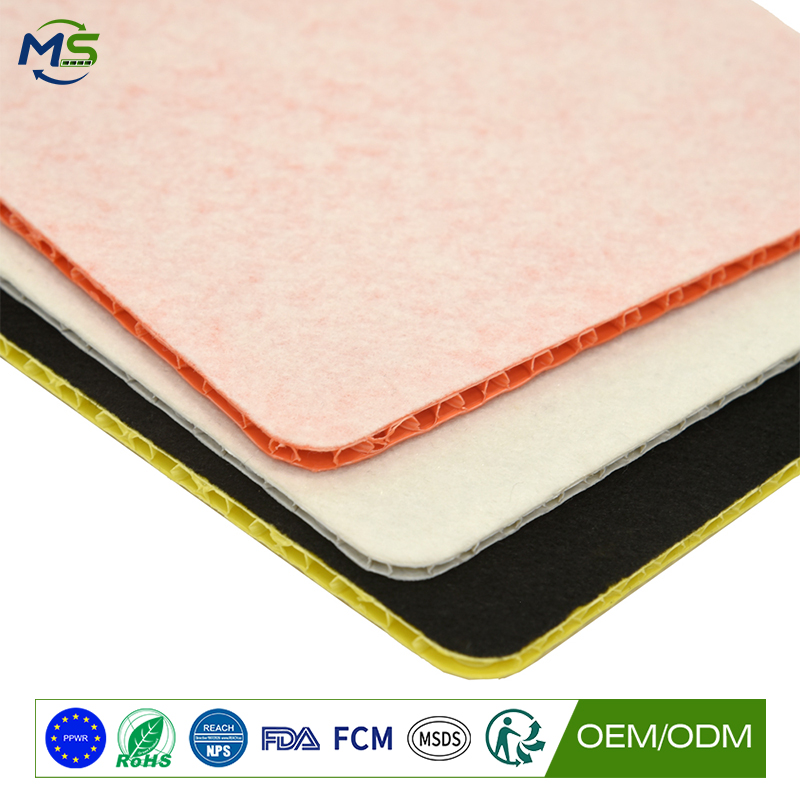
Moving a heavy item across a finished floor is one of the highest-risk operations on any project, because the load is concentrated, the route is improvised and the consequences are structural rather than cosmetic. This article looks at planning and protecting equipment move routes. The focus is route survey, load spreading and protecting floors under concentrated wheel and skid loads.
Equipment move damage is rarely caused by the load itself being too heavy for the floor; it is caused by the load being applied at a point, over an edge, or on a route nobody surveyed.
Plan the route before the move: measure door widths, check floor voids and services, identify turning points and confirm the floor’s capacity along the whole path, not just at the start.
A rigid PP honeycomb protection board laid along the surveyed route spreads wheel and skid loads and gives a continuous, known surface instead of an improvised one.
Equipment moves justify the upper part of the 2 mm to 12 mm range, because wheel and skid loads are far higher than footfall.
For light equipment on castors a mid-to-heavy board may be enough. For heavy items on skids or with concentrated feet, the thickest boards give the spreading that keeps the floor within its capacity.
| Board group | Typical thickness | Where it earns its place | Watch-outs |
|---|---|---|---|
| Light-duty panel | 2-3 mm | Light equipment on castors, short routes | Unsuitable for skids or concentrated feet |
| General move panel | 4-6 mm | Trolley and light machine moves on finished floors | Tape seams along the direction of travel |
| Heavy-duty panel | 8-10 mm | Heavy items on skids, turning points | Widen protection at turns |
| Maximum protection | 12 mm | Plant moves and the heaviest concentrated loads | Confirm floor capacity before moving |
Turning is where damage happens: a skid or a locked castor scrubs the floor at one point. Protect turning areas with a wider, thicker panel and plan the turn so it happens on protection.
Build ramps or transitions at thresholds and lift interfaces rather than letting a wheel drop onto an edge, because that impact is what cracks tiles and stone.
Tape seams along the route so panels do not separate under load, and place the boards in the direction of travel so wheels ride onto joints rather than catching them.
Steel plate is the strongest option but is heavy and slow, and on a long route the placement time becomes the constraint.
Plywood is the usual choice and works, but it absorbs water, crushes at the edges and is awkward to carry along a route with turns and doorways.
A PP honeycomb board gives good spreading at a fraction of the weight, is non-absorbing and can be placed and lifted quickly along a surveyed route.
Survey and mark the route, then lay protection and do a dry run with the load. Inspect the floor at turning points and thresholds after the dry run.
Run a loaded pass with the heaviest item, then lift the panels and inspect for indentation, cracking and any scrubbing marks.
Record placement time, panel condition after the move and any floor damage, then adjust thickness or route before the real move.
State the item weight, the wheel or skid type, the route length, the floor finish and any thresholds or lift interfaces. Ask for the recommended thickness for concentrated loads.
Ask for guidance on ramps and transitions and on taping seams for continuous routes, plus custom sizes for repeated route widths.
For a quotation or sample panel, contact service@mingplastics.com or WhatsApp +86 189 3887 1524. Include the surface type, floor area, trades on site and expected duration so the recommended thickness, facing and fire performance can be confirmed before you order.
Survey the route, protect turning points and thresholds, and specify the thick end of the range for concentrated loads. Do a dry run before the real move.


