Address
Building 1, No. 22, Shexi Yongping Road,
Dongguan, Guangdong, China
Work Hours
Monday to Friday: 7AM - 7PM
Weekend: 10AM - 5PM
Address
Building 1, No. 22, Shexi Yongping Road,
Dongguan, Guangdong, China
Work Hours
Monday to Friday: 7AM - 7PM
Weekend: 10AM - 5PM
Airport terminal routes run continuously beside passengers. This guide covers thickness from 2 mm to 12 mm, edge safety, screening constraints and a terminal trial plan.
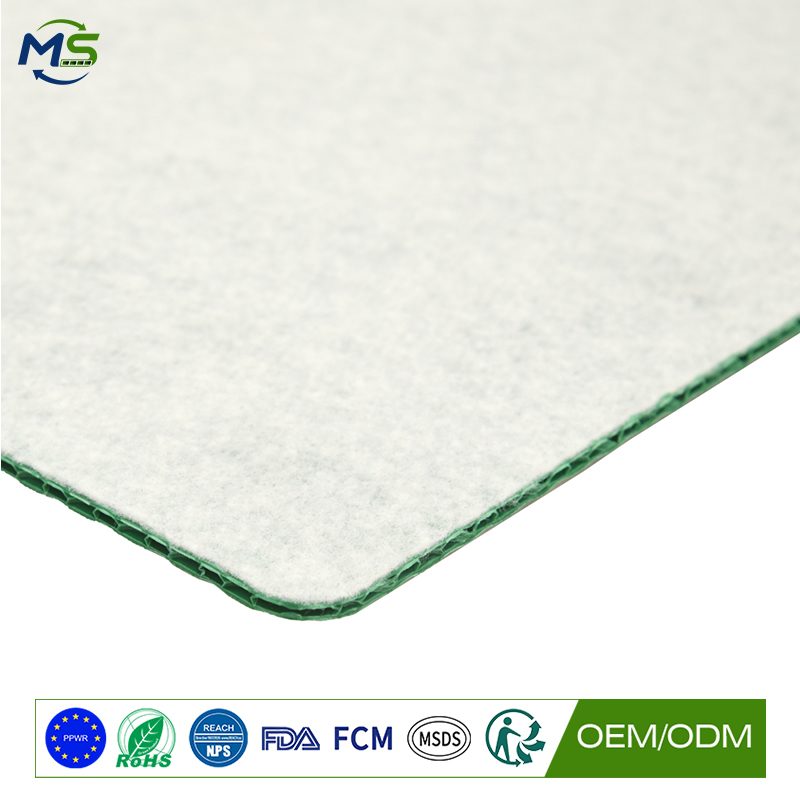
Terminal works run beside millions of passengers, with routes that are cleaned constantly, monitored for safety and never really closed. Protection has to be secure underfoot, presentable and removable fast. This article looks at protecting terminal floors during works. The focus is passenger-safe routes, security screening constraints and 24-hour operation.
Unlike an office or a school, a terminal runs continuously, so protection must be safe and complete at every hour. There is no window in which a route can be left unfinished.
A rigid PP honeycomb protection board lies flat and stays in place under continuous footfall and luggage trolleys, which is the key property for a passenger route.
Because the boards are non-absorbing and wipe-clean, they can be maintained to the cleaning standard of the surrounding terminal.
Terminal routes carry luggage trolleys, catering carts and maintenance vehicles, so the middle to upper part of the 2 mm to 12 mm range is usually right.
For pedestrian diversions a mid thickness is sufficient. Where baggage carts and maintenance vehicles use the route, thicker boards prevent the crushed joints and chipped tiles that are very visible in a large open floor.
| Board group | Typical thickness | Where it earns its place | Watch-outs |
|---|---|---|---|
| Light-duty panel | 2-3 mm | Short pedestrian diversions, landside | Fails under luggage trolleys and carts |
| General route panel | 4-6 mm | Passenger routes with luggage trolley traffic | Edges finished and inspected each shift |
| Heavy-duty panel | 8-10 mm | Catering carts, maintenance vehicles, baggage routes | Heavier to move through screening |
| Maximum protection | 12 mm | Long airside programmes with heavy vehicle traffic | More than pedestrian diversion needs |
Finish every edge and seam and inspect on a shift basis, because a lifted panel in a crowded route is a serious trip risk. Sign and light any narrowing.
Confirm what can pass through security screening and what materials are permitted airside before specifying, and plan deliveries accordingly.
Keep routes as direct as possible: passengers take the shortest path, and any protected route that is longer than the obvious one will be bypassed, which puts traffic onto unprotected floors.
Films and carpet runners curl and slide under luggage trolleys, which is unsafe in a crowded terminal and needs constant attention.
Plywood is heavy to move through security and into airside areas, and it absorbs water from cleaning operations.
A PP honeycomb board is light, cleanable and re-usable across a long programme, which suits terminal works where the same route may be in place for months.
Protect one passenger route and keep a comparable route on the current method. Inspect at each shift and photograph the same points, paying attention to edges.
Run a luggage-trolley test over a sample panel for a set number of passes, then lift and check the floor.
Record edge condition and how often panels needed resecuring, because in a terminal those two factors determine safety compliance.
State the floor type, the route length and passenger volumes, what vehicles use the route and whether it is airside. Ask for the recommended thickness, facing, panel size and fire performance.
Ask for guidance on edge finishing and cleaning, and about custom sizes and colours for route marking in large open spaces.
For a quotation or sample panel, contact service@mingplastics.com or WhatsApp +86 189 3887 1524. Include the surface type, floor area, trades on site and expected duration so the recommended thickness, facing and fire performance can be confirmed before you order.
Terminal protection must stay flat and finished under continuous traffic. Specify thickness for the heaviest vehicle, inspect edges every shift, and confirm airside material rules before ordering.


