Address
Building 1, No. 22, Shexi Yongping Road,
Dongguan, Guangdong, China
Work Hours
Monday to Friday: 7AM - 7PM
Weekend: 10AM - 5PM
Address
Building 1, No. 22, Shexi Yongping Road,
Dongguan, Guangdong, China
Work Hours
Monday to Friday: 7AM - 7PM
Weekend: 10AM - 5PM
Raised floor tiles lose their load rating when cracked. This guide covers thickness from 2 mm to 12 mm, airflow, clean handling and a data hall trial plan.
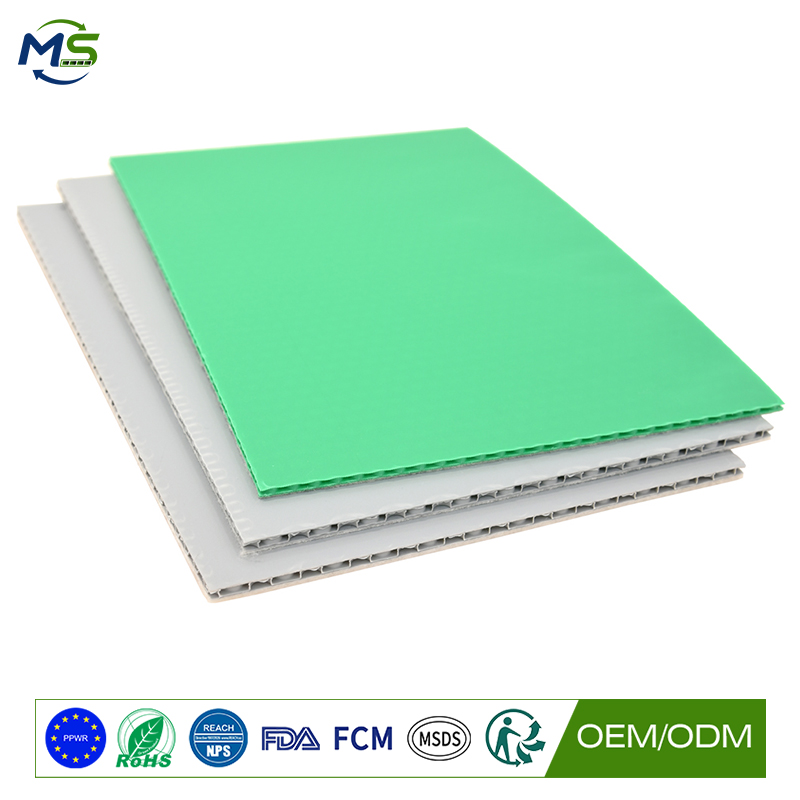
Raised access floors are structural, expensive and intolerant of misuse: a cracked tile or a damaged pedestal affects the floor’s load rating and the room’s airflow. Work inside a data centre happens around live equipment, so protection has to be clean, non-shedding and quick to place. This article looks at protecting raised floors during installation and maintenance. The focus is load spreading, airflow and clean handling.
Raised floor tiles are rated for distributed and point loads, and a cracked or delaminated tile no longer meets that rating. Replacement also means lifting surrounding tiles and disrupting cable management underneath.
The practical risk is concentrated load: equipment on castors, a pallet truck wheel or a set-down point. A rigid PP honeycomb protection board spreads those loads across several tiles instead of letting one tile take them.
Because the panels do not shed fibres or absorb water, they suit a room where contamination and humidity are controlled.
Raised floor work usually needs the middle to upper part of the 2 mm to 12 mm range, because wheeled equipment loads are high relative to the tile rating.
For pedestrian access routes a mid thickness is sufficient. Where racks, UPS units or battery strings are moved, thicker boards spread the load enough to keep individual tiles within their rating.
| Board group | Typical thickness | Where it earns its place | Watch-outs |
|---|---|---|---|
| Light-duty panel | 2-3 mm | Pedestrian routes across raised floor tiles | Insufficient for castor and wheel loads |
| General access panel | 4-6 mm | Maintenance routes with light equipment | Keep perforated tiles clear |
| Heavy-duty panel | 8-10 mm | Rack and UPS moves across the floor | Confirm tile point-load rating first |
| Maximum protection | 12 mm | Battery strings and heavy plant installation | More than routine maintenance needs |
Do not cover perforated tiles or grilles that are part of the room’s airflow design. Plan the protected route around them rather than over them.
Check whether the protection affects anti-static provisions in the room, and confirm the approach with the facilities team before laying panels across a live floor.
Wipe panels before they enter the room and inspect them for debris when lifted, because contamination under a raised floor is difficult to remove later.
Films and cardboard are generally not acceptable in a data hall: they shed, absorb moisture and do nothing for point loads on a tile.
Plywood spreads load well but is heavy to carry into a data hall, absorbs moisture and can splinter, which is a contamination risk.
A PP honeycomb board is light, clean, non-shedding and non-absorbing, and it spreads load across tiles. Those properties are why it suits work around live equipment.
Protect one cold aisle route and keep a comparable route on the current method. Inspect tiles at each lift and photograph tile edges and corners from fixed positions.
Run a point-load test with the rack or equipment castor that will be used, then lift and inspect the tiles beneath.
Record whether perforated tiles were kept clear and whether panels stayed clean, because both affect the room’s operation.
State the tile rating, the floor type, the equipment loads and the airflow constraints. Ask for the recommended thickness, facing and panel size, plus fire performance for the room.
Ask for guidance on keeping perforated tiles clear and on clean handling, and about custom sizes to suit the tile grid.
For a quotation or sample panel, contact service@mingplastics.com or WhatsApp +86 189 3887 1524. Include the surface type, floor area, trades on site and expected duration so the recommended thickness, facing and fire performance can be confirmed before you order.
On raised floors, spread point loads across tiles, keep perforated tiles clear and handle panels cleanly. Confirm the tile rating and the anti-static approach before specifying.


