Address
Building 1, No. 22, Shexi Yongping Road,
Dongguan, Guangdong, China
Work Hours
Monday to Friday: 7AM - 7PM
Weekend: 10AM - 5PM
Address
Building 1, No. 22, Shexi Yongping Road,
Dongguan, Guangdong, China
Work Hours
Monday to Friday: 7AM - 7PM
Weekend: 10AM - 5PM
Marked joinery facias are usually remade, not repaired. This guide covers thickness from 2 mm to 12 mm, restraint without tape, dust and splash control and a trial plan.
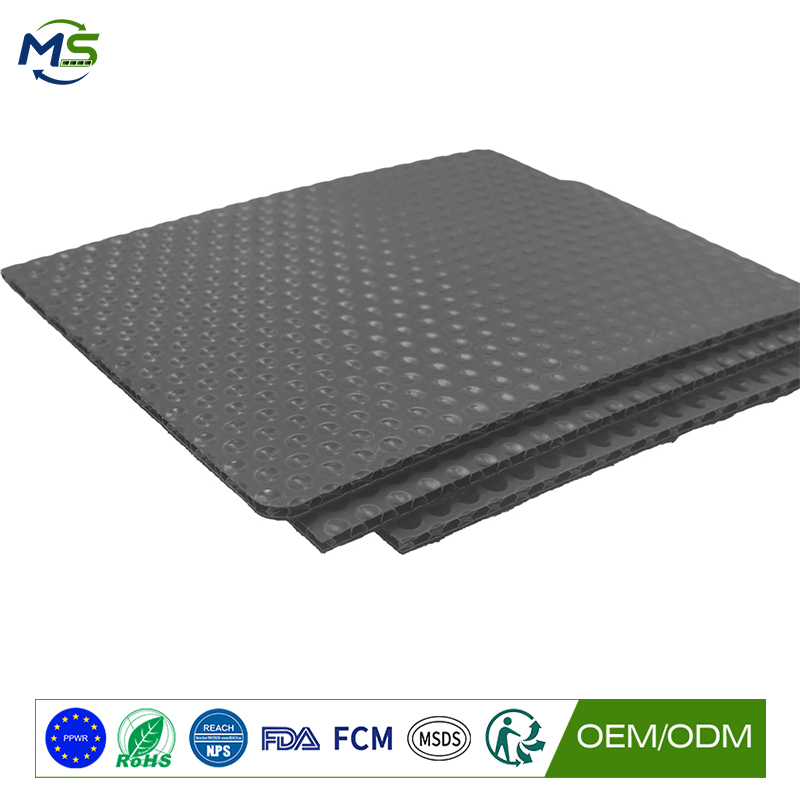
Fitted joinery is usually installed before decorating and electrical work finishes, which leaves finished carcasses and facias exposed to dust, paint and impact. Damage here is disproportionately expensive because a marked facia is often a remake rather than a repair. This article looks at protecting joinery and cabinets during fit-out. The focus is face protection, dust and paint, and protecting assembled units.
Veneered, lacquered and laminate facias cannot be spot-repaired to an invisible standard, so a scratch, a paint splash or a dent usually means a replacement panel and a return visit from the joiner.
The risks are impact during following trades, paint and adhesive splashes, and dust that settles into unfinished edges. Protection has to address all three, which rules out a layer that traps dust against the surface.
A rigid PP honeycomb protection board shields against impact and can be wiped clean, and with a felt or fleece facing it will not abrade a lacquered or veneered face.
Joinery protection is mostly about impact and rigidity, so the thinner-to-middle part of the 2 mm to 12 mm range is usually appropriate. The board should be stiff enough to stand against a run of units without bowing into the facias.
Where units will be used as a work surface or loaded during the works, the thicker boards prevent the crushed edges that show on carcase tops and shelves.
| Board group | Typical thickness | Where it earns its place | Watch-outs |
|---|---|---|---|
| Light-duty panel | 2-3 mm | Decorated joinery with no following heavy trades | Bows into long runs if unsupported |
| General joinery panel | 4-6 mm | Fitted units under normal fit-out activity | Restrain independently; avoid tape on finishes |
| Heavy-duty panel | 8-10 mm | Units used as temporary work surfaces | Heavier panels; check shelf loading |
| Maximum protection | 12 mm | Long programmes with repeated loading on units | More than standard joinery needs |
Protect the full run as a plane rather than unit by unit, so that protection does not catch on individual doors or handles. Keep handles and hardware accessible or covered separately.
Where shelves are open, protect the shelf edges as well as the faces, because those edges take knocks from materials carried past.
Avoid taping directly onto finished surfaces. Restrain panels independently so that removing the protection does not damage the finish it was protecting.
Protective films are designed for flat panels and work well before installation, but on assembled runs they tear at corners and can leave residue if left too long.
Bubble wrap and blankets cushion well but collect dust, are hard to keep in place and do not protect against impact or paint.
Cardboard crushes and absorbs paint and water. A PP honeycomb board is rigid, wipe-clean and re-usable, which makes it practical to protect full runs rather than just the most visible doors.
Protect the joinery in one area and leave a comparable area on the current method. Inspect faces, edges and handles at each inspection and photograph from fixed positions.
Run a splash test: apply paint or water to the protection over a facia, leave it, then remove and check the surface underneath.
Record whether the protection stayed in place and whether any fixing method marked the joinery, because removal damage defeats the purpose.
State the finish type, whether units are assembled, the run lengths and which trades follow. Ask for the recommended thickness, facing, panel size and fire performance.
Ask for guidance on restraining panels without taping to finished surfaces, and about custom sizes for repeated unit runs.
For a quotation or sample panel, contact service@mingplastics.com or WhatsApp +86 189 3887 1524. Include the surface type, floor area, trades on site and expected duration so the recommended thickness, facing and fire performance can be confirmed before you order.
Protect joinery as a continuous plane with independent restraint, keep finishes free of tape residue, and cover shelf edges as well as faces.


