Address
Building 1, No. 22, Shexi Yongping Road,
Dongguan, Guangdong, China
Work Hours
Monday to Friday: 7AM - 7PM
Weekend: 10AM - 5PM
Address
Building 1, No. 22, Shexi Yongping Road,
Dongguan, Guangdong, China
Work Hours
Monday to Friday: 7AM - 7PM
Weekend: 10AM - 5PM
Wall damage concentrates at corridor pinch points and corners. This guide covers thickness from 2 mm to 12 mm, fixing methods, coverage height and a wall trial plan.
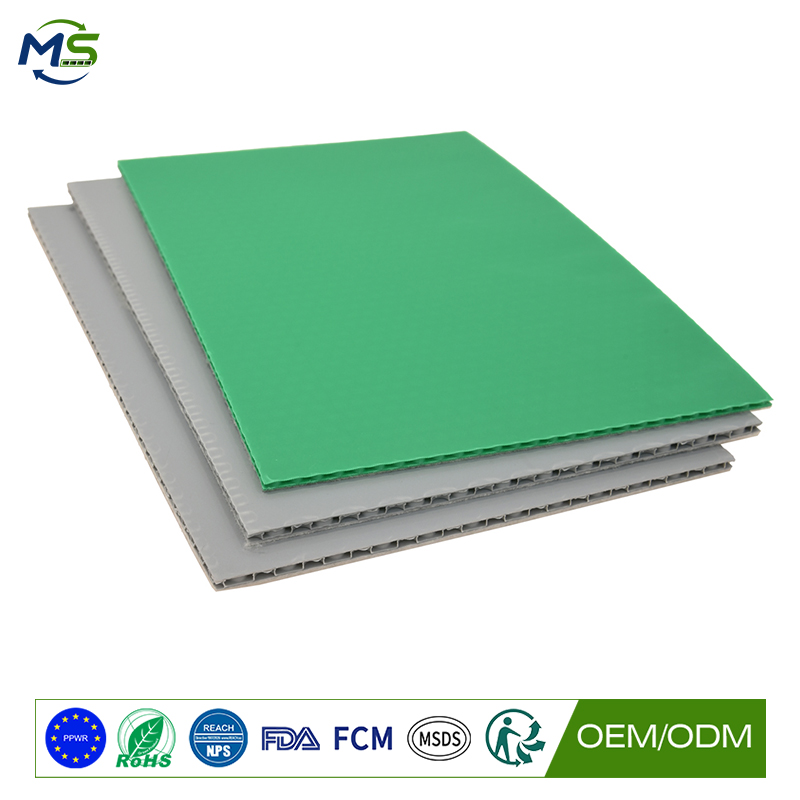
Walls take damage from the things that move through a building: trolleys, materials, ladders and doors swung too hard. On plasterboard the result is a dent that needs patching, sanding and repainting, and on finished joinery it is a replacement. This article looks at wall protection during construction and fit-out. The focus is impact resistance, corridor pinch points and protection that stays in place.
Corridor corners, door swings, lift lobbies and any narrowing in a route are where wall damage concentrates. Protecting an entire wall is often unnecessary; protecting the pinch points covers most of the risk at a fraction of the cost.
A rigid PP honeycomb protection board absorbs and spreads an impact instead of transmitting it to the plasterboard face. Because the board is a panel, it also stays where it is fixed rather than curling at the edges the way a film does.
The felt or fleece facing protects the decorated surface behind the board, which matters on painted or veneered finishes.
Walls see impact rather than sustained load, so the selection logic is different from floors. Within the 2 mm to 12 mm range, the choice follows how hard and how often things hit the surface and how long the protection must stay.
For painted plasterboard in a low-traffic area a thinner board is usually enough. For corridor corners used by trolleys, the thicker boards prevent the crushed corners that otherwise need cutting out and reboarding.
| Board group | Typical thickness | Where it earns its place | Watch-outs |
|---|---|---|---|
| Light-duty panel | 2-3 mm | Painted plasterboard, light pedestrian traffic | Will not protect against trolley impact |
| General wall panel | 4-6 mm | Corridor walls and lift lobbies under daily traffic | Fixings must suit the wall construction |
| Heavy-duty panel | 8-10 mm | Corridor corners used by trolleys and materials | Heavier to fix vertically; plan fixing |
| Maximum protection | 12 mm | Plant moves, repeated heavy impacts in tight routes | More than decorated areas need |
Decide the protection height from the risk, not from convenience: trolley and trolley-handle height for corridors, full height where materials are carried upright. Partial coverage is fine as long as it matches where impacts actually occur.
Fix the panels so they cannot lift or be knocked off, and finish the edges so they do not catch clothing or materials. A panel that comes loose is worse than no protection because it creates an obstruction.
Where the wall is a fire-rated or smoke-sealed construction, confirm what fixing methods are permitted before specifying.
Self-adhesive films protect against scuffs but not against impact, and they can lift paint when removed. Foam strips cushion light knocks but tear and lose adhesion over a long programme.
Plywood resists impact well but is heavy to fix vertically, awkward to cut around services, and often needs mechanical fixings that are not permitted in finished areas.
A PP honeycomb board gives impact resistance at low weight, can be cut on site, and is re-usable between phases. That makes it practical to protect long corridors rather than just the worst corner.
Pick a corridor with known pinch points and protect the corners and narrow sections. Leave a comparable corridor unprotected and record damage in both at each inspection.
Run a controlled impact test: strike a sample panel with the trolley or material that typically causes damage, then check the wall behind. That test sets the thickness.
Record whether panels stayed fixed and whether edges caught anything, because on walls fixity and edge finish determine whether the protection survives the programme.
State the wall construction and finish, the corridor widths, what moves through, and the expected duration. Ask for the recommended thickness, facing, panel size and fire performance required for the area.
Ask for guidance on permitted fixing methods and edge finishing, and whether custom sizes and colours are available to match the building’s wayfinding or finish.
For a quotation or sample panel, contact service@mingplastics.com or WhatsApp +86 189 3887 1524. Include the surface type, floor area, trades on site and expected duration so the recommended thickness, facing and fire performance can be confirmed before you order.
Protect walls where impacts actually happen: pinch points, corners and lift lobbies. Match thickness to the hardest realistic impact, fix panels securely and finish the edges.


