Address
Building 1, No. 22, Shexi Yongping Road,
Dongguan, Guangdong, China
Work Hours
Monday to Friday: 7AM - 7PM
Weekend: 10AM - 5PM
Address
Building 1, No. 22, Shexi Yongping Road,
Dongguan, Guangdong, China
Work Hours
Monday to Friday: 7AM - 7PM
Weekend: 10AM - 5PM
Polished concrete cannot be spot-repaired, so abrasion and staining are costly. This guide covers thickness from 2 mm to 12 mm, spill control, board comparison and a slab trial plan.
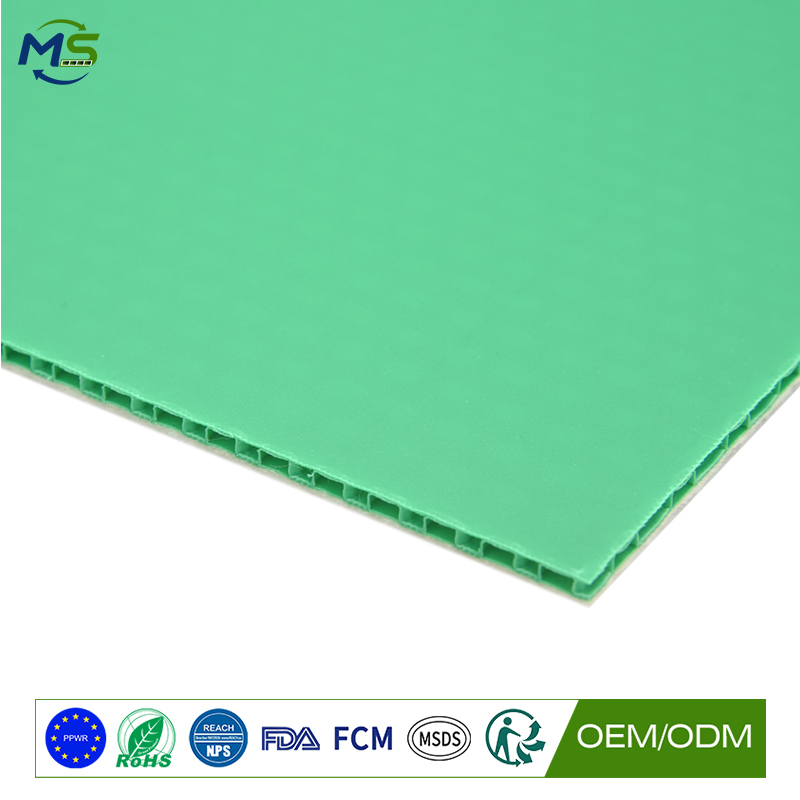
Polished concrete is chosen because it is durable and low maintenance, but the finish itself is a surface treatment that construction traffic can ruin. Once the sheen is scratched or a stain penetrates, repair means re-polishing a whole area rather than patching a spot. This article looks at polished concrete protection on site and sets out how to specify boards for it. The focus is abrasion, staining and protecting a finish that cannot be spot-repaired.
A polished slab gets its appearance from a mechanically refined surface, so damage is not a local defect that can be filled. A scratch or stain usually means re-grinding and re-polishing an entire zone to keep the sheen consistent, which is disruptive and expensive.
The two mechanisms that cause that damage are abrasion from grit and staining from liquids. Both are managed by the same two measures: keep grit above the protection and keep liquids off the slab.
A rigid PP honeycomb protection board helps on both counts. It does not slide, so grit stays on top where it can be swept, and it does not absorb water, so spills stay on the board rather than wicking into the concrete.
Polished concrete is typically specified in open commercial and industrial areas where loads are real: pallet trucks, scissor lifts and material stacks. The range runs 2 mm to 12 mm and the specification should follow the heaviest realistic load.
Where the slab is finished and only light trades remain, a mid thickness is adequate. Where materials will be stacked or machinery moved, thicker boards prevent the point dents and crushed edges that otherwise show as permanent marks.
| Board group | Typical thickness | Where it earns its place | Watch-outs |
|---|---|---|---|
| Light-duty panel | 2-3 mm | Finished slab, decorating only, light foot traffic | Will not resist wheeled point loads |
| General floor panel | 4-6 mm | Polished concrete under normal site traffic | Seams must be taped against grit |
| Heavy-duty panel | 8-10 mm | Material stacks, pallet trucks, machine moves | Heavier panels across large areas |
| Maximum protection | 12 mm | Plant installation, long-duration heavy routes | More than simple fit-out requires |
Concrete is porous even when polished, so oils, paints and coloured liquids can penetrate before they are noticed. Protection that absorbs a spill and holds it against the slab makes the problem worse, not better.
Sweep before laying, tape the seams and contain the perimeter. If wet trades are still running, lift and dry the panels regularly and deal with run-off rather than letting it pond at the edges.
A felt or fleece facing is worth specifying to protect the sheen, because the facing is what touches the polished surface when panels are walked on.
Paper and thin foam are the default on slabs and both fail the same way: they move, grit gets underneath, and the sheen is dulled by ordinary foot traffic. They also tear at the edges where loads concentrate.
Plywood protects but absorbs water, is heavy across large floor plates, and can itself abrade a polished surface when grit is trapped under it.
A PP honeycomb board is light enough for one person, rigid enough to stay put, and non-absorbing. On a large slab those handling advantages decide whether the protection is actually used properly for the whole programme.
Protect one zone and leave a comparable zone on the current method, then inspect both under the same lighting at set intervals. Look for dulling, scratches and any staining at the perimeter.
Run a spill test on the board: pour water and a coloured liquid, wait, then lift and check the slab. This confirms whether the protection genuinely keeps liquids off the surface.
Record re-lay frequency and whether seams stayed sealed, because on a polished slab a single grit ingress can dull an area that then has to be re-polished.
State the slab finish, the area, the trades and loads expected, and whether liquids or wet trades will be present. Ask for the recommended thickness, facing, panel size and fire performance required on site.
Ask for written guidance on seams, edges and spill handling. Where the floor grid is regular, ask about custom sizes to reduce cutting waste across a large area.
For a quotation or sample panel, contact service@mingplastics.com or WhatsApp +86 189 3887 1524. Include the surface type, floor area, trades on site and expected duration so the recommended thickness, facing and fire performance can be confirmed before you order.
Polished concrete is protected by keeping grit above the board and liquids off the slab. Specify thickness for the heaviest load, use a soft facing, tape seams and inspect periodically.


