Address
Building 1, No. 22, Shexi Yongping Road,
Dongguan, Guangdong, China
Work Hours
Monday to Friday: 7AM - 7PM
Weekend: 10AM - 5PM
Address
Building 1, No. 22, Shexi Yongping Road,
Dongguan, Guangdong, China
Work Hours
Monday to Friday: 7AM - 7PM
Weekend: 10AM - 5PM
Cold store protection has to cope with low temperature, condensation and a floor that may be insulated rather than structural. ... Ask Mingskye for a sample.
Cold store protection has to cope with low temperature, condensation and a floor that may be insulated rather than structural. Polypropylene stays workable where cardboard goes soft and some plastics become brittle, but the facing must still be checked for grip when frost forms. Allow panels to acclimatise before laying, avoid sealing moisture into the surface, and lift periodically so the floor can dry.
This page covers cold store floor protection in six sections: Cold store and refrigerated environments; Food processing and hygiene areas; Working in cold store and temperature extremes; Impact cracking at low temperature; Trapped moisture under the panel; Thermal expansion and movement over a long installation. Each section answers one practical question and can be read on its own.
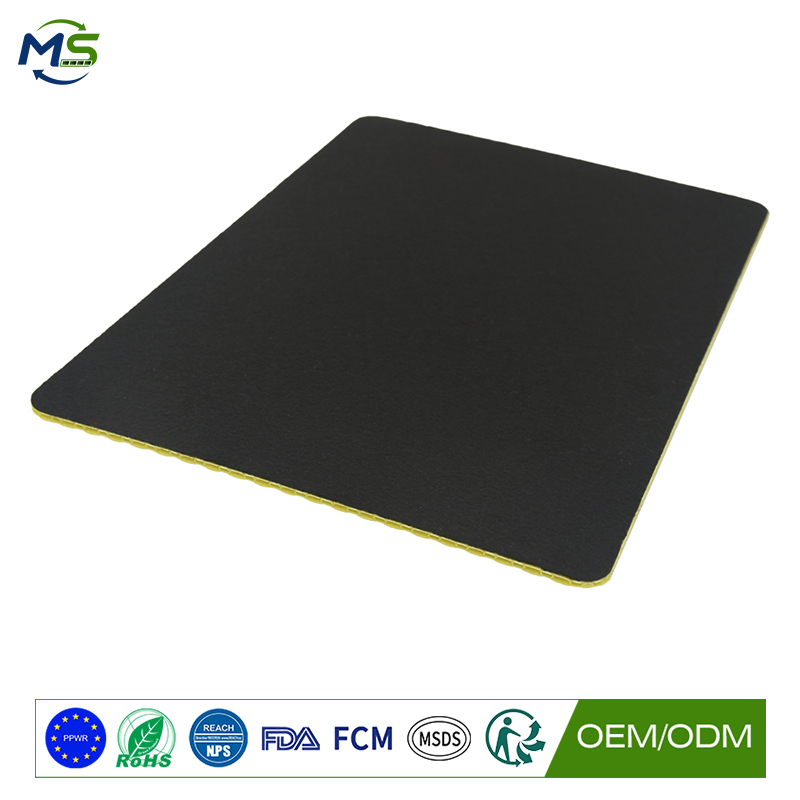
Cold conditions change the behaviour of the panel itself, so a cold store specification needs a different grade from a general one.
As described in the temperature section, polypropylene becomes more brittle as it cools, so panels in a cold store need a core height that carries a margin over the working load, and the handling has to be gentler than on a warm site.
Condensation is the second factor. A panel brought from a warm area into a cold store will condense on the surface, and the moisture then freezes or wets the floor. The panels should be acclimatised before they are laid, and the floor should be protected against the melt water.
The third factor is cleaning. Cold store environments are washed down, and the facing has to tolerate that regime. A felt facing in a cold store will retain moisture and freeze in the core, so a washable facing and a drainage path are the practical requirements.
Food processing areas have a regulatory character that changes the protection specification more than the load ever does.
The environment is washed down with detergent and sanitiser, sometimes at high pressure, and the surfaces around the floor must be cleanable. A protection panel that cannot be cleaned to a validated standard is not usable, which usually excludes felt-faced panels and anything with a texture that traps residue.
Food grade requirements also extend to the material itself. A declaration that the product is suitable for food contact areas, or at least that it is made from a material permitted in such environments, is worth obtaining, and it is a question that should be asked rather than assumed.
The load requirement in a food plant is moderate compared with a data centre, but the floors are often tiled or coated with a slip-resistant finish that cannot tolerate a scuff. A panel with a grippy facing and a drainage path suits this environment better than a smooth film.
For terminology and test-method context see UK Health and Safety Executive. The guidance on this page is practical site guidance, not a test report or a certificate.
Cold conditions make polypropylene stiffer and more brittle, which changes how a panel behaves even though the material is unchanged.
As the temperature falls, polypropylene loses impact toughness and becomes more prone to cracking rather than deforming. A panel that is ductile at 20 °C can crack if it is dropped or flexed sharply at minus 20 °C, and that is a genuine risk in cold store and unheated winter construction.
The practical implication is to avoid sharp flexing in the cold, to handle panels more gently, and to allow them to warm before they are flexed into shape. Any panel cut and fitted outdoors in winter should be allowed to acclimatise before it is flexed.
The opposite extreme has a different effect. In a hot environment the material softens slightly and the compressive capacity falls, so a panel left in a hot vehicle or a sunlit container before installation is temporarily weaker than its rated figure.
| Application question | Short answer | Constraint to confirm | In this guide |
|---|---|---|---|
| What should be checked about cold store and refrigerated environments? | Cold conditions change the behaviour of the panel itself, so a cold store specification needs a … | As described in the temperature section, polypropylene becomes more brittle as it cools, so panels … | Section 1 |
| What should be checked about food processing and hygiene areas? | Food processing areas have a regulatory character that changes the protection specification more than the load … | The environment is washed down with detergent and sanitiser, sometimes at high pressure, and the … | Section 2 |
| What should be checked about working in cold store and temperature … | Cold conditions make polypropylene stiffer and more brittle, which changes how a panel behaves even though … | As the temperature falls, polypropylene loses impact toughness and becomes more prone to cracking rather … | Section 3 |
| What should be checked about impact cracking at low temperature? | Cold polypropylene loses impact toughness, and a panel that bends without cracking at room temperature may … | Polypropylene has a brittleness temperature in this region, and as the material approaches it the … | Section 4 |
Cold polypropylene loses impact toughness, and a panel that bends without cracking at room temperature may crack when it is dropped or flexed in the cold.
Polypropylene has a brittleness temperature in this region, and as the material approaches it the energy required to fracture falls sharply. A panel dropped from waist height onto a concrete floor at minus 15 °C can crack in a way the same panel would simply dent at 15 °C.
The effect is most likely in unheated winter construction and in cold stores, and in both cases the practical rule is to handle panels more gently and to avoid sharp flexing. Flexing to fit an awkward corner is a warm-weather operation.
It also affects the appearance of the damage. A brittle crack in a cold panel looks like a clean fracture line and looks like a manufacturing fault, when it is entirely a temperature effect. If panels are being returned cracked in winter, the temperature should be considered before the supplier is questioned.
Water trapped beneath a protection panel can damage the floor more seriously than the traffic the panel was protecting against.
The mechanism is that the floor cannot dry downward or sideways, and the vapour pressure builds under the panel. On a screed this can prevent the screed from achieving its design strength and can cause the surface to delaminate later.
Signs of the problem are visible on the underside of a lifted panel as a white or grey deposit, and on the floor as a darkened area with a distinct edge matching the panel footprint.
Prevention is procedural rather than material-based. Never lay an impermeable panel on a damp floor, keep a drainage path, leave the area open until the screed is dry, and inspect the underside of panels at every lift.
Polypropylene expands by roughly 0.02 cm per metre for every 10 °C of temperature change, which is small but enough to buckle a long, tightly fitted run of panels.
The coefficient of thermal expansion for polypropylene is around 150 to 200 microstrain per kelvin. For a 10 m run that is a change of about 30 mm across a 20 °C seasonal swing, and a continuous, tightly butted line of panels has nowhere to absorb it.
The practical consequence is that expansion joints and perimeter gaps matter on long runs, particularly on floors that are heated in winter and unheated in summer, and on external ramps and balconies where the panel sees the full daily range.
Leaving a small gap at the ends of a run and avoiding a continuous line of rigidly taped seams costs almost nothing and removes a real failure mode. The gap should be wide enough for the expected movement but narrow enough that it does not become a trip hazard.
Cold conditions change the behaviour of the panel itself, so a cold store specification needs a different grade from a general one. As described in the temperature section, polypropylene becomes more brittle as it cools, so panels in a cold store need a core …
Food processing areas have a regulatory character that changes the protection specification more than the load ever does. The environment is washed down with detergent and sanitiser, sometimes at high pressure, and the surfaces around the floor must be cleanable …
Cold polypropylene loses impact toughness, and a panel that bends without cracking at room temperature may crack when it is dropped or flexed in the cold. Polypropylene has a brittleness temperature in this region, and as the material approaches it the energy required to fracture falls sharply. A …
Polypropylene expands by roughly 0.02 cm per metre for every 10 °C of temperature change, which is small but enough to buckle a long, tightly fitted run of panels. The coefficient of thermal expansion for polypropylene is around 150 to 200 microstrain per kelvin. For a 10 m run that is …
References checked by publisher and title on 2026-11-06. Standards and regulations are cited by name only; no performance values are attributed to them. General material-property figures in the text are indicative reference values for polypropylene and should be verified against your supplier’s current data sheet. Confirm applicability and current versions for your own project before relying on any of them.
For a quotation, a sample panel or help matching a thickness and facing to your site conditions, contact service@mingplastics.com or WhatsApp +86 189 3887 1524. Include the surface type, floor area, the trades working overhead and the expected duration so the recommended specification can be confirmed before you order.
For cold store floor protection, Check the site-specific constraint with the building owner before choosing a format. Polypropylene expands by roughly 0.02 cm per metre for every 10 °C of temperature change, which is small but enough to buckle a long, tightly fitted run of …


