Address
Building 1, No. 22, Shexi Yongping Road,
Dongguan, Guangdong, China
Work Hours
Monday to Friday: 7AM - 7PM
Weekend: 10AM - 5PM
Address
Building 1, No. 22, Shexi Yongping Road,
Dongguan, Guangdong, China
Work Hours
Monday to Friday: 7AM - 7PM
Weekend: 10AM - 5PM
A reuse programme works when someone owns the panels. Assign a store location, label each stack with its phase and inspection ... Ask Mingskye for a sample.
A reuse programme works when someone owns the panels. Assign a store location, label each stack with its phase and inspection date, set a simple pass or fail check, and make the next phase collect panels rather than order new ones. Record cycles and retire panels on condition, not on a calendar. Without an owner and a location, reusable panels are simply expensive disposable ones.
This page covers reusable protection programme in six sections: A reusable protection programme that actually gets reused; Storing panels on site without ruining them; Cleaning panels between phases without damaging the facing; Making a reuse programme work for procurement; Measuring what the site actually consumed; Five misconceptions about reusable protection. Each section answers one practical question and can be read on its own.
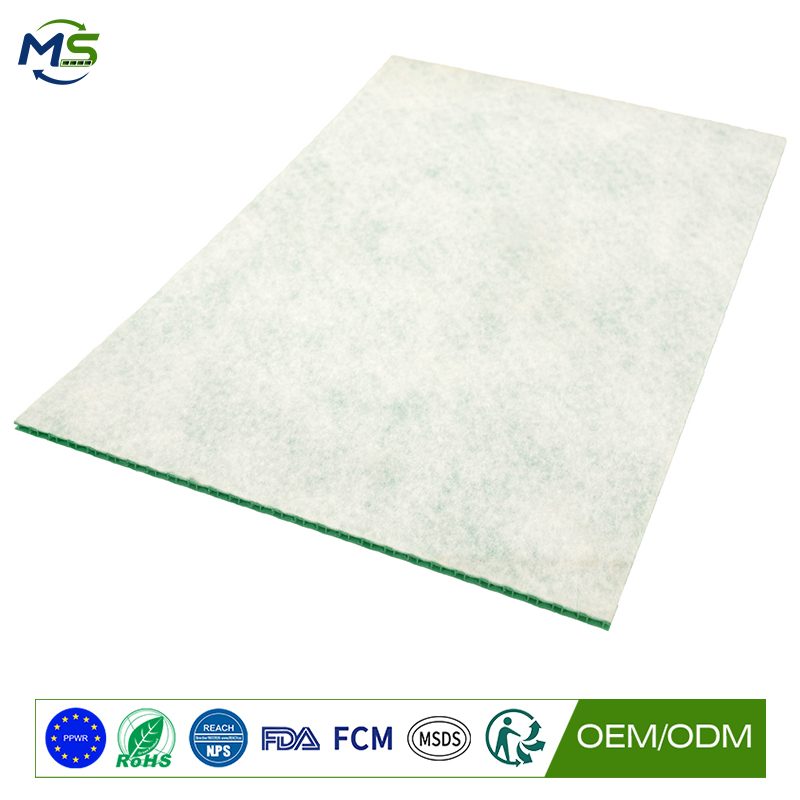
Reuse fails when panels are dispersed or damaged quietly, so the programme needs a collection point, a count and an inspection.
The single most effective measure is a designated collection point at the end of each phase, with panels returned to it rather than left in the area. Panels left in an area are usually reused once by whoever finds them, and then lost.
Counts matter. A panel count at issue, at return and at the end of the project is the only way to know whether the reuse assumption in the cost model is real, and it is also what allows the fleet to be right-sized for the next phase.
Inspection at return separates serviceable panels from damaged ones. A panel with a broken face or a crushed core goes to a repair or disposal route, and the remaining fleet stays at full strength. Without this step the fleet gradually fills with damaged panels that fail under load.
Storage decides whether the panels are still reusable at the end of the phase, and it takes very little discipline to get right.
Panels should be stored flat, in a dry place, away from direct sunlight and away from the edges of a traffic route. Sunlight on a stacked pile heats the faces and can cause the stack to bow, which is difficult to correct.
The stack needs to be rated for the load. A large stack of panels on a weak temporary floor is a real risk, and the loading should be confirmed with whoever designed the temporary works if the stack is more than a few hundred panels.
Panels should be counted and inspected when they come off site, not at the end of the project. A small inspection at the point of collection turns a vague dispute about quantity into a list of specific panels.
For terminology and test-method context see GHG Protocol Corporate Value Chain (Scope 3) Accounting and Reporting Standard. The guidance on this page is practical site guidance, not a test report or a certificate.
Cleaning is what keeps a reusable panel reusable, and the method matters more than the frequency.
The first rule is to clean dry where possible. Vacuum or brush before washing, because grit dragged across a facing during wet cleaning is the main cause of abrasion. Once grit is removed, a mild detergent and a soft brush or cloth is enough.
High-pressure washing and abrasive pads should be avoided, and so should solvent-based cleaners unless the facing is known to be compatible. Solvents can craze polypropylene and will attack some adhesives used on the seam tape.
After cleaning the panels should be dry before they are stacked, and they should be checked for standing water in the core cells. A panel stacked wet will develop odour and staining, and the odour is very difficult to remove later.
| Decision question | Short answer | Checklist line | In this guide |
|---|---|---|---|
| What should be checked about a reusable protection programme that actually … | Reuse fails when panels are dispersed or damaged quietly, so the programme needs a collection point … | The single most effective measure is a designated collection point at the end of each … | Section 1 |
| What should be checked about storing panels on site without ruining … | Storage decides whether the panels are still reusable at the end of the phase, and it … | Panels should be stored flat, in a dry place, away from direct sunlight and away … | Section 2 |
| What should be checked about cleaning panels between phases without damaging … | Cleaning is what keeps a reusable panel reusable, and the method matters more than the frequency. | The first rule is to clean dry where possible. Vacuum or brush before washing, because … | Section 3 |
| What should be checked about making a reuse programme work for … | Procurement policies usually reward the lowest unit price, so a reuse programme has to be argued … | The argument that works is total cost of ownership against a defined use case, supported … | Section 4 |
Procurement policies usually reward the lowest unit price, so a reuse programme has to be argued in the language of the policy to survive.
The argument that works is total cost of ownership against a defined use case, supported by the cycle count from previous projects and the waste diversion figure. It is a different calculation from the one the purchasing system is configured to run, so it needs to be presented as a case rather than expected to be discovered by the system.
Some frameworks allow an evaluation on a total cost basis when the case is documented, and a supplier who provides cycle counts, waste data and reference sites makes that case far easier to put together.
A second, simpler route is to specify performance and durability rather than price per square metre. A specification that states the number of cycles, the required performance after reuse and the take-back obligation moves the comparison away from unit price and towards whole-life value.
Four simple measurements give a project a credible sustainability record, and all four are counts rather than estimates.
Count the panels issued to the site. Count the panels returned at each phase and at the end. The difference gives the number damaged beyond repair and, with it, a direct measure of the protection performance achieved.
Weigh the offcuts and consumables that leave site. Offcuts are the most commonly overlooked waste stream in protection work, because they are bulky and go straight onto the skip rather than being counted.
Record the number of reuse cycles achieved across the whole project and the mass of material sent for recycling. Together these four figures give a waste diversion rate and a cycle count, which are the two numbers a client with reporting obligations actually needs.
Most site complaints about protection boards come from five assumptions that do not survive contact with a real project.
The first is that heavier is always better. Thickness helps against sustained load, but against a sharp or a concentrated point load it changes little, and it makes the panel impossible to move, which means it will not be used where it is needed.
The second is that a smooth facing grips better. A smooth film facing actually slides more easily on a hard floor, and the panel that moves is the panel that ends up somewhere else when someone is standing on it.
The third is that protection boards can be left down indefinitely. They are designed for a defined duration and a defined inspection cycle, and the most common failure is a panel that was never looked at after week three.
The fourth is that a damaged panel is still doing its job. Once the face is broken the substrate is exposed, and the damaged area is where the next incident happens.
The fifth is that reusable is always cheaper. Reuse wins when the panel survives the number of cycles planned for it and when the collection and inspection are actually organised. Without that organisation it is a more expensive consumable.
Reuse fails when panels are dispersed or damaged quietly, so the programme needs a collection point, a count and an inspection. The single most effective measure is a designated collection point at the end of each phase, with panels returned to it rather …
Storage decides whether the panels are still reusable at the end of the phase, and it takes very little discipline to get right. Panels should be stored flat, in a dry place, away from direct sunlight and away from the edges of a traffic route …
Procurement policies usually reward the lowest unit price, so a reuse programme has to be argued in the language of the policy to survive. The argument that works is total cost of ownership against a defined use case, supported by the cycle count from previous projects …
Most site complaints about protection boards come from five assumptions that do not survive contact with a real project. The first is that heavier is always better. Thickness helps against sustained load, but against a sharp or a concentrated point load …
References checked by publisher and title on 2026-11-06. Standards and regulations are cited by name only; no performance values are attributed to them. General material-property figures in the text are indicative reference values for polypropylene and should be verified against your supplier’s current data sheet. Confirm applicability and current versions for your own project before relying on any of them.
For a quotation, a sample panel or help matching a thickness and facing to your site conditions, contact service@mingplastics.com or WhatsApp +86 189 3887 1524. Include the surface type, floor area, the trades working overhead and the expected duration so the recommended specification can be confirmed before you order.
For reusable protection programme, Reduce the decision to a single comparison sheet and name the person who signs it off. Most site complaints about protection boards come from five assumptions that do not survive contact with a real project.


