Address
Building 1, No. 22, Shexi Yongping Road,
Dongguan, Guangdong, China
Work Hours
Monday to Friday: 7AM - 7PM
Weekend: 10AM - 5PM
Address
Building 1, No. 22, Shexi Yongping Road,
Dongguan, Guangdong, China
Work Hours
Monday to Friday: 7AM - 7PM
Weekend: 10AM - 5PM
A minimum order quantity is worth accepting when the extra panels will be used on the same programme or stored without damage, ... Ask Mingskye for a sample.
A minimum order quantity is worth accepting when the extra panels will be used on the same programme or stored without damage, and when the freight saving per unit exceeds the carrying cost. It is a poor trade when the surplus is made-to-size for one room only or when site storage is damp and unsecured. Compare the landed unit cost against the expected usable quantity, not the ordered quantity.
This page covers protection panel minimum order quantity in six sections: Minimum order quantities and when it is worth; Pricing factors that explain a wide spread between; Working capital and how payment terms affect the; Distributor and stock arrangements; Weight, volume and the shipping cost that actually; Scope 3 and where protection actually sits in. Each section answers one practical question and can be read on its own.
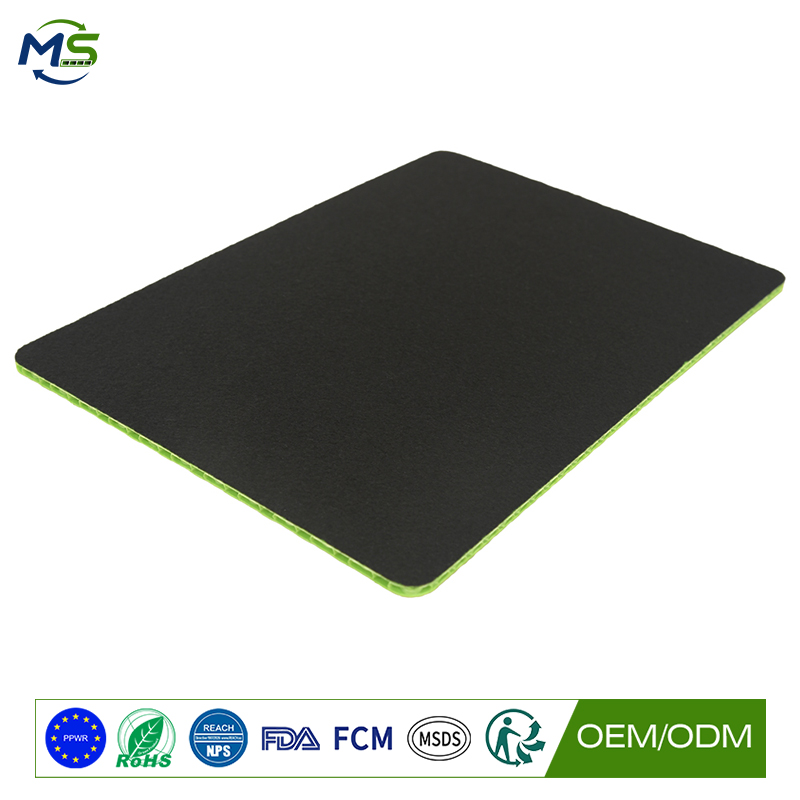
Minimum order quantities protect the manufacturer from the cost of a short production run, and they can usually be negotiated when the total value of the relationship justifies it.
A short run is disproportionately expensive because the setup cost is spread over very few panels. Setting up a cutting programme, changing the face material and packing a partial pallet all carry fixed costs that do not scale down.
The negotiation is straightforward when the buyer can offer something in return: a forecast of the total requirement across several projects, a commitment to a trial order at the standard minimum, or payment terms on a larger order.
For a first purchase, a sample or a trial order at the standard minimum quantity is usually the cheapest way to test a supplier, and it is much better than placing a full order and discovering the issue after the container has arrived.
Two offers for panels of the same nominal thickness can differ by a factor of two, and the difference is almost always in the specification rather than in the margin.
The core height is the first factor. Two panels of the same overall thickness with different core heights have very different stiffness and load capacity, and the one with the smaller core is much cheaper because it uses less material.
The second is the facing. A felt or non-woven facing is materially more expensive than a film facing, and a flame-retardant grade carries an additive cost across the whole panel.
The third is the bond method and the quality control. Welded bonding with a documented process and batch testing is a more expensive product than an adhesive-bonded one, and it should be, because it performs differently. The fourth is the order quantity and the format, with a pre-cut programme costing more per square metre than a standard panel supply.
For terminology and test-method context see International Chamber of Commerce. The guidance on this page is practical site guidance, not a test report or a certificate.
Payment terms change the cost of a purchase even when nothing about the product changes, and on a large order the difference is worth calculating.
A deposit plus a balance on delivery means the buyer funds the production. An open account with payment at 30 or 60 days means the supplier funds it, and that difference has a real cost that is reflected in the price.
For a project with a slow payment cycle from the client, the working capital cost of buying the panels falls on the contractor, and it can exceed the difference between two competing quotations. This is the calculation that decides the commercial terms on a large order.
Bank instruments such as a letter of credit or a documentary collection protect the buyer and the seller in different ways and at different costs. It is worth deciding which risk actually matters in the transaction rather than defaulting to the same arrangement for every order.
| Trade question | Short answer | Document to request | In this guide |
|---|---|---|---|
| What should be checked about minimum order quantities and when it … | Minimum order quantities protect the manufacturer from the cost of a short production run, and they … | A short run is disproportionately expensive because the setup cost is spread over very few … | Section 1 |
| What should be checked about pricing factors that explain a wide … | Two offers for panels of the same nominal thickness can differ by a factor of two … | The core height is the first factor. Two panels of the same overall thickness with … | Section 2 |
| What should be checked about working capital and how payment terms … | Payment terms change the cost of a purchase even when nothing about the product changes, and … | A deposit plus a balance on delivery means the buyer funds the production. An open … | Section 3 |
| What should be checked about distributor and stock arrangements? | Holding stock in the destination country removes the freight and clearance delay from the critical path … | The stock model suits a distributor selling into a region with several projects and a … | Section 4 |
Holding stock in the destination country removes the freight and clearance delay from the critical path, and it suits projects with a recurring rather than a one-off requirement.
The stock model suits a distributor selling into a region with several projects and a steady demand, because the freight economics improve with volume and the lead time drops to the point where the panels are available for the next project immediately.
The cost is working capital and the risk of unsold stock, particularly with a wide range of grades and sizes where a slow-moving variant ties up space and money. The discipline that keeps it working is to hold a narrow range of the most-used grades and sizes and to order the rest to project.
For the buyer, the question is whether the distributor can hold the grade and size that the project needs, and what happens when it cannot. A distributor who will supply from the factory within an agreed lead time is more useful than one holding an unsuitable range locally.
For light, bulky goods the freight charge is driven by volume, and the useful question is how many cubic metres the project needs rather than how many kilograms.
Air freight is charged on a combination of actual weight and volumetric weight, and for a panel that is light and bulky the volumetric figure dominates. This means that a nested or folded format can transform the freight cost, even when the per-kilogram rate looks unchanged.
Sea freight is usually charged per container or per tonne, whichever is greater, so for a light product the volume calculation is again the binding one. The practical consequence is that the shipping format is often worth more commercially than the unit price of the panels.
Road freight in Europe has the same character, charged per pallet with a volumetric ceiling. Consolidating several areas of a project into one shipment and removing the packaging void usually delivers more than negotiating the rate.
Protection boards are usually a purchased good rather than a directly controlled emission, so they enter a buyer’s Scope 3 inventory under purchased goods and services.
For a business reporting on value chain emissions, a reusable panel can be an unusually favourable line because the same asset can be counted once rather than counted again for every project or every cycle. A panel used eight times has one embodied carbon figure rather than eight.
The accounting has to be stated honestly, though. Whether the embodied carbon is counted once for the fleet or spread across the use cycles is a methodological decision, and the basis should be declared in the report so that the figure can be compared with other suppliers.
The end-of-life route matters for the figure as much as the reuse count. A single-polymer panel that goes back into a polypropylene recycling stream retains its material value, whereas a laminated board with a paper or aluminium facing has no practical route and is counted as waste.
Minimum order quantities protect the manufacturer from the cost of a short production run, and they can usually be negotiated when the total value of the relationship justifies it. A short run is disproportionately expensive because the setup cost is spread over very few panels. Setting up a cutting programme, changing …
Two offers for panels of the same nominal thickness can differ by a factor of two, and the difference is almost always in the specification rather than in the margin. The core height is the first factor. Two panels of the same overall thickness with different core heights have very different stiffness …
Holding stock in the destination country removes the freight and clearance delay from the critical path, and it suits projects with a recurring rather than a one-off requirement. The stock model suits a distributor selling into a region with several projects and a steady demand, because the freight economics improve …
Protection boards are usually a purchased good rather than a directly controlled emission, so they enter a buyer’s Scope 3 inventory under purchased goods and services. For a business reporting on value chain emissions, a reusable panel can be an unusually favourable line because the same asset can …
References checked by publisher and title on 2026-11-06. Standards and regulations are cited by name only; no performance values are attributed to them. General material-property figures in the text are indicative reference values for polypropylene and should be verified against your supplier’s current data sheet. Confirm applicability and current versions for your own project before relying on any of them.
For a quotation, a sample panel or help matching a thickness and facing to your site conditions, contact service@mingplastics.com or WhatsApp +86 189 3887 1524. Include the surface type, floor area, the trades working overhead and the expected duration so the recommended specification can be confirmed before you order.
For protection panel minimum order quantity, Fix the document pack, the milestones and the landed unit cost in the purchase order. Protection boards are usually a purchased good rather than a directly controlled emission, so they enter a buyer’s Scope 3 inventory under purchased goods and services.


