Address
Building 1, No. 22, Shexi Yongping Road,
Dongguan, Guangdong, China
Work Hours
Monday to Friday: 7AM - 7PM
Weekend: 10AM - 5PM
Address
Building 1, No. 22, Shexi Yongping Road,
Dongguan, Guangdong, China
Work Hours
Monday to Friday: 7AM - 7PM
Weekend: 10AM - 5PM
Cleanroom fit-out protection must control particles and static as well as physical damage. Choose a panel that does not shed ... Ask Mingskye for a sample.
Cleanroom fit-out protection must control particles and static as well as physical damage. Choose a panel that does not shed fibres, wipe it down before it enters the controlled area, avoid tape that leaves residue on a resin floor, and keep the protection outside the classified zone until it is needed. Coordinate the sequence with the cleaning protocol so protection removal does not undo a completed clean.
This page covers cleanroom floor protection in six sections: Semiconductor and cleanroom fit-outs; Aerospace and precision manufacturing floors; Pharmaceutical and laboratory fit-outs; Static and dust cling on low-humidity sites; Using panels to protect against dust and debris; Sequencing the protection around the trades. Each section answers one practical question and can be read on its own.
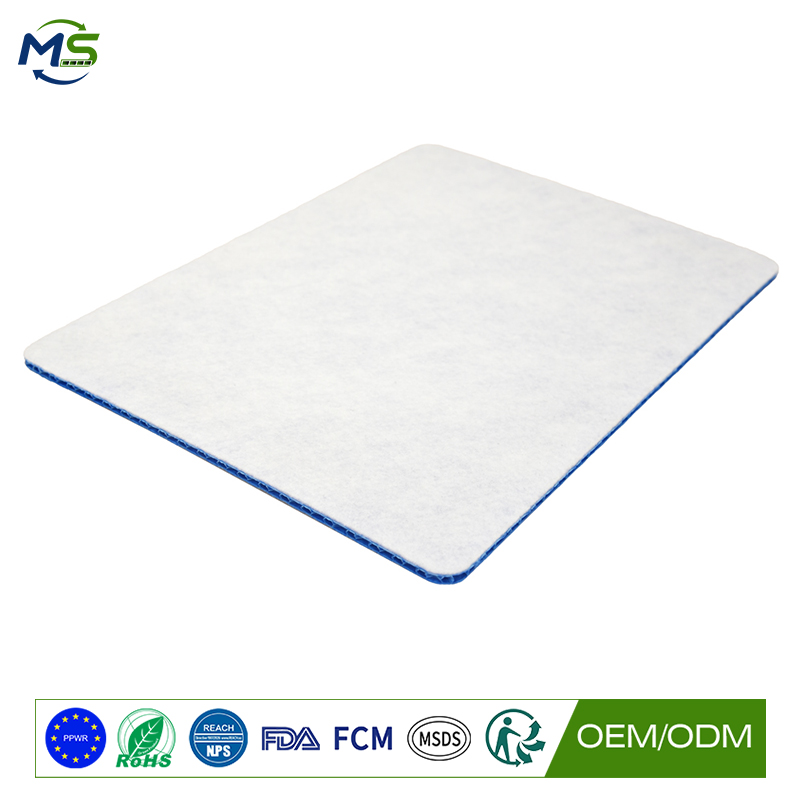
Cleanroom and semiconductor projects treat the floor as a contamination control surface, so the protection requirement is as much about particulate as about load.
In a cleanroom, a protection sheet that sheds particles is worse than no protection, so the material choice is driven by cleanability and by the absence of loose fibres. A film-faced panel with a sealed surface is preferred over a felt-faced one for that reason.
The load requirement is also higher than it looks, because cleanroom build work involves kitting, trolley movement and occasional staging of equipment in the room. The floor finish is usually a seamless epoxy or raised floor with a defined cleanability classification, so it must not be marked or scratched.
Panels used in these environments should be dedicated and not moved into a general construction area, because the cleaning regime and the contamination standard are different. Mixing the two fleets is a common route to a cleanroom release that is held up at the end.
Aerospace facilities combine a very high value floor with a controlled environment, so protection has to be gentle and also controlled.
The floor in an aerospace assembly hall is often an epoxy or terrazzo system with a high decorative standard, and the tolerance for any marking is effectively zero because the areas are frequently visible to customers and auditors.
Protection in these halls also has a documentary dimension. Where a process or a clean area is protected, there may be a requirement to record when the protection was applied and removed, which makes an individually numbered and logged panel more useful than an anonymous sheet.
The practical specification is a high-grade reusable panel with a soft non-abrasive facing and a taped or weighted joint, and a rule that it is lifted and cleaned rather than swept, since a fine abrasive dust on a sealed floor is the usual cause of the hazing that appears later.
For terminology and test-method context see UK Health and Safety Executive. The guidance on this page is practical site guidance, not a test report or a certificate.
Pharmaceutical projects combine cleanability, chemical resistance and a visible floor finish in a space that is usually small and busy.
The floors in these spaces are usually seamless resin systems with a defined cleanability and chemical resistance class. The protection has to be cleanable to the same standard, and it has to resist the solvents and reagents that will eventually be used on the floor once the project is complete.
The panels in these areas are usually few and small, and they are moved constantly because the spaces are tight. A small format with a light weight is more useful here than a large panel, and the labour to move a small panel is a smaller fraction of the work.
The documentation requirement is the distinguishing feature. In a validated environment, the material used in a controlled area may need to be traceable, which makes a numbered and logged panel more appropriate than an anonymous sheet.
| Application question | Short answer | Constraint to confirm | In this guide |
|---|---|---|---|
| What should be checked about semiconductor and cleanroom fit-outs? | Cleanroom and semiconductor projects treat the floor as a contamination control surface, so the protection requirement … | In a cleanroom, a protection sheet that sheds particles is worse than no protection, so … | Section 1 |
| What should be checked about aerospace and precision manufacturing floors? | Aerospace facilities combine a very high value floor with a controlled environment, so protection has to … | The floor in an aerospace assembly hall is often an epoxy or terrazzo system with … | Section 2 |
| What should be checked about pharmaceutical and laboratory fit-outs? | Pharmaceutical projects combine cleanability, chemical resistance and a visible floor finish in a space that is … | The floors in these spaces are usually seamless resin systems with a defined cleanability and … | Section 3 |
| What should be checked about static and dust cling on low-humidity … | Polypropylene is a good electrical insulator and can build static charge in dry conditions, which makes … | The effect is most noticeable in winter, in heated interiors with low humidity, and on … | Section 4 |
Polypropylene is a good electrical insulator and can build static charge in dry conditions, which makes dust cling to the surface instead of settling away from it.
The effect is most noticeable in winter, in heated interiors with low humidity, and on insulated floors. Static makes a panel attract dust and fine debris from the air, and it also causes a slight resistance when panels are moved.
The dust that clings is a problem for two reasons: it is harder to remove than loose dust, and it is more abrasive when it does come off, because it has been held against the facing rather than swept away.
The remedy is to manage humidity rather than to change the panel. Keeping the relative humidity above roughly 40 per cent with the site’s heating and humidification, and using an antistatic facing where the application is particularly sensitive, addresses the cause.
When the objective is dust containment rather than load protection, the specification changes to sealing and cleanability rather than strength.
A dust control application needs the panels to be sealed to each other and to the surrounding structure, so the joint treatment matters far more than the panel grade. Gaps at the skirting and around door openings are what actually let the dust through.
The face sheet also matters in this application, because a textured or felt facing collects dust and is hard to clean, whereas a smooth film facing wipes down quickly and releases fine dust more readily.
Temporary dust sheets that are folded rather than laid flat work better than flat sheets, because a folded sheet traps less dust on an upward face and can be shaken out at the end of the shift rather than cleaned.
Most protection disputes come from a sequencing error, where a floor is protected before the trades that need access to it have finished.
The sequence of trades and the sequence of protection have to be planned together. Laying protection before the screeding, painting or wet trades have finished is the most common cause of a protection layer being removed and reinstalled, and it is pure waste.
A workable plan divides the floor into zones by trade and states the order in which the protection is lifted, worked on and relaid. Zone boundaries then follow the natural work sequence, so material moves in one direction across the floor and the protected area shrinks progressively rather than randomly.
The plan should also state who removes the protection, who inspects the substrate at removal, and who confirms the area is clear before the next trade arrives. Those three responsibilities are the ones most often left undefined.
Cleanroom and semiconductor projects treat the floor as a contamination control surface, so the protection requirement is as much about particulate as about load. In a cleanroom, a protection sheet that sheds particles is worse than no protection, so the material choice is driven by cleanability …
Aerospace facilities combine a very high value floor with a controlled environment, so protection has to be gentle and also controlled. The floor in an aerospace assembly hall is often an epoxy or terrazzo system with a high decorative standard, and the tolerance …
Polypropylene is a good electrical insulator and can build static charge in dry conditions, which makes dust cling to the surface instead of settling away from it. The effect is most noticeable in winter, in heated interiors with low humidity, and on insulated floors. Static makes a panel attract …
Most protection disputes come from a sequencing error, where a floor is protected before the trades that need access to it have finished. The sequence of trades and the sequence of protection have to be planned together. Laying protection before the screeding, painting or wet …
References checked by publisher and title on 2026-11-06. Standards and regulations are cited by name only; no performance values are attributed to them. General material-property figures in the text are indicative reference values for polypropylene and should be verified against your supplier’s current data sheet. Confirm applicability and current versions for your own project before relying on any of them.
For a quotation, a sample panel or help matching a thickness and facing to your site conditions, contact service@mingplastics.com or WhatsApp +86 189 3887 1524. Include the surface type, floor area, the trades working overhead and the expected duration so the recommended specification can be confirmed before you order.
For cleanroom floor protection, Check the site-specific constraint with the building owner before choosing a format. Most protection disputes come from a sequencing error, where a floor is protected before the trades that need access to it have finished.


