Address
Building 1, No. 22, Shexi Yongping Road,
Dongguan, Guangdong, China
Work Hours
Monday to Friday: 7AM - 7PM
Weekend: 10AM - 5PM
Address
Building 1, No. 22, Shexi Yongping Road,
Dongguan, Guangdong, China
Work Hours
Monday to Friday: 7AM - 7PM
Weekend: 10AM - 5PM
The practical difference is weight at equal stiffness. A solid plastic sheet must be thick and heavy before it stops deflecting ... Ask Mingskye for a sample.
The practical difference is weight at equal stiffness. A solid plastic sheet must be thick and heavy before it stops deflecting under a point load; a honeycomb panel reaches comparable stiffness with far less polymer because the skins are held apart by cell walls. The trade-off is that a hollow core can crush locally under a concentrated load and needs its edges protected.
This page covers honeycomb panel vs solid sheet in six sections: What a PP honeycomb protection board actually is; Thickness, density and weight: how the three relate; Load distribution and why point loads matter more; Bending stiffness and why panels that deflect are; Thermal expansion and movement over a long installation; Perforations, ventilation and moisture management under panels. Each section answers one practical question and can be read on its own.
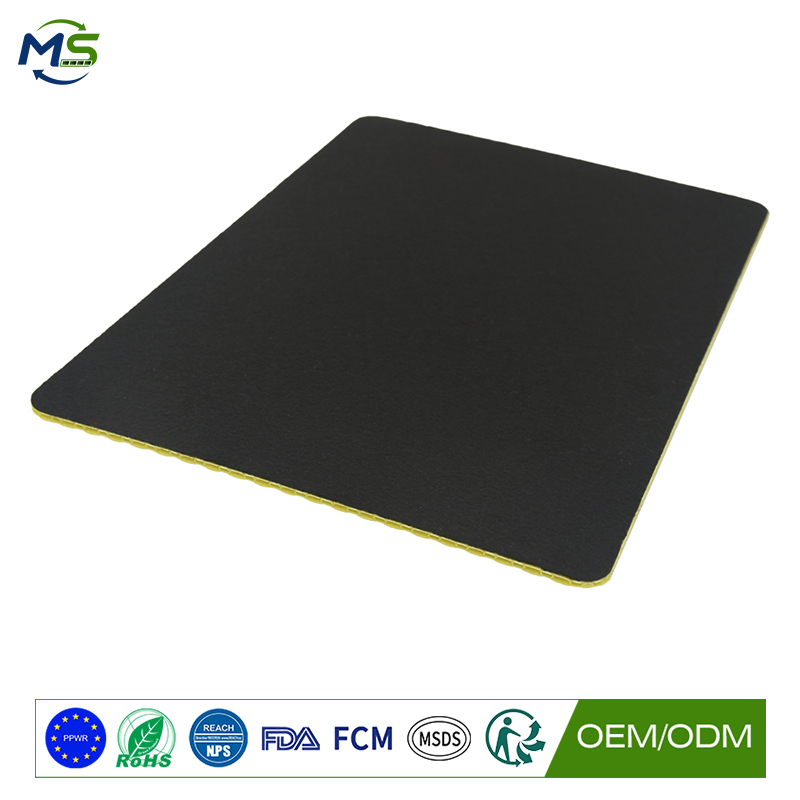
A PP honeycomb protection board is a lightweight sandwich panel made from two flat polypropylene skins bonded to a honeycomb core, and the core is what gives the board its strength-to-weight ratio.
The name describes the structure rather than the material. Polypropylene is the polymer, honeycomb describes the core geometry, and protection board describes the job. Instead of a solid slab of plastic, the material is distributed into thin walls that run perpendicular to the faces. Load applied to the surface is carried by those walls rather than by the full thickness of a solid sheet.
This matters on site because the two properties that decide whether a protection board works are weight and stiffness. A solid polypropylene sheet heavy enough to resist a point load is awkward to move, and awkward material gets left in the store. The honeycomb format reaches a useful stiffness at a fraction of the weight, which is why it can be carried by one person and still survive being stood on.
Because the core is hollow, the board is also a poor conductor of heat compared with a solid sheet of the same thickness. That is useful in cold rooms and on floors over heating systems, and it means the board can be left down through seasonal changes without acting as a thermal bridge.
For a honeycomb panel the nominal thickness, the core height and the finished weight move together, so specifying all three removes most of the ambiguity in a quote.
Nominal thickness is the overall panel depth including both face skins. Core height is that depth less the two skins, and the remaining material is what the honeycomb is folded into. Two panels of the same nominal thickness can have very different core heights depending on how the skins are sized, and that is what determines the load capacity.
Weight follows from the geometry. A thicker core adds wall height without adding much material, so weight increases gradually with thickness rather than in proportion to it. This is the reason a 10 mm honeycomb board can weigh less than a 6 mm solid sheet of the same material.
When requesting a quotation it is worth asking for the three figures together: nominal thickness in millimetres, core height in millimetres, and weight in kilograms per square metre. A supplier who can supply all three without checking is working from a real spec sheet rather than a catalogue thickness.
For terminology and test-method context see ISO standards catalogue. The guidance on this page is practical site guidance, not a test report or a certificate.
Protection boards are usually specified against a uniform load, yet on a construction site the loads that actually cause damage are concentrated at a point.
A trolley wheel, a scaffold base plate, a tool case and a ladder foot all deliver their load through a small contact area. The same total weight spread evenly across a square metre does far less damage, because the core walls share the load instead of one cell taking it all.
This is why the internal load capacity of a board is a better number to work with than the compressive strength of the material. Internal load capacity is measured in kilograms per square metre at a given deflection, and it describes what the structure can carry across its face without crushing.
Practical guidance follows from this. Where point loads will occur, either use a thicker board, place a spreader plate under the load, or route the traffic away from the protected area. No board of any thickness will handle a concentrated load indefinitely without some deflection.
| Question | Short answer | What to check on site | In this guide |
|---|---|---|---|
| What a PP honeycomb protection board actually is? | A PP honeycomb protection board is a lightweight sandwich panel made from two flat polypropylene skins … | The name describes the structure rather than the material. Polypropylene is the polymer, honeycomb describes … | Section 1 |
| What should be checked about thickness, density and weight: how the … | For a honeycomb panel the nominal thickness, the core height and the finished weight move together … | Nominal thickness is the overall panel depth including both face skins. Core height is that … | Section 2 |
| What should be checked about load distribution and why point loads … | Protection boards are usually specified against a uniform load, yet on a construction site the loads … | A trolley wheel, a scaffold base plate, a tool case and a ladder foot all … | Section 3 |
| What should be checked about bending stiffness and why panels that … | A board that deflects under load may still be strong enough, but it is transmitting movement … | Stiffness in a panel is governed by the face sheets, because they sit furthest from … | Section 4 |
A board that deflects under load may still be strong enough, but it is transmitting movement into the floor finish, and that movement is what actually causes visible damage.
Stiffness in a panel is governed by the face sheets, because they sit furthest from the neutral axis and therefore do most of the bending work. Core height matters mainly for compression, while face sheet thickness and material govern deflection under load.
The problem with a deflecting panel is rarely that it breaks. It is that it works the floor finish underneath it. A resilient floor such as a floating timber floor or a resilient tile can crack or lift under repeated small movement, and a stone or tile floor can develop hollow-sounding areas and lifted corners.
Checking deflection at the specification stage is inexpensive. Specify a maximum working deflection, usually a few millimetres at the design load, and ask the supplier to state the figure at that load rather than a generic load rating.
Polypropylene expands by roughly 0.02 cm per metre for every 10 °C of temperature change, which is small but enough to buckle a long, tightly fitted run of panels.
The coefficient of thermal expansion for polypropylene is around 150 to 200 microstrain per kelvin. For a 10 m run that is a change of about 30 mm across a 20 °C seasonal swing, and a continuous, tightly butted line of panels has nowhere to absorb it.
The practical consequence is that expansion joints and perimeter gaps matter on long runs, particularly on floors that are heated in winter and unheated in summer, and on external ramps and balconies where the panel sees the full daily range.
Leaving a small gap at the ends of a run and avoiding a continuous line of rigidly taped seams costs almost nothing and removes a real failure mode. The gap should be wide enough for the expected movement but narrow enough that it does not become a trip hazard.
Perforation in a protection panel has two distinct purposes, and confusing them leads to the wrong product being specified for a wet slab or an underfloor heating system.
Ventilation perforations exist to let air and moisture move between the panel and the floor below, which is essential when the panel is laid on a damp slab that will not dry out from above. A solid unperforated panel laid on damp screed traps moisture and can cause the screed to deteriorate.
Flow-through or drainage perforations serve a different purpose: they allow water to escape from the surface of the panel when it is used in a wet area, so a wet panel dries from both sides rather than holding a film of water on top.
The specification should say which behaviour is required and confirm that the perforation does not compromise the load rating. A heavily perforated panel loses compressive strength, so perforated grades are usually specified with a lower working load than solid ones of the same thickness.
A PP honeycomb protection board is a lightweight sandwich panel made from two flat polypropylene skins bonded to a honeycomb core, and the core is what gives the board its strength-to-weight ratio. The name describes the structure rather than the material. Polypropylene is the polymer, honeycomb describes the core geometry, and protection board describes …
For a honeycomb panel the nominal thickness, the core height and the finished weight move together, so specifying all three removes most of the ambiguity in a quote. Nominal thickness is the overall panel depth including both face skins. Core height is that depth less the two skins, and the …
A board that deflects under load may still be strong enough, but it is transmitting movement into the floor finish, and that movement is what actually causes visible damage. Stiffness in a panel is governed by the face sheets, because they sit furthest from the neutral axis and therefore do most …
Perforation in a protection panel has two distinct purposes, and confusing them leads to the wrong product being specified for a wet slab or an underfloor heating system. Ventilation perforations exist to let air and moisture move between the panel and the floor below, which is essential when the panel …
References checked by publisher and title on 2026-11-06. Standards and regulations are cited by name only; no performance values are attributed to them. General material-property figures in the text are indicative reference values for polypropylene and should be verified against your supplier’s current data sheet. Confirm applicability and current versions for your own project before relying on any of them.
For a quotation, a sample panel or help matching a thickness and facing to your site conditions, contact service@mingplastics.com or WhatsApp +86 189 3887 1524. Include the surface type, floor area, the trades working overhead and the expected duration so the recommended specification can be confirmed before you order.
For honeycomb panel vs solid sheet, Confirm the core construction, facing and test method in writing before comparing any two panels. Perforation in a protection panel has two distinct purposes, and confusing them leads to the wrong product being specified for a wet slab or an underfloor heating system.


