Address
Building 1, No. 22, Shexi Yongping Road,
Dongguan, Guangdong, China
Work Hours
Monday to Friday: 7AM - 7PM
Weekend: 10AM - 5PM
Address
Building 1, No. 22, Shexi Yongping Road,
Dongguan, Guangdong, China
Work Hours
Monday to Friday: 7AM - 7PM
Weekend: 10AM - 5PM
Vertical protection is the best-value use of a reusable panel because it is neither walked on nor load bearing. Cut pieces to fit ... Ask Mingskye for a sample.
Vertical protection is the best-value use of a reusable panel because it is neither walked on nor load bearing. Cut pieces to fit each tread, riser, door leaf and exposed corner, and fix them with low-tack tape on finished surfaces or battens and straps where the surface is valuable. Fit corners early, before the heavy trades arrive, and remove tape slowly on a warm day.
This page covers stair and wall protection fit-out in six sections: Protecting walls, door leaves and vulnerable corners; Protecting stair treads and risers during fit-out; Removing protection without taking the floor with it; Working around services, penetrations and uneven edges; Handover: what the protection should look like at; Storing panels on site without ruining them. Each section answers one practical question and can be read on its own.
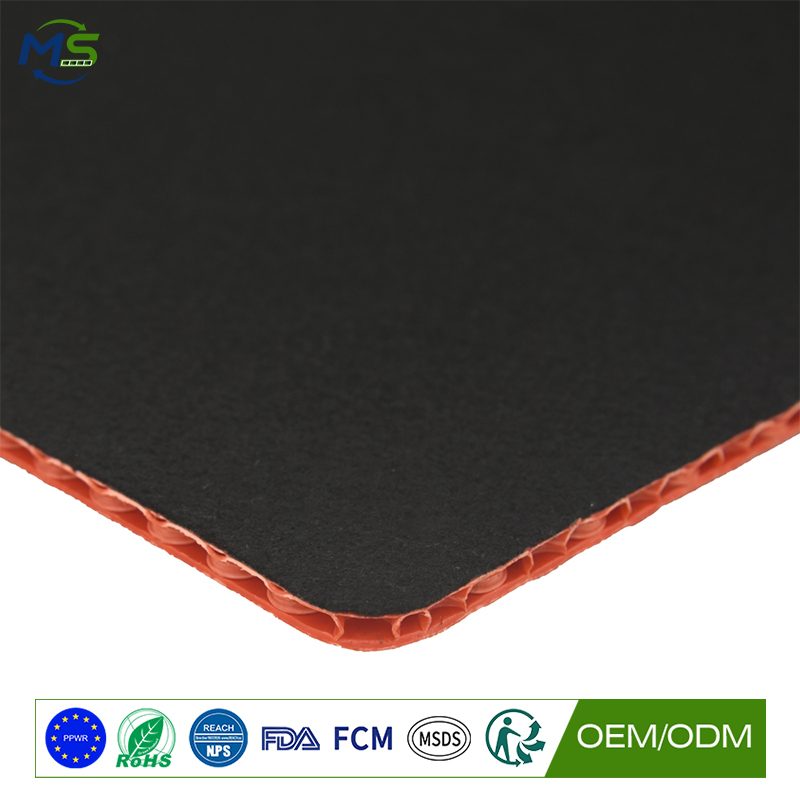
Wall and corner protection is the cheapest damage prevention on a site, and it should be installed before the traffic that causes it arrives.
Vertical protection is a good-value use of a reusable panel because it is neither loaded nor crossed. A panel fixed to the wall face with a low-tack tape or with straps over the top of the panel protects against trolley handles, door leaves and people carrying material.
Door leaves need specific attention because they swing. A cardboard or sheet protector fixed to the leaf at the handle height prevents the damage that a swinging handle causes to a painted frame, and it takes a couple of minutes per door.
Corners are the highest-risk detail on most refurbishment sites. A corner guard or a wrapped panel section at the door jambs and lift lobbies will prevent the impact damage that no amount of floor protection addresses.
Stairs are the point on a refurbishment site where protection is most needed and most often fitted badly.
A stair tread sees concentrated point loads because a foot or a hand truck wheel lands on a small area, and it sees them at an angle rather than flat, which loads the nosing and the front edge hardest. A tread protector should therefore cover the nosing and the first part of the tread, not just the flat centre.
The panel must be fixed so it cannot slide. On a stair, friction alone is not enough, and the fixing has to be mechanical or bonded in a way that can be removed without damaging the finish. On marble and stone, mechanical fixing into the tread is not acceptable, so an approved adhesive or a weighted arrangement is used instead.
Risers need protection as well, because they take the scuffs from feet and material being carried. A flexible protector on the riser costs little and prevents the marking that makes a completed staircase look neglected on handover.
For terminology and test-method context see UK Health and Safety Executive. The guidance on this page is practical site guidance, not a test report or a certificate.
Removal is where good protection is often damaged, because the panel is pulled while it is still partly stuck down.
Adhesive tape should be removed while it is still workable, not left to harden for weeks. Heat can be used on some tapes, but the safest method is a low-tack tape that is removed on the schedule it was applied, and a written removal schedule in the method statement prevents the problem entirely.
Panels should be lifted rather than dragged, and lifted from a corner rather than pulled along the surface. Any grit that has accumulated under the panel should be removed before it is lifted, and a vacuum at the joint is the fastest way to do it.
Finally, the floor should be inspected and cleaned at the point of removal, and the count of panels returned should be recorded on the same visit. Doing the inspection while the protection is still down avoids a second walk-over and finds the areas that need attention before the trades return.
| Site question | Short answer | What to check before starting | In this guide |
|---|---|---|---|
| What should be checked about protecting walls, door leaves and vulnerable … | Wall and corner protection is the cheapest damage prevention on a site, and it should be … | Vertical protection is a good-value use of a reusable panel because it is neither loaded … | Section 1 |
| What should be checked about protecting stair treads and risers during … | Stairs are the point on a refurbishment site where protection is most needed and most often … | A stair tread sees concentrated point loads because a foot or a hand truck wheel … | Section 2 |
| What should be checked about removing protection without taking the floor … | Removal is where good protection is often damaged, because the panel is pulled while it is … | Adhesive tape should be removed while it is still workable, not left to harden for … | Section 3 |
| What should be checked about working around services, penetrations and uneven … | Cutting around an obstacle is where most site damage to protection occurs, because the cut edge … | Cut-outs should be made slightly undersize and the resulting opening covered by a facing plate … | Section 4 |
Cutting around an obstacle is where most site damage to protection occurs, because the cut edge is the weakest part of the panel.
Cut-outs should be made slightly undersize and the resulting opening covered by a facing plate or a bonded collar, so that the panel cannot move in the cut and expose the floor. A cut edge left open will lift with traffic.
Where a panel meets a wall, a riser or a fixed object, it should be cut to a close fit and held by a mechanical fixing or by a rebate, rather than simply pushed into the gap. A panel wedged into a gap will work loose when the floor moves.
Around service penetrations, the board should be cut on the line of the service so that the service itself or its escutcheon provides the closing detail, and the cut edge should be sealed with a compatible tape to keep grit out of the core.
The protection is part of the finished appearance, and the handover standard should be agreed with the client before the first panel is laid.
Agreeing the handover condition in advance removes almost all dispute. The standard can specify that the floor is free of grit, that no seam tape remains, that edges are trimmed and that the panels are presented with a consistent facing and a consistent direction of lay.
Consistency of appearance matters more than perfection. Panels laid in the same direction, with the seam lines running in one orientation, read as a deliberate installation. Mixed directions and mixed grades read as a temporary site arrangement even when the floor underneath is perfect.
It is worth photographing the protected area at handover with the client, because that resolves any later disagreement about the condition of the substrate at the point protection was removed.
Storage decides whether the panels are still reusable at the end of the phase, and it takes very little discipline to get right.
Panels should be stored flat, in a dry place, away from direct sunlight and away from the edges of a traffic route. Sunlight on a stacked pile heats the faces and can cause the stack to bow, which is difficult to correct.
The stack needs to be rated for the load. A large stack of panels on a weak temporary floor is a real risk, and the loading should be confirmed with whoever designed the temporary works if the stack is more than a few hundred panels.
Panels should be counted and inspected when they come off site, not at the end of the project. A small inspection at the point of collection turns a vague dispute about quantity into a list of specific panels.
Wall and corner protection is the cheapest damage prevention on a site, and it should be installed before the traffic that causes it arrives. Vertical protection is a good-value use of a reusable panel because it is neither loaded nor crossed. A panel fixed to the …
Stairs are the point on a refurbishment site where protection is most needed and most often fitted badly. A stair tread sees concentrated point loads because a foot or a hand truck wheel lands on a small area, and it …
Cutting around an obstacle is where most site damage to protection occurs, because the cut edge is the weakest part of the panel. Cut-outs should be made slightly undersize and the resulting opening covered by a facing plate or a bonded collar, so that the …
Storage decides whether the panels are still reusable at the end of the phase, and it takes very little discipline to get right. Panels should be stored flat, in a dry place, away from direct sunlight and away from the edges of a traffic route …
References checked by publisher and title on 2026-11-06. Standards and regulations are cited by name only; no performance values are attributed to them. General material-property figures in the text are indicative reference values for polypropylene and should be verified against your supplier’s current data sheet. Confirm applicability and current versions for your own project before relying on any of them.
For a quotation, a sample panel or help matching a thickness and facing to your site conditions, contact service@mingplastics.com or WhatsApp +86 189 3887 1524. Include the surface type, floor area, the trades working overhead and the expected duration so the recommended specification can be confirmed before you order.
For stair and wall protection fit-out, Walk the route, agree the seam method and photograph the floor before the first panel is laid. Storage decides whether the panels are still reusable at the end of the phase, and it takes very little discipline to get right.


