Address
Building 1, No. 22, Shexi Yongping Road,
Dongguan, Guangdong, China
Work Hours
Monday to Friday: 7AM - 7PM
Weekend: 10AM - 5PM
Address
Building 1, No. 22, Shexi Yongping Road,
Dongguan, Guangdong, China
Work Hours
Monday to Friday: 7AM - 7PM
Weekend: 10AM - 5PM
A workable one-page specification names the surface, the area, the heaviest traffic, the required thickness and facing, the ... Ask Mingskye for a sample.
A workable one-page specification names the surface, the area, the heaviest traffic, the required thickness and facing, the maximum sheet size and weight, the seam method, the test evidence required, the reuse expectation and the handover condition. It also states who photographs the floor before covering and who signs off removal. One page is enough when every line can be checked on delivery.
This page covers temporary floor protection specification in six sections: What a good specification looks like on one; What to put in a request for quotation; The access constraint that decides the specification before; A structured checklist for comparing supplier offers; Using panels to protect against dust and debris; Protecting an existing floor during a refurbishment. Each section answers one practical question and can be read on its own.
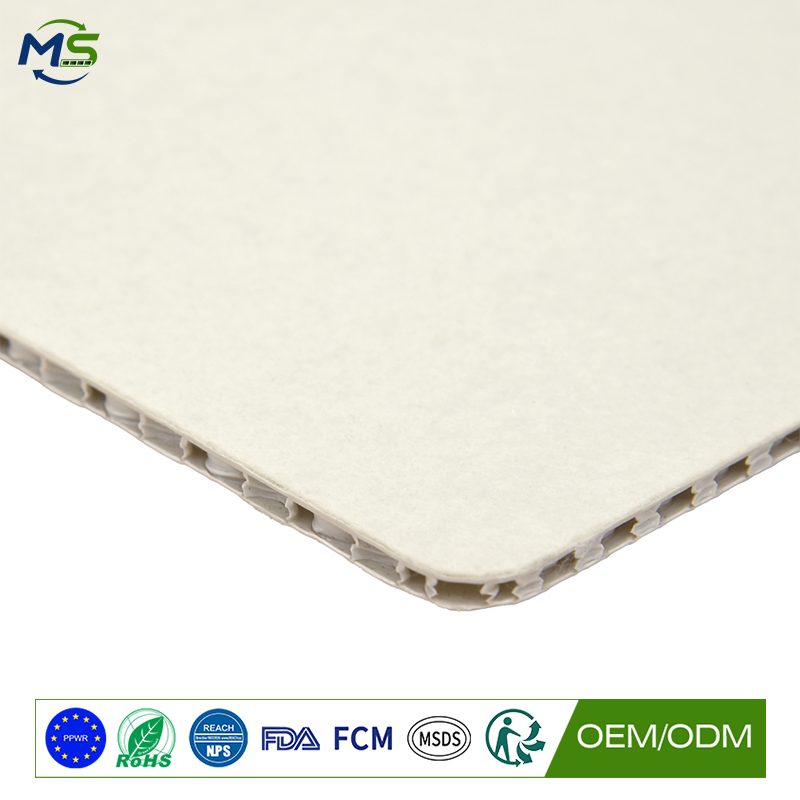
A one-page specification that a site supervisor can read is worth more than a twelve-page document that nobody consults on the day.
The page should open with the substrate and the finish, then the loads with their footprints, then the panel: thickness, core height, facing, internal load capacity at a stated deflection, and tolerances.
It then needs the installation rules in a form that can be followed: preparation of the substrate, maximum panel size, permitted span without support, joint treatment, edge treatment, and the maximum duration before a panel must be inspected.
It closes with the commercial and compliance items: certification, test report references, delivery and packaging, the disposal route, and who to call with a technical question. The value of the document is that it settles questions on the site instead of generating them.
A complete enquiry contains the substrate, the loads, the area, the duration, the access route and the disposal route, and it gets a usable answer in one round rather than five.
Start with the substrate: the floor build-up and the finish, whether the floor is rigid or spanning, and what the finish can tolerate in terms of working deflection. Add the heaviest standing load and the heaviest moving load, and say whether they are the same.
Then the logistics: the area, the number of separate areas, the expected duration in weeks, the access route including stairs and lift dimensions, and whether the boards will be reused or single-use. Finish with the delivery destination and the disposal or return route.
Include the facing requirement and any fire or environmental constraint, and ask for the figures you need to compare offers: nominal thickness, core height, weight per square metre, internal load capacity at a stated deflection, and the tolerances. An enquiry that asks for specific figures produces comparable offers, which is the point of asking for them.
For terminology and test-method context see GHG Protocol Corporate Value Chain (Scope 3) Accounting and Reporting Standard. The guidance on this page is practical site guidance, not a test report or a certificate.
A panel that cannot be carried to the place it is needed is not a solution, and on many projects the access route decides the specification more than the load does.
Protection is valuable only where it is laid. If the route to the work area involves a staircase, a narrow doorway or a lift with a fixed capacity, the panel has to pass through it, and a board chosen for load capacity may be impossible to move.
Weight per square metre should be compared against what two people can safely carry on a stair, which is a much lower practical figure than most people assume for awkward, flat, slightly flexible items. Panels that are light but large are harder to handle than panels that are heavier but smaller.
Options that keep the capacity and solve the access problem include smaller panel formats, folded or rolled formats that reduce the cross-section for transport, and splitting the coverage into more panels of lower weight. It is worth raising access with the supplier before ordering, not after the delivery is on site.
| Decision question | Short answer | Checklist line | In this guide |
|---|---|---|---|
| What a good specification looks like on one page? | A one-page specification that a site supervisor can read is worth more than a twelve-page document … | The page should open with the substrate and the finish, then the loads with their … | Section 1 |
| What to put in a request for quotation? | A complete enquiry contains the substrate, the loads, the area, the duration, the access route and … | Start with the substrate: the floor build-up and the finish, whether the floor is rigid … | Section 2 |
| What should be checked about the access constraint that decides the … | A panel that cannot be carried to the place it is needed is not a solution … | Protection is valuable only where it is laid. If the route to the work area … | Section 3 |
| What should be checked about a structured checklist for comparing supplier … | Compare offers on the figures that determine performance and delivery, and treat everything else as commercial … | The performance column is short: nominal thickness, core height, face sheet material, internal load capacity … | Section 4 |
Compare offers on the figures that determine performance and delivery, and treat everything else as commercial detail to be settled after selection.
The performance column is short: nominal thickness, core height, face sheet material, internal load capacity with deflection and test method, weight per square metre, and dimensional tolerances. If two offers cannot be compared on these, they are not offers of the same product.
The compliance column covers the manufacturing certification, the product test reports, the declaration of conformity and the material safety data. A supplier that supplies these as standard will normally supply them quickly; one that does not usually has to go back to a factory or a third party.
The commercial column covers price per square metre, the minimum order quantity, the lead time, the packaging format, the delivery terms and the payment terms. Agreeing the technical specification first and the commercial terms second is faster, because the technical specification is what determines whether the offers are even comparable.
When the objective is dust containment rather than load protection, the specification changes to sealing and cleanability rather than strength.
A dust control application needs the panels to be sealed to each other and to the surrounding structure, so the joint treatment matters far more than the panel grade. Gaps at the skirting and around door openings are what actually let the dust through.
The face sheet also matters in this application, because a textured or felt facing collects dust and is hard to clean, whereas a smooth film facing wipes down quickly and releases fine dust more readily.
Temporary dust sheets that are folded rather than laid flat work better than flat sheets, because a folded sheet traps less dust on an upward face and can be shaken out at the end of the shift rather than cleaned.
In a live refurbishment, protection serves two masters at once, the client who wants the floor kept and the contractor who needs access.
The first requirement is usually the highest-value finish on the site. On a hotel or an office refurbishment, the client cares about a marble lobby or a timber floor that will be visible on handover, and those areas get the highest grade of protection.
The second requirement is productivity, which means the protection has to be moveable. A panel that cannot be lifted by two people and carried down a corridor will stay where it was put and the work behind it will not happen.
A practical compromise used on live sites is to use a heavier board in the high-visibility areas and a lighter reusable sheet in circulation routes, with a rigid barrier between the two so that the heavier panels are not walked on.
A one-page specification that a site supervisor can read is worth more than a twelve-page document that nobody consults on the day. The page should open with the substrate and the finish, then the loads with their footprints, then the panel: thickness, core height …
A complete enquiry contains the substrate, the loads, the area, the duration, the access route and the disposal route, and it gets a usable answer in one round rather than five. Start with the substrate: the floor build-up and the finish, whether the floor is rigid or spanning, and what the finish can …
Compare offers on the figures that determine performance and delivery, and treat everything else as commercial detail to be settled after selection. The performance column is short: nominal thickness, core height, face sheet material, internal load capacity with deflection and test method, weight per …
In a live refurbishment, protection serves two masters at once, the client who wants the floor kept and the contractor who needs access. The first requirement is usually the highest-value finish on the site. On a hotel or an office refurbishment, the client cares about …
References checked by publisher and title on 2026-11-06. Standards and regulations are cited by name only; no performance values are attributed to them. General material-property figures in the text are indicative reference values for polypropylene and should be verified against your supplier’s current data sheet. Confirm applicability and current versions for your own project before relying on any of them.
For a quotation, a sample panel or help matching a thickness and facing to your site conditions, contact service@mingplastics.com or WhatsApp +86 189 3887 1524. Include the surface type, floor area, the trades working overhead and the expected duration so the recommended specification can be confirmed before you order.
For temporary floor protection specification, Reduce the decision to a single comparison sheet and name the person who signs it off. In a live refurbishment, protection serves two masters at once, the client who wants the floor kept and the contractor who needs access.


