Address
Building 1, No. 22, Shexi Yongping Road,
Dongguan, Guangdong, China
Work Hours
Monday to Friday: 7AM - 7PM
Weekend: 10AM - 5PM
Address
Building 1, No. 22, Shexi Yongping Road,
Dongguan, Guangdong, China
Work Hours
Monday to Friday: 7AM - 7PM
Weekend: 10AM - 5PM
A supplier audit should test the evidence behind the offer rather than the offer itself. Ask for the test method and date behind ... Ask Mingskye for a sample.
A supplier audit should test the evidence behind the offer rather than the offer itself. Ask for the test method and date behind each strength figure, the quality management scope, a sample from a production batch rather than a hand-made one, the traceability of material declarations, and what happens when a consignment fails inspection. A supplier who can reproduce the same evidence twice is a lower risk than one with an impressive single data sheet.
This page covers protection panel supplier audit in six sections: How to run a supplier audit for protection; Questions that reveal whether a supplier understands the; Red flags in a supplier’s claims; Quality management and what a certification actually covers; Inspecting a consignment on arrival; Sampling before a full order. Each section answers one practical question and can be read on its own.
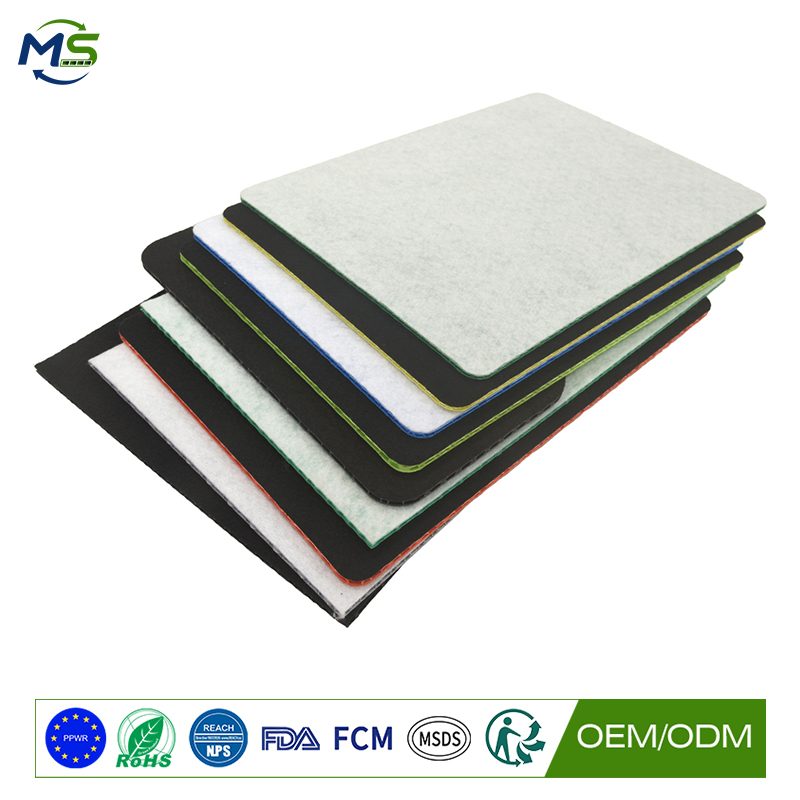
A useful audit for a panel manufacturer looks at the production line and the test records rather than at the showroom.
On the line, the questions are about the core extrusion, the bond method, the face application and the trim tolerance, and about how the process is controlled between batches. A line that produces a consistent product has documented checks at defined frequencies, and those checks are worth seeing.
In the laboratory or the test area, the interesting evidence is the destructive testing of full panels rather than the testing of material samples. A panel tested to failure and sectioned shows the real core geometry, the bond line and the failure mode, and it is far more informative than a certificate.
On the documentation side, look at the record of the last three production batches, the incoming material inspection, and the non-conformance log. A log with entries in it shows a process that finds and deals with problems; an empty one usually means the problems are not being recorded.
A few questions in the right order tell you more about a supplier than any amount of product literature.
Ask what deflection limit applies and what the capacity is at that limit. A supplier who answers in terms of compressive strength and then rephrases has understood the question; one who answers with a single number has not.
Ask what happens at the edge of a cut panel and whether the product is intended to be trimmed on site. The answer reveals whether they expect their panels to be handled by site labour and whether the grade suits it.
Ask how many cycles the product has actually achieved on comparable projects, and ask to speak to a reference. The honest answer is a range rather than a figure, and the honest supplier will say so.
Finally, ask what they would change if the heaviest load turned out to be higher than expected. A supplier with a solution mindset will talk about spreading the load and about a second grade; one with a fixed catalogue will talk about their standard range.
For terminology and test-method context see ISO standards catalogue. The guidance on this page is practical site guidance, not a test report or a certificate.
A small number of claims appear in almost every weak specification and are worth challenging directly.
An unquantified load claim is the most common. Phrases such as heavy duty, industrial grade or heavy duty construction describe a category rather than a number, and they cannot be checked against anything.
The second is a durability claim without a cycle count. Statements such as designed for repeated use or long lasting appear in almost any brochure and mean nothing without a number of cycles or an equivalent test.
The third is an environmental claim without a route. Recyclable is meaningless if the product has a bonded facing that prevents recovery, and it is worth asking which stream it goes into and under whose authority.
The fourth is a fire claim without a classification. Fire rated or fire resistant without the standard and the class cannot be verified and should not be accepted on a site where fire performance is governed by a temporary works risk assessment.
| Supplier question | Short answer | Evidence to request | In this guide |
|---|---|---|---|
| How to run a supplier audit for protection panels? | A useful audit for a panel manufacturer looks at the production line and the test records … | On the line, the questions are about the core extrusion, the bond method, the face … | Section 1 |
| What should be checked about questions that reveal whether a supplier … | A few questions in the right order tell you more about a supplier than any amount … | Ask what deflection limit applies and what the capacity is at that limit. A supplier … | Section 2 |
| What should be checked about red flags in a supplier’s claims? | A small number of claims appear in almost every weak specification and are worth challenging directly. | An unquantified load claim is the most common. Phrases such as heavy duty, industrial grade … | Section 3 |
| What should be checked about quality management and what a certification … | A quality management certification covers the process that produces the board, not the performance of an … | A supplier operating under a certified quality management system has documented procedures for incoming material … | Section 4 |
A quality management certification covers the process that produces the board, not the performance of an individual panel, and the distinction matters when a project demands evidence.
A supplier operating under a certified quality management system has documented procedures for incoming material, production, inspection and non-conformance. That is a meaningful assurance about consistency between batches, which is what matters when a floor is protected across several deliveries.
It does not mean each panel has been individually tested to the published load figures. Testing is normally carried out on samples at defined frequencies, and the certificate describes the system rather than the individual board.
For project documentation, the useful set of evidence is the product declaration, the test reports for the specific grade, the certification of the manufacturing system, and a declaration of conformity for the market the product is being supplied into. A supplier who provides this set unprompted is saving weeks of procurement administration.
A goods-in inspection takes twenty minutes and determines whether a defect is found now or after it has been laid.
Check the pallet count against the packing list and confirm the marks and the batch references match. Photograph any visible transit damage before the pallets are broken down, because the packaging condition is part of the evidence.
Break down one pallet per production batch and check the actual panel: the thickness, the facing, the edge condition and the bond. Check a cut-off edge in section if the bond method matters to the application.
Record the findings on the delivery paperwork before signing, and note any shortage or damage specifically rather than a general remark. A consignment signed with a general remark is very difficult to claim against later, and the claim is easier to make at the point of delivery than three weeks afterwards.
A sample panel should be tested for the things that will actually fail on the site, and a general product sample rarely tests any of them.
The most valuable sample test is simply to lay the panel on the actual floor and walk on it the way the site will. That reveals grip, movement under traffic, whether the surface marks, and how the seams behave, none of which appear in a datasheet.
A second test is the point-load test: put a loaded tool case or a scaffold base plate on the panel for an hour and measure the indentation and the residual deformation. A small even indentation is acceptable, a sharp permanent impression is not.
A third test is the wet test in a corner: wet the panel and check whether the facing holds and whether the core absorbs water at the edges. This is quick and it is where failures tend to originate later on.
A useful audit for a panel manufacturer looks at the production line and the test records rather than at the showroom. On the line, the questions are about the core extrusion, the bond method, the face application and the trim tolerance, and about …
A few questions in the right order tell you more about a supplier than any amount of product literature. Ask what deflection limit applies and what the capacity is at that limit. A supplier who answers in terms of compressive strength …
A quality management certification covers the process that produces the board, not the performance of an individual panel, and the distinction matters when a project demands evidence. A supplier operating under a certified quality management system has documented procedures for incoming material, production, inspection and non-conformance. That is a …
A sample panel should be tested for the things that will actually fail on the site, and a general product sample rarely tests any of them. The most valuable sample test is simply to lay the panel on the actual floor and walk on it the way the …
References checked by publisher and title on 2026-11-06. Standards and regulations are cited by name only; no performance values are attributed to them. General material-property figures in the text are indicative reference values for polypropylene and should be verified against your supplier’s current data sheet. Confirm applicability and current versions for your own project before relying on any of them.
For a quotation, a sample panel or help matching a thickness and facing to your site conditions, contact service@mingplastics.com or WhatsApp +86 189 3887 1524. Include the surface type, floor area, the trades working overhead and the expected duration so the recommended specification can be confirmed before you order.
For protection panel supplier audit, Ask for the evidence behind each claim and a production-batch sample before committing. A sample panel should be tested for the things that will actually fail on the site, and a general product sample rarely tests any of them.


