Address
Building 1, No. 22, Shexi Yongping Road,
Dongguan, Guangdong, China
Work Hours
Monday to Friday: 7AM - 7PM
Weekend: 10AM - 5PM
Address
Building 1, No. 22, Shexi Yongping Road,
Dongguan, Guangdong, China
Work Hours
Monday to Friday: 7AM - 7PM
Weekend: 10AM - 5PM
Single-use protection is the right answer when there is one short phase, no realistic storage or reuse route, a curing surface ... Ask Mingskye for a sample.
Single-use protection is the right answer when there is one short phase, no realistic storage or reuse route, a curing surface that must breathe, or a contaminated area where material cannot be taken away and cleaned. It is a poor answer when the same floor will be crossed by several trades over months, when disposal is costly, or when the client is reporting waste and emissions.
This page covers single-use floor protection in six sections: Why single-use alternatives are sometimes the right answer; How to spot an over-specified quote; The environmental case for reusable versus disposable; The cost of protection that never gets used; Protecting a floor that has just been screeded; Planning the end of the protection programme. Each section answers one practical question and can be read on its own.
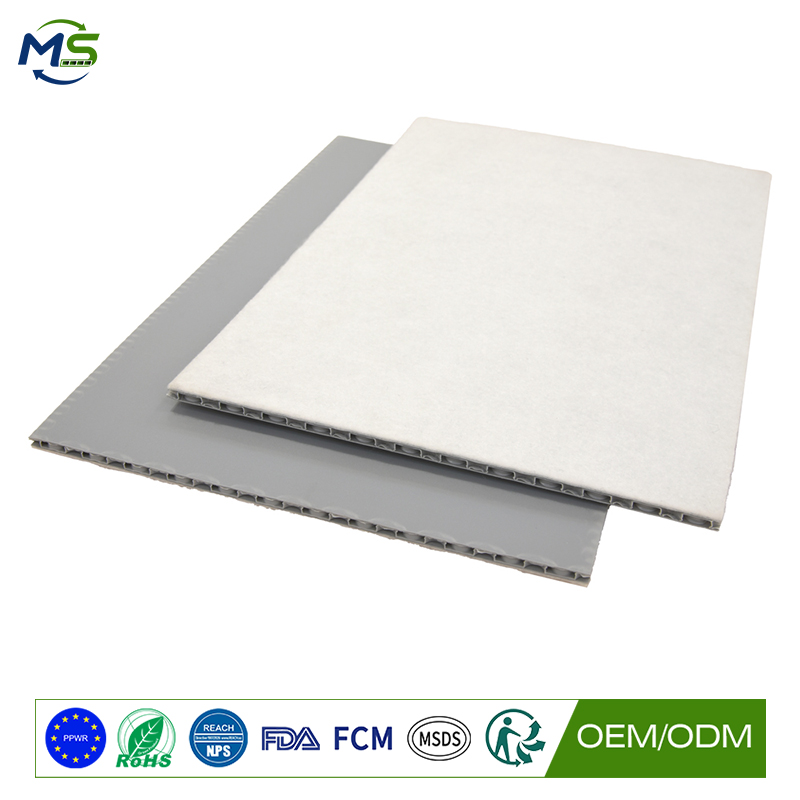
A single-use product is right when the job is genuinely single-use, the floor is not valuable and no collection system exists.
There is a category of work where reuse is impossible. A one-off concrete pour with a short protection window, a demolition site where the floor will be removed anyway, or a project where the panels will be contaminated beyond cleaning. Buying a reusable panel for these cases adds the cost of collection and return for no benefit.
The second case is a very short project in a remote location with no transport infrastructure for the return, where the collection cost exceeds the value of the panel.
The third case is a floor with no value to protect, where the real requirement is to keep a trade working for two days. In all three cases the single-use product is the correct economic answer, and a supplier who insists on the reusable option is selling the wrong thing.
An over-specified quote is expensive, unnecessary and often a sign that the supplier has a preferred product rather than a solution.
The tell is a specification with no load calculation behind it. A quote that offers a very thick panel for a light-duty area, or a fire-retardant grade with no fire requirement in the project, has not been derived from the application.
The second tell is the omission of the deflection limit and the working load in the offer. A supplier quoting a single load figure without the deflection has not engaged with the question of how the panel will actually behave, and the figure cannot be compared with the alternatives.
The third tell is a quote that cannot be compared, because it does not state the core height, the weight per square metre and the tolerances. A quote like that is designed to be the only offer, and it is usually the one that has not been checked against the site conditions.
For terminology and test-method context see ISO standards catalogue. The guidance on this page is practical site guidance, not a test report or a certificate.
Reusable wins on waste volume almost by definition, because the number of items entering the waste stream falls with every reuse cycle.
A disposable protection sheet used once per project generates one sheet of waste per protected square metre. A reusable panel used eight times generates one-eighth of a panel of waste per protected square metre, which is the arithmetic of the entire argument.
It is worth being careful about the counter-case. If a reusable panel is used once and then discarded, it has performed worse than a disposable sheet because more material was involved to achieve the same outcome. Reuse has to actually happen, which is why the collection and inspection regime is not an optional extra.
The related point is the weight. A disposable sheet is light and easy to move, and the labour saved on a single-phase project can outweigh the environmental benefit. The honest position is that reuse pays off on projects with real cycles, and single-use projects should use a single-use product.
| Comparison question | Short answer | What decides the choice | In this guide |
|---|---|---|---|
| Why single-use alternatives are sometimes the right answer? | A single-use product is right when the job is genuinely single-use, the floor is not valuable … | There is a category of work where reuse is impossible. A one-off concrete pour with … | Section 1 |
| How to spot an over-specified quote? | An over-specified quote is expensive, unnecessary and often a sign that the supplier has a preferred … | The tell is a specification with no load calculation behind it. A quote that offers … | Section 2 |
| What should be checked about the environmental case for reusable versus … | Reusable wins on waste volume almost by definition, because the number of items entering the waste … | A disposable protection sheet used once per project generates one sheet of waste per protected … | Section 3 |
| What should be checked about the cost of protection that never … | Protection bought but not deployed is pure waste, and it is one of the most common … | The reasons are predictable. The areas are not ready, the access is blocked, the panels … | Section 4 |
Protection bought but not deployed is pure waste, and it is one of the most common outcomes of a protection plan written in an office rather than on site.
The reasons are predictable. The areas are not ready, the access is blocked, the panels were delivered to the wrong part of the site, or the crews simply do not know they are there. In each case the material is bought and the value is not realised.
The remedy is to tie the purchase to the work sequence and to deliver by area rather than in one consignment. A phased delivery matched to the trade sequence keeps the panels in use rather than in a store.
It is also worth checking that the crews have been told what protection exists and where. A protection plan that exists only in a document is not a plan, and the panels that sit unused are the visible symptom.
A newly screeded floor must be protected from traffic for a period determined by the screed specification, and no panel specification overrides that.
The curing or drying time belongs to the screed and to the product used, and it is not shortened by covering it. In fact covering accelerates surface drying while trapping moisture below, which can cause the surface to delaminate or crack later.
Where protection is required during the drying period, the correct approach is to use a breathable permeable membrane rather than an impermeable panel, and to allow ventilation. A panel laid on a damp screed with no drainage path will do more harm than the traffic it prevents.
The decision about when to start protecting should be taken with the screed supplier, who can advise on the moisture condition and the safe loading. This is a conversation worth having early, because it determines the order of trades and often the programme.
The disposal or return decision should be made at the start of the project, because the choice affects the specification and the collection effort.
A return-to-stock route makes the fleet a continuing asset and needs panels that are individually identifiable, clean enough to re-sell and stored somewhere dry. That last point is usually the constraint that is overlooked, because a fleet needs storage space and a site rarely allocates it.
A recycling route needs the panels to be single-material and free of contamination, and it needs a collection arrangement with a recycler rather than a general waste contractor. Mixing the two streams at the collection point destroys the value of the recyclable one.
A disposal route is the default and it should be treated as a decision with a cost attached, not as the absence of a decision. It is worth asking a supplier what they will take back and at what price, since many will collect a pallet of panels at no charge precisely to keep them out of their own customer’s waste stream.
A single-use product is right when the job is genuinely single-use, the floor is not valuable and no collection system exists. There is a category of work where reuse is impossible. A one-off concrete pour with a short protection window, a demolition site …
An over-specified quote is expensive, unnecessary and often a sign that the supplier has a preferred product rather than a solution. The tell is a specification with no load calculation behind it. A quote that offers a very thick panel for a light-duty …
Protection bought but not deployed is pure waste, and it is one of the most common outcomes of a protection plan written in an office rather than on site. The reasons are predictable. The areas are not ready, the access is blocked, the panels were delivered to the wrong part of …
The disposal or return decision should be made at the start of the project, because the choice affects the specification and the collection effort. A return-to-stock route makes the fleet a continuing asset and needs panels that are individually identifiable, clean enough to re-sell and stored …
References checked by publisher and title on 2026-11-06. Standards and regulations are cited by name only; no performance values are attributed to them. General material-property figures in the text are indicative reference values for polypropylene and should be verified against your supplier’s current data sheet. Confirm applicability and current versions for your own project before relying on any of them.
For a quotation, a sample panel or help matching a thickness and facing to your site conditions, contact service@mingplastics.com or WhatsApp +86 189 3887 1524. Include the surface type, floor area, the trades working overhead and the expected duration so the recommended specification can be confirmed before you order.
For single-use floor protection, Rank the alternatives on the one property that actually decides your case, then check the price. The disposal or return decision should be made at the start of the project, because the choice affects the specification and the collection effort.


