Address
Building 1, No. 22, Shexi Yongping Road,
Dongguan, Guangdong, China
Work Hours
Monday to Friday: 7AM - 7PM
Weekend: 10AM - 5PM
Address
Building 1, No. 22, Shexi Yongping Road,
Dongguan, Guangdong, China
Work Hours
Monday to Friday: 7AM - 7PM
Weekend: 10AM - 5PM
Break-even is reached when the reusable panel's total cost divided by its actual number of cycles falls below the disposable ... Ask Mingskye for a sample.
Break-even is reached when the reusable panel’s total cost divided by its actual number of cycles falls below the disposable alternative’s cost for one cycle including waste removal. The decisive input is a realistic cycle count from comparable projects, not a supplier’s maximum. Ask how many uses the figure assumes, whether repair is included, and how panels are inspected between cycles.
This page covers protection panel break-even reuse in six sections: Break-even reuse: how many cycles justify a reusable; Total cost of ownership over a long project; The cost of protection that never gets used; Measuring what the site actually consumed; Making a reuse programme work for procurement; Presenting the business case internally. Each section answers one practical question and can be read on its own.
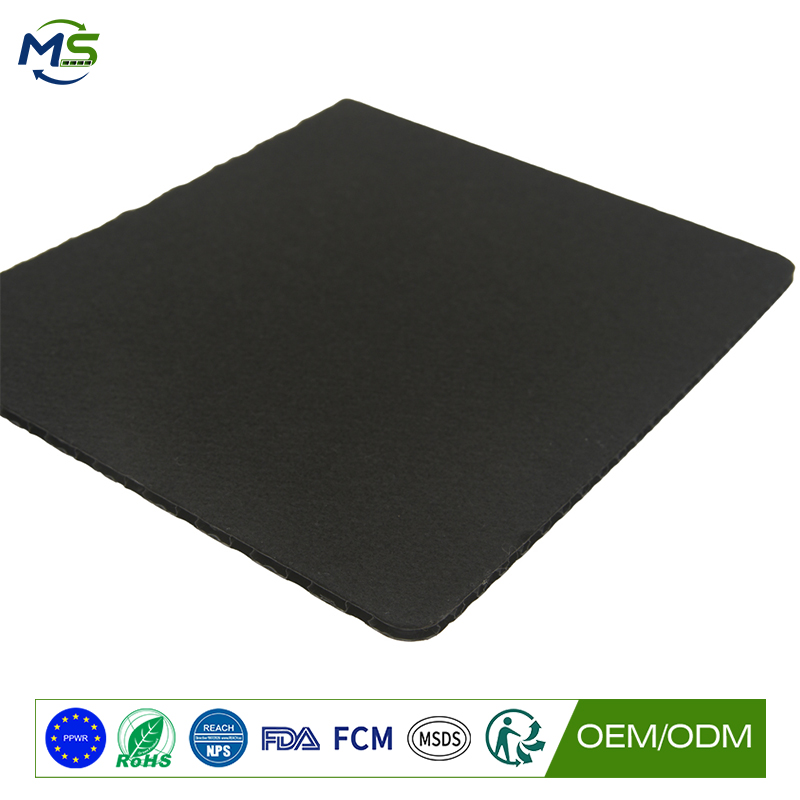
A reusable board beats a disposable one once it has survived enough cycles to absorb the price difference, and the price difference is usually smaller than people assume.
The calculation compares the purchase price of the reusable board with the disposable board plus the cost of disposal, the waste handling and the labour to clear it. Where the reusable board costs twice as much per square metre but disposal and handling add 40 per cent to the disposable option, the break-even sits around three cycles.
Add the labour saving and the reusable board is ahead from the first cycle on many projects, because a reusable board is laid and lifted repeatedly rather than disposed of and replaced.
The counter-case is a short, single-phase project with no reuse opportunity and no collection discipline, where the disposable option wins. Deciding honestly which kind of project it is saves buying the wrong product and then managing the consequences.
On a project measured in months, the total cost of ownership includes the fleet, the collection rounds, the inspection time, the repairs and the final disposal, not just the purchase.
The items that surprise people are the operational ones. Collecting panels from four levels at the end of each phase takes labour, and so does inspecting them. Repairs take labour. Storage between phases takes space, and space on a congested site is expensive in its own way.
A fleet that is too large has idle stock, storage cost and a risk of panels being lost. A fleet that is too small causes teams to wait for protection, and that delay usually costs more than the panels.
The practical approach is to model the number of panels in service at any one time, the number of movements per phase and the disposal at the end, then compare that total against the cost of buying new panels for each phase. The second number is usually the benchmark that surprises people, because it is what the alternative actually costs.
For terminology and test-method context see GHG Protocol Corporate Value Chain (Scope 3) Accounting and Reporting Standard. The guidance on this page is practical site guidance, not a test report or a certificate.
Protection bought but not deployed is pure waste, and it is one of the most common outcomes of a protection plan written in an office rather than on site.
The reasons are predictable. The areas are not ready, the access is blocked, the panels were delivered to the wrong part of the site, or the crews simply do not know they are there. In each case the material is bought and the value is not realised.
The remedy is to tie the purchase to the work sequence and to deliver by area rather than in one consignment. A phased delivery matched to the trade sequence keeps the panels in use rather than in a store.
It is also worth checking that the crews have been told what protection exists and where. A protection plan that exists only in a document is not a plan, and the panels that sit unused are the visible symptom.
| Cost question | Short answer | Figure to record | In this guide |
|---|---|---|---|
| What should be checked about break-even reuse: how many cycles justify … | A reusable board beats a disposable one once it has survived enough cycles to absorb the … | The calculation compares the purchase price of the reusable board with the disposable board plus … | Section 1 |
| What should be checked about total cost of ownership over a … | On a project measured in months, the total cost of ownership includes the fleet, the collection … | The items that surprise people are the operational ones. Collecting panels from four levels at … | Section 2 |
| What should be checked about the cost of protection that never … | Protection bought but not deployed is pure waste, and it is one of the most common … | The reasons are predictable. The areas are not ready, the access is blocked, the panels … | Section 3 |
| What should be checked about measuring what the site actually consumed? | Four simple measurements give a project a credible sustainability record, and all four are counts rather … | Count the panels issued to the site. Count the panels returned at each phase and … | Section 4 |
Four simple measurements give a project a credible sustainability record, and all four are counts rather than estimates.
Count the panels issued to the site. Count the panels returned at each phase and at the end. The difference gives the number damaged beyond repair and, with it, a direct measure of the protection performance achieved.
Weigh the offcuts and consumables that leave site. Offcuts are the most commonly overlooked waste stream in protection work, because they are bulky and go straight onto the skip rather than being counted.
Record the number of reuse cycles achieved across the whole project and the mass of material sent for recycling. Together these four figures give a waste diversion rate and a cycle count, which are the two numbers a client with reporting obligations actually needs.
Procurement policies usually reward the lowest unit price, so a reuse programme has to be argued in the language of the policy to survive.
The argument that works is total cost of ownership against a defined use case, supported by the cycle count from previous projects and the waste diversion figure. It is a different calculation from the one the purchasing system is configured to run, so it needs to be presented as a case rather than expected to be discovered by the system.
Some frameworks allow an evaluation on a total cost basis when the case is documented, and a supplier who provides cycle counts, waste data and reference sites makes that case far easier to put together.
A second, simpler route is to specify performance and durability rather than price per square metre. A specification that states the number of cycles, the required performance after reuse and the take-back obligation moves the comparison away from unit price and towards whole-life value.
The protection business case lands better when it is framed as programme risk reduction rather than as an environmental or procurement initiative.
Three points carry the argument. First, protecting the client floor removes a claim risk that is larger than the entire protection budget. Second, a working protection plan removes the delay exposure created by trades waiting for access. Third, a reusable fleet converts a consumable into an asset, which is a materially different line in the cost report.
Each of these can be supported with a number from the site rather than a general principle, and the site should be asked for the numbers: the value of the finished floor, the number of trades that work behind the protection, and the current cost of disposing of protection waste.
The environmental argument then becomes a supporting point rather than the main one, which makes it much harder to dismiss, because the decision is being made on cost and risk where the evidence is strongest.
A reusable board beats a disposable one once it has survived enough cycles to absorb the price difference, and the price difference is usually smaller than people assume. The calculation compares the purchase price of the reusable board with the disposable board plus the cost of disposal, the waste handling …
On a project measured in months, the total cost of ownership includes the fleet, the collection rounds, the inspection time, the repairs and the final disposal, not just the purchase. The items that surprise people are the operational ones. Collecting panels from four levels at the end of each phase takes labour …
Four simple measurements give a project a credible sustainability record, and all four are counts rather than estimates. Count the panels issued to the site. Count the panels returned at each phase and at the end. The difference gives the …
The protection business case lands better when it is framed as programme risk reduction rather than as an environmental or procurement initiative. Three points carry the argument. First, protecting the client floor removes a claim risk that is larger than the entire protection budget …
References checked by publisher and title on 2026-11-06. Standards and regulations are cited by name only; no performance values are attributed to them. General material-property figures in the text are indicative reference values for polypropylene and should be verified against your supplier’s current data sheet. Confirm applicability and current versions for your own project before relying on any of them.
For a quotation, a sample panel or help matching a thickness and facing to your site conditions, contact service@mingplastics.com or WhatsApp +86 189 3887 1524. Include the surface type, floor area, the trades working overhead and the expected duration so the recommended specification can be confirmed before you order.
For protection panel break-even reuse, Record cycles, labour and waste while the work is live, not when the report is due. The protection business case lands better when it is framed as programme risk reduction rather than as an environmental or procurement initiative.


