Address
Building 1, No. 22, Shexi Yongping Road,
Dongguan, Guangdong, China
Work Hours
Monday to Friday: 7AM - 7PM
Weekend: 10AM - 5PM
Address
Building 1, No. 22, Shexi Yongping Road,
Dongguan, Guangdong, China
Work Hours
Monday to Friday: 7AM - 7PM
Weekend: 10AM - 5PM
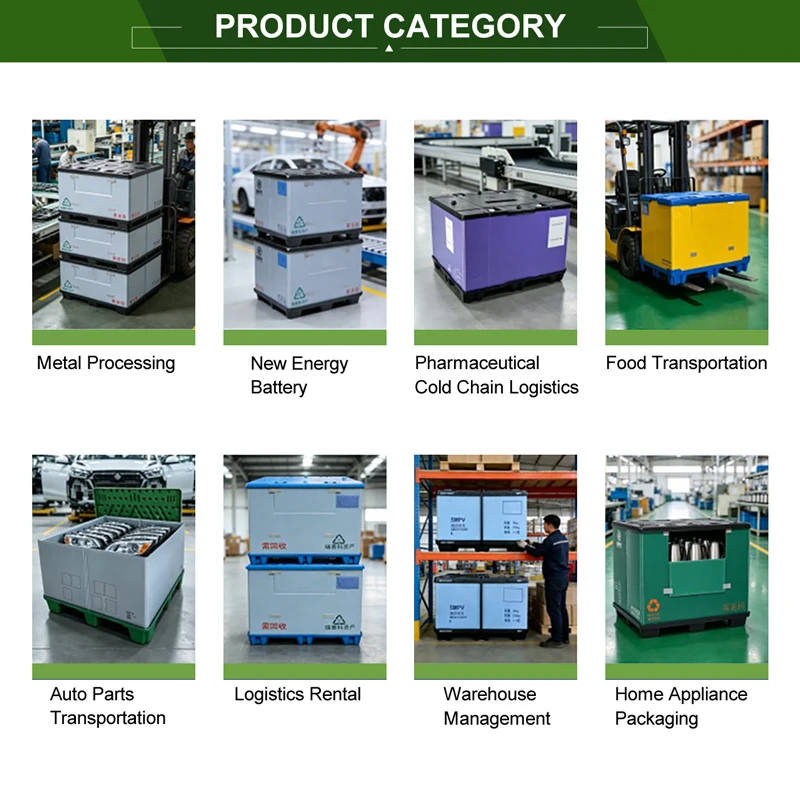
Achieving zero-damage logistics while simultaneously reducing tare weight is the new holy grail of industrial transit engineering, particularly in the high-growth EV battery and automotive sectors. Moving away from single-use wood and cardboard crates has become a critical milestone for supply chain decarbonization. Understanding the core science and economics of **Why Reusable Plastic Packaging is the Foundation of the Global Circular Economy Directive** represents a critical milestone for supply chain leaders looking to secure assets, bypass border delays, and optimize total cost of ownership (TCO). MingPlastics’ engineered transit assets are designed to bridge the gap between high physical load limits and absolute regulatory compliance, delivering a future-proof logistics strategy.
The foundation of a reliable heavy-duty circular logistics system is the physical core of the panel. Our specialized panels feature a high-density, multi-layer circular polypropylene cell structure. This sandwich core provides exceptional isotropic flexural rigidity, distributing compression forces symmetrically across the vertical walls of the container. Sourced from 100% virgin PP resins, the material remains chemically inert, preventing any risk of toxic chemical migration or polymer degradation in extreme conditions.
Geopolitical shifts and nearshoring require supply chains that operate with zero border friction. Single-use wood crates are subject to strict phytosanitary heat treatments and fumigation under ISPM 15 regulations, often causing severe customs delays. All-plastic packaging assets are naturally exempt from these constraints, flying through international borders. This friction-free customs velocity is a massive driver for JIT (Just-In-Time) assembly and multi-country trade lanes.
The financial benefits of reusable packaging become massive when analyzing reverse logistics. Traditional wood and paper containers cannot be folded, meaning returning them empty is incredibly expensive. Our collapsible and foldable plastic bins compress to 20% of their original volume, allowing you to fit five times more empty units in a return container.
| Reverse Freight Cost | Rigid Wood / Metal Frames | MingPlastics Collapsible Bins |
|---|---|---|
| Return Space Saving | 0% (Requires Same Return Freight) | 80% Space Saved (1 to 5 Volume Ratio) |
| Fumigation Record Fee | \ / Shipment Required | \ (All-Plastic Naturally Exempt) |
| 100-Trip Total Cost | \,000 (Freight + Handling) | \,800 (Fully Amortized Loop) |
The global push for zero-waste packaging is driven by stringent environmental laws. In Europe, environmental frameworks like Germany’s LUCID Packaging Act and France’s ADEME place heavy financial penalties on single-use waste. By transitioning to our certified reusable packaging loops, exporters avoid these waste taxes. Polypropylene transit assets are designed to support corporate Scope 3 decarbonization, directly reducing greenhouse gases associated with disposable waste disposal.
Different industrial sectors demand unique packaging characteristics. In the automotive and EV sectors, transporting heavy engine blocks or fragile high-voltage battery modules requires extreme physical strength and safety. We specialize in custom engineering pallet sleeve containers with customized internal dunnage, anti-scratch textile laminations, and permanent ESD anti-static dissipation (^6 – 10^9 \Omega$) to protect sensitive PCB modules from static ignition.
Q: How does the foldability impact return shipping costs?
A: Because they collapse to 20% of their original volume, you can fit five times more empty units in a return container, cutting reverse logistics costs by 80%.
Q: Do these boxes meet European packaging regulations?
A: Yes, they are 100% reusable and recyclable, fully complying with the EU PPWR and EPR environmental tax laws in countries like Germany and France.
Future-proof your global industrial logistics today. For technical drawings, certified UN test reports, and direct factory wholesale quotes, contact our engineering department at Email (dawn@mingplastics.com) or reach our technical team via WhatsApp (+86 18098231505).
MingPlastics: Your direct factory source for advanced, steel-reinforced, and RFID-ready PP honeycomb box systems. Certified compliant with FDA, EU FCM, ROHS, and REACH standards.
📞 WhatsApp/WeChat: +86 18098231505
📧 Direct Email Enquiry: dawn@mingplastics.com
💬 Project Consultation: Consult with our Engineers on WhatsApp