Address
Building 1, No. 22, Shexi Yongping Road,
Dongguan, Guangdong, China
Work Hours
Monday to Friday: 7AM - 7PM
Weekend: 10AM - 5PM
Address
Building 1, No. 22, Shexi Yongping Road,
Dongguan, Guangdong, China
Work Hours
Monday to Friday: 7AM - 7PM
Weekend: 10AM - 5PM
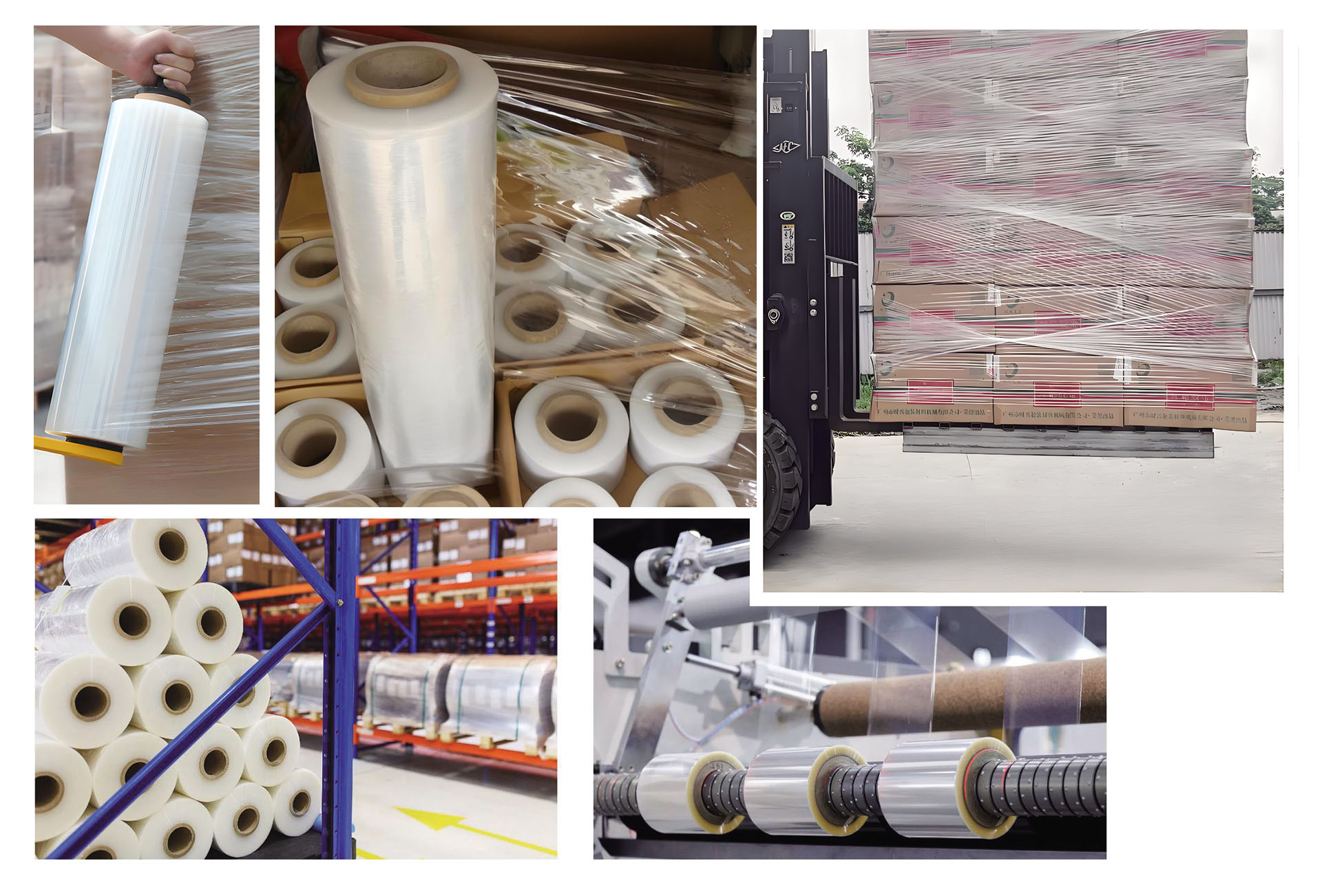
In sales and procurement, the best stretch film is not automatically the thinnest roll or the cheapest roll on a quotation. The practical question is whether the film protects the load with a controlled amount of material, while keeping the wrapping process repeatable. That is the reason to evaluate nano stretch film against a defined baseline rather than relying on a broad claim about advanced film technology. This article looks at qualified savings communication and turns it into a measurement plan for teams that buy, operate or manage packaging equipment. The focus is baseline, conditions and measured outcome.
A conventional wrapping routine often hides its real cost. The roll price is visible, but film used per pallet, breaks, restarts, rewrapping and load damage are distributed across different teams. A practical nano stretch wrap film comparison puts those items on one trial sheet. Use the same load family, wrapping pattern and acceptance standard for the current film and the candidate film. If the comparison changes several variables at once, it becomes difficult to tell whether the result came from the film, the machine or the load.
Mingskye describes this range as a 55-layer cast-film construction with cling, core and nano functional layers. The product description associates the construction with strength, toughness, processability and handling properties. Those are useful reasons to request a sample, not a substitute for a test. The film should earn its place through the result on the job you need to protect.
Compared with a conventional film routine, the intended advantage is material efficiency: use less film where the load does not require extra material, while keeping the required hold. That can also reduce the amount of single-use film removed after delivery. It does not mean every load will use the same gauge or that waste falls by a fixed percentage.
The thickness schedule should be read as a set of choices, not as one universal nano stretch film specification. The product page separates conventional hand-use and machine-use tables, and the same micron value can have a different role depending on the grade and equipment. For qualified savings communication, start by identifying how the film is applied, then ask the supplier to tie the quotation to a grade code, thickness and trial condition.
The product page lists 8, 10, 12, 15, 17, 20 and 23 μm across separate hand-use and machine-use tables. The 8 μm entry is shown under High end Stiff Film (F), a hand-use grade. Machine wrapping should be matched to the listed machine grades and the wrapper’s operating conditions. A micron figure alone is not a complete specification.
For hand wrapping, the operator’s handling method, load shape and corner condition matter. For automatic wrapping, pre-stretch capability, wrap force and machine speed matter. The largest ultimate-stretch figure is not automatically the correct machine setting. Ask for the optimal operating range for the quoted grade and document any adjustment made during the sample run. This keeps a thinner-film discussion connected to an actual packaging result.
| Film-use group | Listed grades and thicknesses |
|---|---|
| Hand-use: High end Stiff Film (F) | 8 μm, 10 μm, 12 μm |
| Hand-use: Standard (A) | 15 μm, 17 μm, 20 μm, 23 μm |
| Machine-use: Genius (D) | 12 μm, 15 μm |
| Machine-use: Titan (K) | 12 μm, 15 μm |
| Machine-use: Xeon (C) | 15 μm, 17 μm, 20 μm |
| Machine-use: Zeon (B) | 12 μm, 17 μm, 23 μm |
| Machine-use: Arteon (E) | 10 μm, 12 μm |
The comparison with a conventional stretch film should be specific enough for a production decision. Record the current film’s thickness, net mass used per acceptable pallet, wrapping pattern and number of wraps. Note the load dimensions, weight, carton surfaces and any sharp edges. Then repeat the same run with the selected nano stretch wrap film. For sales and procurement, pay particular attention to baseline, conditions and measured outcome.
A useful result is not simply “the new roll looked thinner.” It is a repeatable outcome: grams per acceptable pallet, first-pass success, film breaks, rewraps and the condition of the load after normal handling. If a candidate film needs extra turns, include those turns in the consumption result. If it reduces material but creates line interruptions, include the downtime and rejected film.
A qualified comparison can show where nano stretch film is useful and where a different gauge is better. It may also show that a conventional film is already well optimized for one load family. That is not a failed trial; it is information that prevents a blanket specification from being applied to every shipment.
The environmental case begins with material that is not used. If a pallet can be protected with fewer grams of film, the business has less single-use wrapping to remove, collect and manage after unpacking. Measure this at the pallet level. Record film consumed, film discarded during breaks, and film used for rewrapping. A reduction in one category should not be presented as a reduction in total waste unless the other categories have also been checked.
The product page states that material efficiency can reduce costs by up to 50% through elasticity, stickiness and toughness. Treat this as a supplier-stated potential saving, not a guaranteed outcome. The actual result depends on the grade, load, machine settings, current film and calculation baseline. It also does not prove that waste or carbon emissions fall by 50%.
For baseline, conditions and measured outcome, connect the waste target to an operational target. A packaging team might track grams per pallet, first-pass wrap rate and kilograms of rejected film. A procurement team might track cost per acceptable pallet. Together, these measures show whether the change is reducing material use without transferring the problem to damaged goods or extra labour.
A controlled trial is easier to approve when the pass criteria are written before the first roll is loaded. Choose at least three representative loads: a normal load, a difficult load and a load that exposes the condition most likely to cause trouble in sales and procurement. Keep the current film as a control. Record wrapper settings or operator method, load weight, pallet dimensions and storage or transport conditions.
Use a short checklist:
Do not treat a sample approval as proof for every product or site. A successful run identifies a grade and a set of conditions worth scaling. A failed run identifies what must change: film grade, wrapping pattern, machine maintenance, operator method or load preparation. This is more useful than selecting a thickness from a catalogue without a baseline.
For a supplier enquiry, describe the job before asking for a price. Include the current film, application method, pallet dimensions, load weight, equipment, storage temperature and the failure or waste issue you want to address. For baseline, conditions and measured outcome, add the measurement you already have, such as film used per pallet or the number of rewraps per shift.
The MingPlastics nano stretch film product page provides the published thickness and performance tables. The customizable multilayer machine-film page is useful when the operation needs a machine-use discussion. The earlier articles on choosing nano stretch film beyond thickness and thickness, waste and packaging cost explain the same comparison logic from two different angles. Lantech’s stretch-wrapping guidance is a useful external reference for considering containment force and machine condition.
For a quotation, contact service@mingplastics.com with the wrapping brief. Ask for the quoted grade, applicable thickness, recommended starting conditions and the basis for any saving estimate. The goal is a film choice that reduces unnecessary material and single-use waste while keeping the load safe and the line predictable.
A sensible nano stretch film decision is based on the load, the equipment and the measured result. Start with a controlled comparison, document the chosen grade and then scale only when the film protects the shipment with a repeatable amount of material.