Address
Building 1, No. 22, Shexi Yongping Road,
Dongguan, Guangdong, China
Work Hours
Monday to Friday: 7AM - 7PM
Weekend: 10AM - 5PM
Address
Building 1, No. 22, Shexi Yongping Road,
Dongguan, Guangdong, China
Work Hours
Monday to Friday: 7AM - 7PM
Weekend: 10AM - 5PM
Veterinary floors face claws, washdown and disinfectants. This guide covers thickness from 2 mm to 12 mm, grip, drainage and an animal facility trial plan.
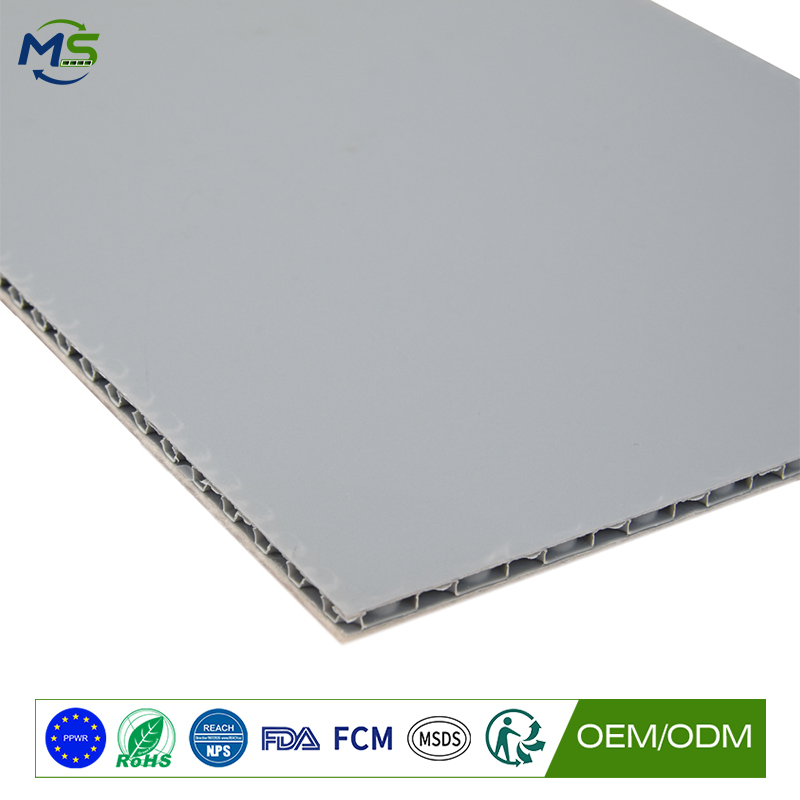
Veterinary and animal facilities combine washdown cleaning, claws and hooves, and hygiene requirements in a small footprint. Protection has to be waterproof, cleanable and safe for animals as well as people. This article looks at protecting floors in animal facilities. The focus is moisture, claw damage and hygienic surfaces.
Animal facilities see pointed loads from claws and hooves, constant washing, and strict infection control. A covering that punctures, absorbs or harbours bacteria fails on all three counts.
A rigid PP honeycomb protection board resists puncture better than soft coverings, does not absorb water and can be cleaned with the site’s agents.
Confirm the cleaning agents and disinfectants in use before specifying, because they are often stronger than in general environments.
Animal facilities carry equipment, cages and animals themselves, so the middle part of the 2 mm to 12 mm range is typical.
For pedestrian routes a mid thickness is enough. Where equipment, cages and heavy animals move through, thicker boards protect the floor from concentrated loads.
| Board group | Typical thickness | Where it earns its place | Watch-outs |
|---|---|---|---|
| Light-duty panel | 2-3 mm | Pedestrian routes away from animals | Punctures under claws and hooves |
| General facility panel | 4-6 mm | Kennel and treatment routes with foot traffic | Confirm disinfectant compatibility |
| Heavy-duty panel | 8-10 mm | Equipment, cage moves and large animals | Check floor tolerance |
| Maximum protection | 12 mm | Heavy equipment installation in animal areas | Confirm floor capacity |
Keep drainage clear, because washdown water has to go somewhere and ponding is both a hygiene and a slip problem.
Consider grip: a faced board gives a better surface for animals and people than smooth plastic, especially when wet.
Finish edges so claws and paws cannot catch them, and inspect daily in areas animals use.
Cardboard and paper products are unusable: they soak, shred and harbour contamination.
Plywood absorbs water and disinfectant, delaminates and can splinter, which is a risk around animals.
Rubber matting is the correct permanent answer for animal areas but is heavy and expensive to deploy temporarily. A PP honeycomb board is light, cleanable and waterproof.
Protect one route or room and leave a comparable area on the current method. Inspect daily, including under the panels.
Run a disinfectant test with the site’s agent on a sample panel, then check for degradation and residue.
Record drainage performance and how animals responded to the surface, because both matter in a working facility.
State the floor type, the disinfectants used, the drainage layout, what animals are present and the expected loads. Ask for the recommended thickness and confirm water and chemical resistance.
Ask for guidance on grip and edge finishing for animal safety, plus custom sizes for kennel and pen layouts.
For a quotation or sample panel, contact service@mingplastics.com or WhatsApp +86 189 3887 1524. Include the surface type, floor area, trades on site and expected duration so the recommended thickness, facing and fire performance can be confirmed before you order.
In animal facilities, use waterproof cleanable protection with good grip, keep drainage clear, finish edges against claws and confirm disinfectant compatibility.


