Address
Building 1, No. 22, Shexi Yongping Road,
Dongguan, Guangdong, China
Work Hours
Monday to Friday: 7AM - 7PM
Weekend: 10AM - 5PM
Address
Building 1, No. 22, Shexi Yongping Road,
Dongguan, Guangdong, China
Work Hours
Monday to Friday: 7AM - 7PM
Weekend: 10AM - 5PM
Hospital protection must satisfy infection control and fire rules. This guide covers thickness from 2 mm to 12 mm, cleaning compatibility, compliance and a clinical trial plan.
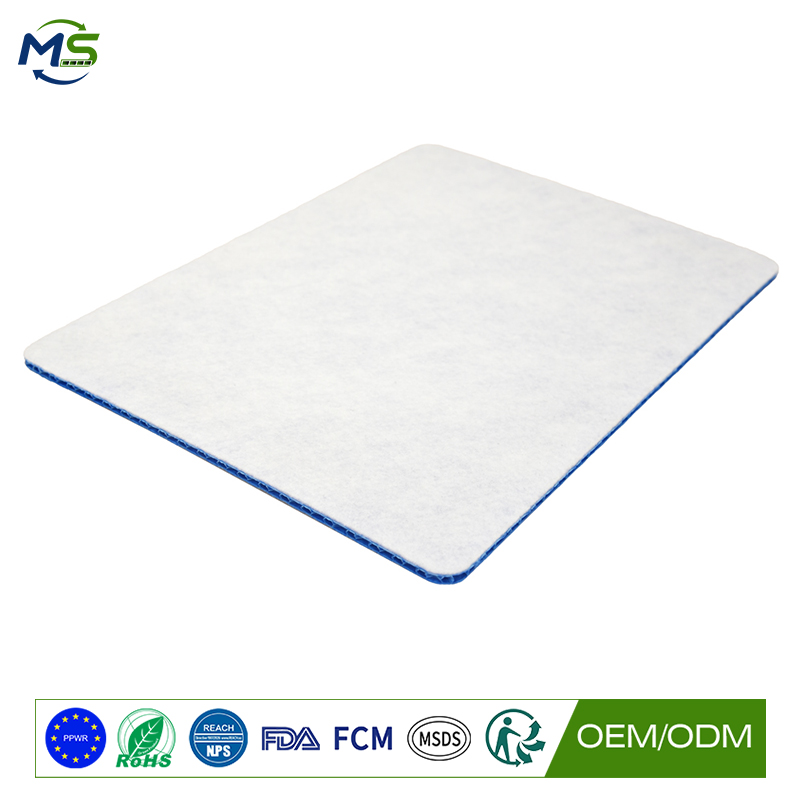
Hospital work happens around patients, which adds infection control, fire performance and cleaning requirements to an ordinary protection decision. Routes pass through areas that are cleaned with aggressive agents and cannot be closed. This article looks at protecting floors and walls in live clinical areas. The focus is cleanability, compliance and keeping routes open.
Any material brought into a clinical area has to be cleanable with the agents the hospital uses, and it must not harbour dust or moisture at its edges. That requirement eliminates most absorbent protection before cost is even considered.
A PP honeycomb protection board does not absorb water, can be wiped with standard cleaning agents and lies flat, so it can be kept clean along a route that is in daily use.
Because the boards are rigid rather than flexible, seams and edges can be finished so they do not lift and collect debris in a corridor.
Hospital routes carry beds, trolleys and equipment, so the middle to upper part of the 2 mm to 12 mm range is usually appropriate for corridors.
For ward floors with pedestrian traffic only, a mid thickness is sufficient. Where beds and heavy equipment are moved repeatedly, thicker boards prevent the point dents that damage seamless vinyl flooring and its welded joints.
| Board group | Typical thickness | Where it earns its place | Watch-outs |
|---|---|---|---|
| Light-duty panel | 2-3 mm | Ward floors with pedestrian traffic only | Not for bed or equipment moves |
| General route panel | 4-6 mm | Clinical corridors under daily trolley traffic | Confirm fire performance; finish edges |
| Heavy-duty panel | 8-10 mm | Bed and equipment moves over seamless vinyl | Heavier handling; check welded joints |
| Maximum protection | 12 mm | Plant and imaging equipment installation routes | More than ward-level work needs |
Confirm the fire performance required for the area before ordering, because clinical corridors are usually escape routes with their own specification. Fire-retardant options are part of the product range and should be stated in the enquiry.
Confirm compatibility with the cleaning agents in use, and clean the boards on the same schedule as the surrounding floor so the route does not become an exception.
Keep the route as narrow as operational safety allows and sign it, because in a live ward the protection itself must not obstruct staff or patients.
Paper and foam are generally unacceptable in clinical areas: they tear, hold moisture and cannot be cleaned to the required standard.
Plywood is cleanable but heavy, absorbs water at the edges and is slow to fit around a working ward, and its fixings can damage seamless flooring.
A PP honeycomb board is non-absorbing, wipe-clean and light enough to place and lift quickly, which is what makes it practical in an area that cannot be closed.
Agree the trial with the infection-control team before starting. Protect one route and keep a comparable route on the current method, inspecting both on the same schedule.
Run a cleaning test: clean a sample panel with the hospital’s standard agent repeatedly, then check for degradation and for residue on the floor beneath.
Record whether edges stayed sealed and whether the route could be kept clean daily, because those two factors determine compliance.
State the floor type, whether it is seamless vinyl with welded joints, the cleaning agents in use, and the fire performance required. Ask for the recommended thickness, facing and panel size, and confirm fire-retardant availability.
Ask for written guidance on cleaning, edge finishing and on keeping escape routes compliant, and about custom sizes for standard corridor widths.
For a quotation or sample panel, contact service@mingplastics.com or WhatsApp +86 189 3887 1524. Include the surface type, floor area, trades on site and expected duration so the recommended thickness, facing and fire performance can be confirmed before you order.
In clinical areas, specify for cleanability and fire performance first, then for load. Confirm the fire rating and cleaning compatibility in writing before ordering.


