Address
Building 1, No. 22, Shexi Yongping Road,
Dongguan, Guangdong, China
Work Hours
Monday to Friday: 7AM - 7PM
Weekend: 10AM - 5PM
Address
Building 1, No. 22, Shexi Yongping Road,
Dongguan, Guangdong, China
Work Hours
Monday to Friday: 7AM - 7PM
Weekend: 10AM - 5PM
Dispatch floors wear along fixed wheel lines. This guide covers thickness from 2 mm to 12 mm, wear lines, seam direction and a dispatch trial plan.
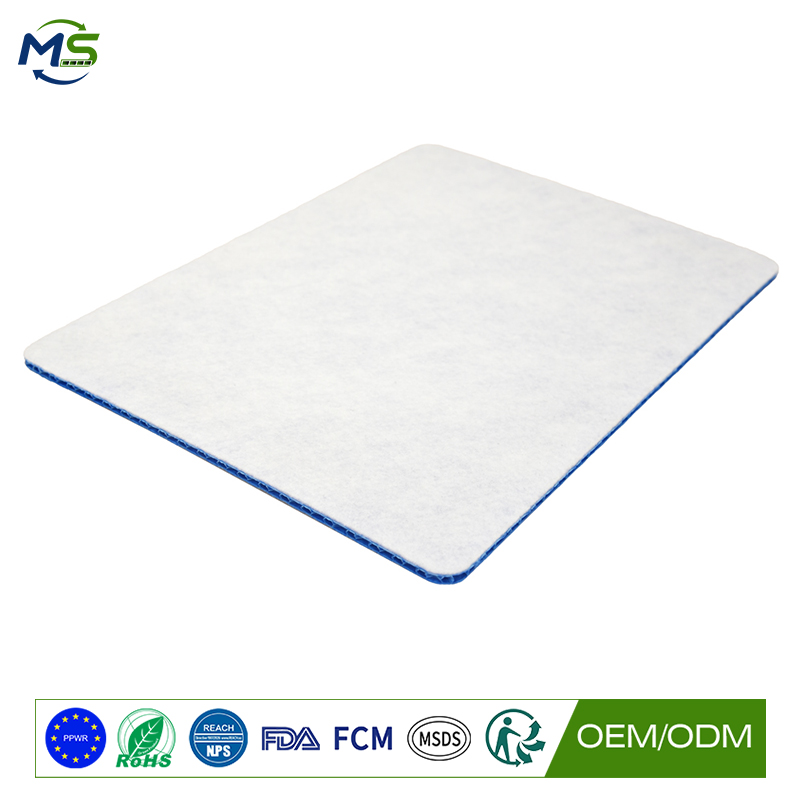
Dispatch and packing areas see more wheeled cycles per hour than almost anywhere else, and the floor fails along the same few lines repeatedly. Protection there is a wear problem rather than an impact problem. This article looks at protecting dispatch floors. The focus is repetitive wheel traffic, wear lines and protecting a high-cycle surface.
In a dispatch area the same wheels follow the same paths thousands of times, so damage appears as wear lines along fixed routes rather than as isolated marks.
A rigid PP honeycomb protection board takes that wear instead of the floor, and because it is a panel it stays on the route rather than being pushed aside.
Because the panels do not absorb water or oil, they suit an area where spills and washdown are routine.
Dispatch areas carry pallet trucks, cages and deliveries constantly, so the middle to upper part of the 2 mm to 12 mm range is typical.
For pedestrian walkways a mid thickness is enough. On the main wheel lines, thicker boards resist the repeated loading that wears through thinner protection.
| Board group | Typical thickness | Where it earns its place | Watch-outs |
|---|---|---|---|
| Light-duty panel | 2-3 mm | Pedestrian walkways beside dispatch routes | Wears through on wheel lines |
| General dispatch panel | 4-6 mm | Packing areas with moderate wheel traffic | Tape seams along travel direction |
| Heavy-duty panel | 8-10 mm | Main pallet truck and cage wheel lines | Rotate panels on the busiest lines |
| Maximum protection | 12 mm | Heaviest, highest-cycle dispatch routes | Confirm floor and coating tolerance |
Identify the main wheel lines before specifying and protect those first, because they carry almost all the wear.
Tape seams in the direction of travel so wheels ride onto joints rather than catching them, and check seam condition as part of routine inspection.
Inspect on a cycle that matches the throughput, not weekly: in a high-cycle area, weekly inspection is too slow to catch a worn panel.
Plywood wears through on the wheel lines and absorbs oil, after which it has to be replaced on the busiest part of the floor.
Matting works for pedestrian walkways but not for loaded wheel routes, and floor paint protects against dusting rather than point loads.
A PP honeycomb board spreads wheel loads and can be rotated or replaced panel by panel on the wear lines.
Protect the main wheel line and leave a comparable line on the current method. Inspect on a cycle matched to throughput, photographing the same points.
Run a repeated-pass test with a loaded pallet truck, then lift and compare the floor beneath both lines.
Record wear per panel and how quickly panels were replaced, because in dispatch that determines running cost.
State the floor type, the daily cycle count, the wheeled loads and whether oil or washdown is present. Ask for the recommended thickness for repeated wheel traffic.
Ask for guidance on seam direction and inspection intervals, plus custom sizes for standard aisle widths.
For a quotation or sample panel, contact service@mingplastics.com or WhatsApp +86 189 3887 1524. Include the surface type, floor area, trades on site and expected duration so the recommended thickness, facing and fire performance can be confirmed before you order.
In dispatch areas, protect the main wheel lines with the thick end of the range, run seams along the direction of travel, and inspect on a cycle matched to throughput.


