Address
Building 1, No. 22, Shexi Yongping Road,
Dongguan, Guangdong, China
Work Hours
Monday to Friday: 7AM - 7PM
Weekend: 10AM - 5PM
Address
Building 1, No. 22, Shexi Yongping Road,
Dongguan, Guangdong, China
Work Hours
Monday to Friday: 7AM - 7PM
Weekend: 10AM - 5PM
Bank refits move heavy security equipment over high-value finishes. This guide covers thickness from 2 mm to 12 mm, security and a branch trial plan.
Bank branch refits combine high-value finishes, security equipment and the need to keep trading or reopen on a fixed date. Works happen in small, secure spaces with strict controls. This article looks at protecting floors during branch refits. The focus is security equipment moves, marble and stone finishes and reopening on time.
Branch refits move safes, ATMs and security screens across finished floors, and those are among the heaviest items that enter a small commercial space.
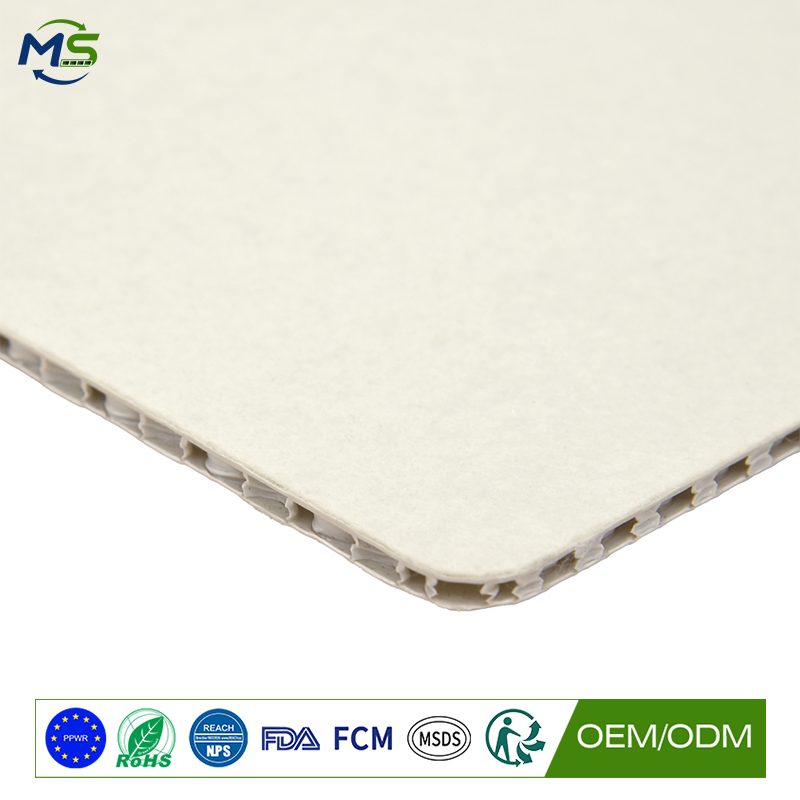
A rigid PP honeycomb protection board spreads those loads and protects marble, stone and polished finishes that are expensive to replace and slow to match.
Because the panels are light, they can be carried through secure areas without heavy handling equipment.
Branch works involve safes, ATM units and counters, so the middle to upper part of the 2 mm to 12 mm range is typical for installation routes.
For pedestrian areas a mid thickness is enough. Where ATMs and safes are moved, the thicker boards give the spreading those concentrated loads require.
| Board group | Typical thickness | Where it earns its place | Watch-outs |
|---|---|---|---|
| Light-duty panel | 2-3 mm | Customer areas with foot traffic only | Not for ATM or safe moves |
| General branch panel | 4-6 mm | Branch floors under refit traffic | Keep customer routes open and protected |
| Heavy-duty panel | 8-10 mm | ATM, safe and counter installation routes | Build transitions at thresholds |
| Maximum protection | 12 mm | Safes and heaviest security equipment | Confirm floor capacity |
Work to the reopening date: protection must be cleared and the floor inspected before the branch opens, because the date is usually fixed and public.
Coordinate with security: confirm what materials can enter secure areas and plan deliveries and escorts accordingly.
Keep any public route or ATM access open and protected, since closing it affects customers during the works.
Plywood is heavy to manoeuvre in a small branch and absorbs water from cleaning.
Moving blankets protect equipment, not floors, and they slide rather than spreading load.
Sheeting is a slip hazard in a public area. A PP honeycomb board is light, cuttable and protects stone and marble finishes.
Protect the installation route and one counter area, leaving comparable areas on the current method. Inspect after each equipment move.
Run an ATM or safe move over a sample panel, then lift and check the floor beneath.
Record condition at reopening, because a branch’s finish is part of the brand and is judged on day one.
State the floor finishes, the equipment weights, the secure-area constraints and the reopening date. Ask for the recommended thickness for equipment moves.
Ask for guidance on working within security controls and about custom sizes for standard branch layouts.
For a quotation or sample panel, contact service@mingplastics.com or WhatsApp +86 189 3887 1524. Include the surface type, floor area, trades on site and expected duration so the recommended thickness, facing and fire performance can be confirmed before you order.
For branch refits, protect the equipment route with the thick end of the range, work within security controls, and clear and inspect the floor before reopening.


