Address
Building 1, No. 22, Shexi Yongping Road,
Dongguan, Guangdong, China
Work Hours
Monday to Friday: 7AM - 7PM
Weekend: 10AM - 5PM
Address
Building 1, No. 22, Shexi Yongping Road,
Dongguan, Guangdong, China
Work Hours
Monday to Friday: 7AM - 7PM
Weekend: 10AM - 5PM
Retail stockrooms take the heaviest loads in a store. This guide covers thickness from 2 mm to 12 mm, cage traffic and a stockroom trial plan.
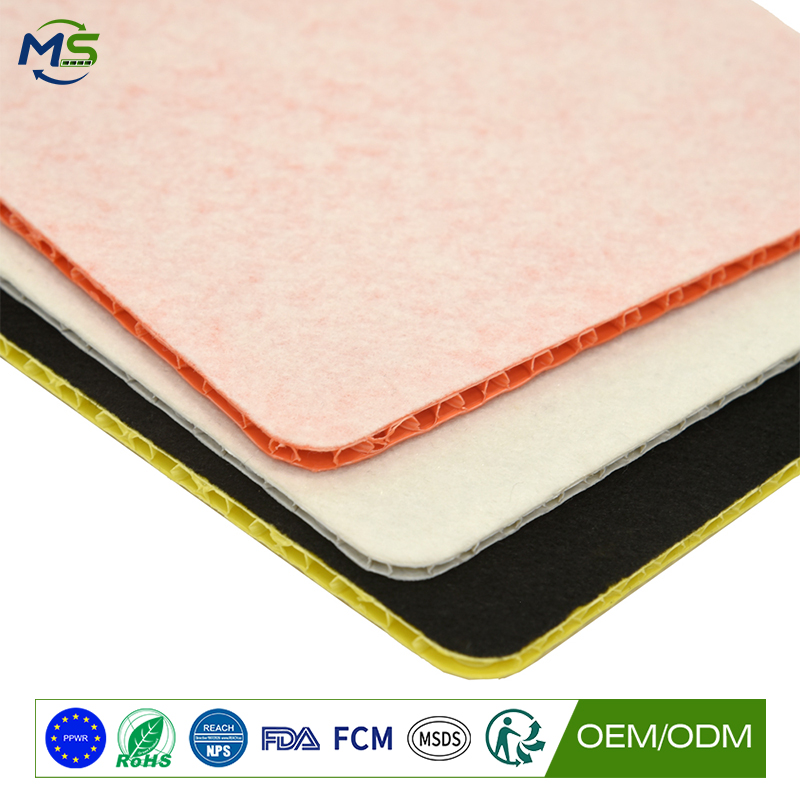
Retail stockrooms take the heaviest loads in a store: cages, pallets and constant replenishment, usually on a floor nobody specified for it. Damage there is invisible to customers but expensive to fix. This article looks at protecting back-of-house floors. The focus is cage traffic, storage loads and protecting an unglamorous but expensive surface.
The shopfloor gets the design attention, but the stockroom takes the cages, pallet trucks and deliveries. It is where floors actually fail in retail.
A rigid PP honeycomb protection board spreads cage and pallet loads and resists the constant abrasion that stockroom traffic produces.
Because the panels do not absorb water, they suit a stockroom that is cleaned and where spills and leaks happen.
Stockrooms carry cages, pallet trucks and stacked stock, so the middle to upper part of the 2 mm to 12 mm range is typical.
For pedestrian routes a mid thickness is enough. Under cage wheels, pallet trucks and racked stock, thicker boards protect the floor from concentrated loads.
| Board group | Typical thickness | Where it earns its place | Watch-outs |
|---|---|---|---|
| Light-duty panel | 2-3 mm | Pedestrian routes in stock areas | Compresses under cage wheels |
| General stockroom panel | 4-6 mm | Stockroom routes with cage and trolley traffic | Protect the busiest line in the route |
| Heavy-duty panel | 8-10 mm | Pallet trucks, stacked stock and deliveries | Check floor tolerance |
| Maximum protection | 12 mm | Racking installation and heavy deliveries | Confirm floor capacity |
Protect the route from the loading door through to the shopfloor, because that is where cages travel repeatedly along the same line.
Where stock is stacked temporarily, protect the set-down area rather than letting pallets rest directly on the floor.
Keep spills and leaks off the floor: a non-absorbing board keeps liquid on top where it can be dealt with rather than letting it reach the surface.
Cardboard is ubiquitous in stockrooms and compresses immediately under cage wheels, which is precisely the load that matters.
Plywood works but absorbs water, crushes at the edges and is heavy to shift around a crowded stockroom.
Matting is appropriate for standing areas, not for cage routes. A PP honeycomb board spreads load and is light enough to reposition.
Protect one route and one set-down area, leaving comparable areas on the current method. Inspect weekly and after peak delivery periods.
Run a loaded cage test over a sample panel for a set number of passes, then lift and check the floor.
Record wear at the busiest line in the route, because in a stockroom that line determines the specification.
State the floor type, the cage and pallet loads, the route and storage layout and whether the store trades during works. Ask for the recommended thickness for cage traffic.
Ask for guidance on set-down areas and spill handling, plus custom sizes for standard stockroom aisles.
For a quotation or sample panel, contact service@mingplastics.com or WhatsApp +86 189 3887 1524. Include the surface type, floor area, trades on site and expected duration so the recommended thickness, facing and fire performance can be confirmed before you order.
Protect the cage route and every set-down area, use the thick end of the range under wheeled loads, and keep spills off the floor with a non-absorbing board.


