Address
Building 1, No. 22, Shexi Yongping Road,
Dongguan, Guangdong, China
Work Hours
Monday to Friday: 7AM - 7PM
Weekend: 10AM - 5PM
Address
Building 1, No. 22, Shexi Yongping Road,
Dongguan, Guangdong, China
Work Hours
Monday to Friday: 7AM - 7PM
Weekend: 10AM - 5PM
Lift cab damage is chargeable and highly visible. This guide covers thickness from 2 mm to 12 mm, clearances, floor versus wall lining and a cab trial plan.
An elevator cab is a small, expensive, highly finished space that becomes the main material route during fit-out. Scratched stainless steel, dented panelling and damaged floors in a cab are usually chargeable and always visible. This article looks at protecting lift interiors during construction and move-in. The focus is lining a confined space, protecting metal finishes and keeping the lift in service.
Lift interiors combine stainless steel, glass, stone or laminate in a confined space, and every material move passes through it. Damage is almost always a replacement rather than a repair, and lift downtime during repair affects the whole programme.
Protection therefore has to be complete but removable: it must cover walls, floor and door returns without preventing the lift from operating normally.
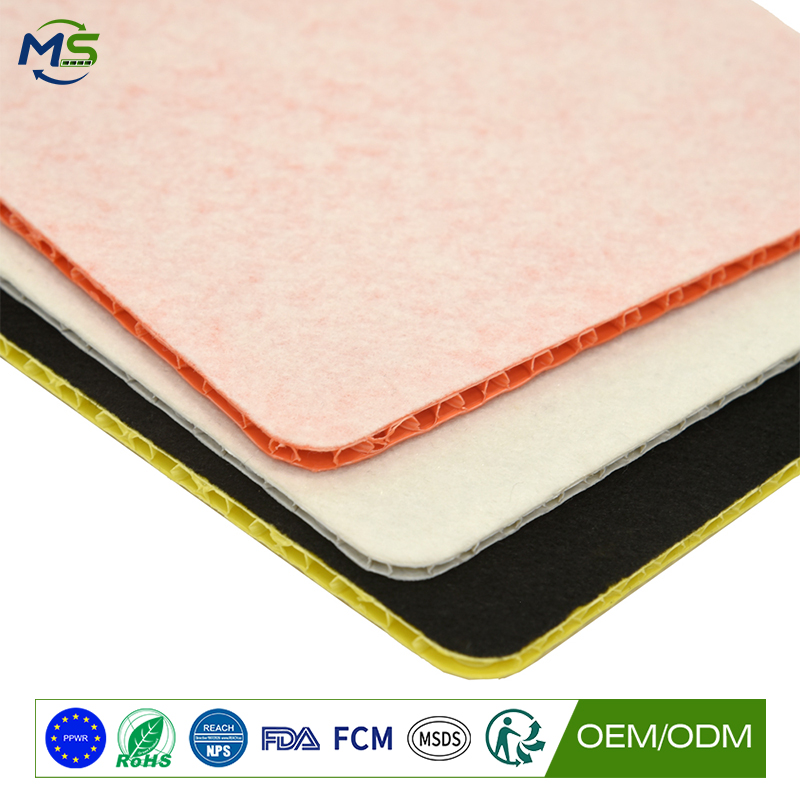
A rigid PP honeycomb protection board can be cut to line the cab, and with a felt or fleece facing it will not scratch metal or glass finishes.
In a cab, clearance is everything: panels must not foul the door, the sensors or the floor level. Within the 2 mm to 12 mm range, thinner boards suit wall lining while the thicker end is reserved for the cab floor where wheeled loads land.
For pedestrian move-in traffic a mid range is usually enough. Where heavy items are wheeled into the cab, protect the floor with the thicker boards and keep the walls thinner.
| Board group | Typical thickness | Where it earns its place | Watch-outs |
|---|---|---|---|
| Light-duty panel | 2-3 mm | Cab wall lining over metal and glass finishes | Not for the cab floor under wheeled loads |
| General cab panel | 4-6 mm | Cab floors under pedestrian and light trolley traffic | Seams taped; clearance at door tracks |
| Heavy-duty panel | 8-10 mm | Heavy item moves into the cab | Thickness may foul thresholds; check clearances |
| Maximum protection | 12 mm | Plant and equipment moves through the lift | Use on the floor only, not on walls |
Line walls with cut panels that stop short of door tracks, sensors and operating panels. Any protection that interferes with door operation is a safety issue, not a cosmetic one.
Protect the cab floor first, because that is where loads land and where damage is most likely. Tape seams so grit does not work under the panels and scratch the floor.
Inspect daily during heavy move periods and re-secure any panel that has shifted, because a loose panel in a moving lift quickly becomes a jam.
Adhesive films are standard for metal finishes but are single-use and can leave residue, especially on stainless steel left covered for months.
Moving blankets cushion well but do not protect against wheeled loads, collect dust and are difficult to keep in place in a moving cab.
Plywood protects the cab floor well but is heavy, awkward to cut to a cab and can damage the door threshold. A PP honeycomb board is lighter, cuttable and re-usable across a move-in programme.
Line one cab and leave a comparable cab on the current method. Inspect walls, floor, door returns and threshold at each inspection, photographing from fixed positions.
Run a loaded move with the heaviest item that will use the lift, then lift the floor panels and check for indentation and scratching.
Record any interference with door operation immediately and stop using that lining if it occurs, because lift safety overrides protection.
State the cab dimensions, the finishes, the floor type and what will be moved. Ask for the recommended thickness for floor and walls separately, the facing, panel size and fire performance required in a lift.
Ask for guidance on clearances around door tracks and sensors, and about custom sizes cut to cab dimensions to reduce site cutting.
For a quotation or sample panel, contact service@mingplastics.com or WhatsApp +86 189 3887 1524. Include the surface type, floor area, trades on site and expected duration so the recommended thickness, facing and fire performance can be confirmed before you order.
Protect the cab floor with a thicker board and the walls with a thinner soft-faced panel, keep clear of door tracks and sensors, and inspect daily during heavy moves.


