Address
Building 1, No. 22, Shexi Yongping Road,
Dongguan, Guangdong, China
Work Hours
Monday to Friday: 7AM - 7PM
Weekend: 10AM - 5PM
Address
Building 1, No. 22, Shexi Yongping Road,
Dongguan, Guangdong, China
Work Hours
Monday to Friday: 7AM - 7PM
Weekend: 10AM - 5PM
The global winding and cabling industry is undergoing a significant transformation. As manufacturers seek to optimize their supply chains for high-value fiber optics and specialty wires, Polypropylene (PP) fiber reels have emerged as the superior alternative to traditional wooden and paper-based spools.
Driven by regulatory pressures like the EU PPWR and the need for significant carbon footprint reduction, the shift toward plastic is not just an environmental choice but a critical technical and economic necessity.
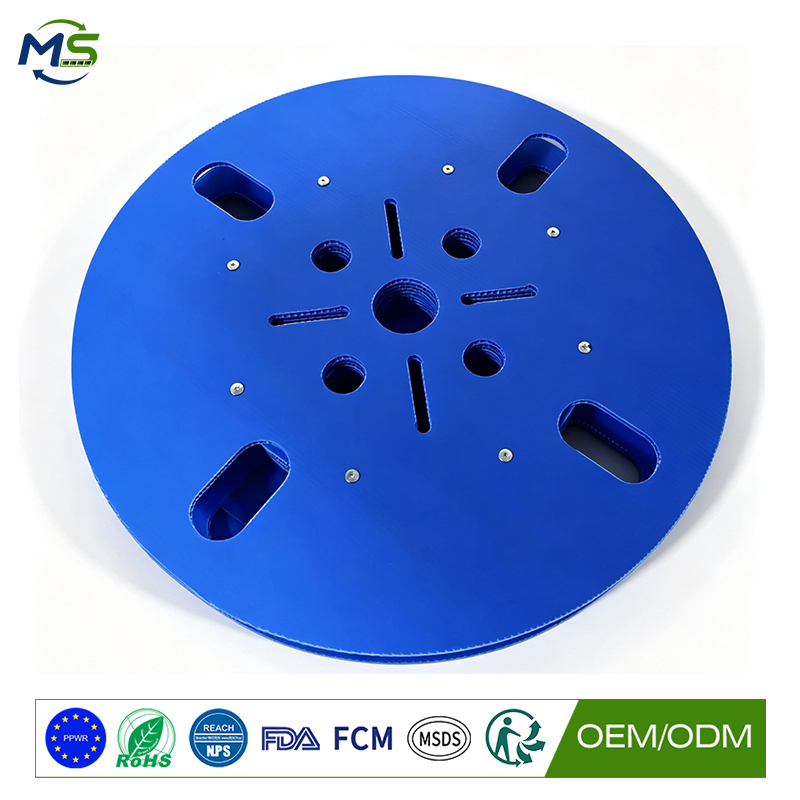
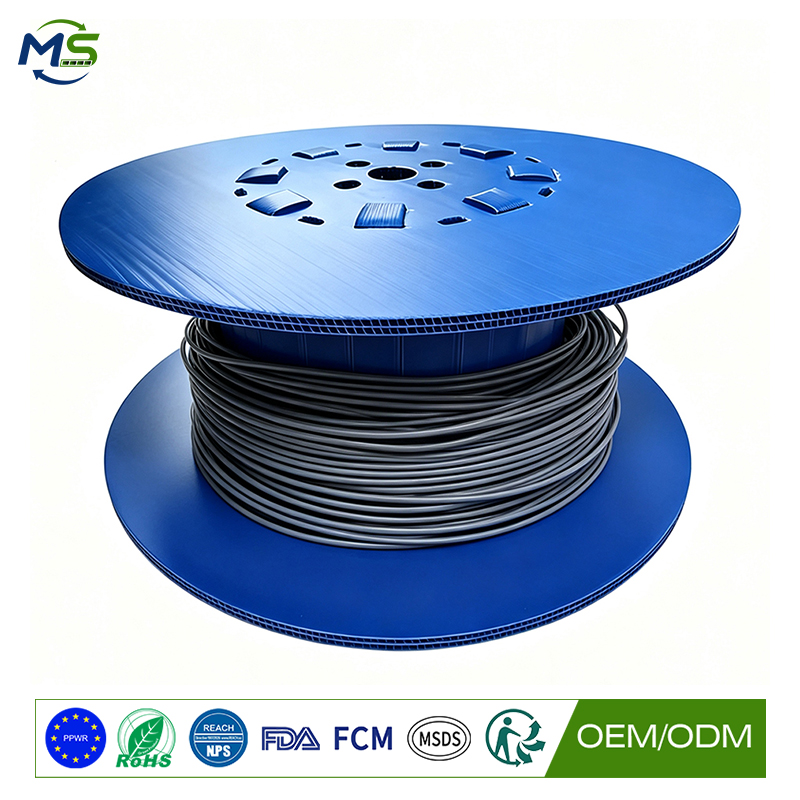
The micro-texture of a winding surface determines the safety of the coated fiber. MingPlastics utilizes mirror-polished injection molds to ensure a burr-free flange and hub interface. This ‘Zero-Splinter’ environment eliminates the risk of fiber attenuation or mechanical failure caused by micro-scratches from wooden or paper dust. Furthermore, the material’s specific gravity (0.90-0.91 g/cm3) offers a 40% weight reduction compared to solid wood, lowering freight costs significantly.
Corporate ESG mandates now require detailed Scope 3 emission reporting. Transitioning from one-way wooden spools to a reusable plastic spool pool directly lowers the carbon footprint of the supply chain. Every ton of plastic packaging diverted from landfills represents a measurable reduction in greenhouse gas emissions. MingPlastics provides the necessary lifecycle assessment data to help our clients meet their sustainability milestones.
The Total Cost of Ownership (TCO) for a PP fiber reel is significantly lower than that of paper or wood. While the initial purchase price might be 30-50% higher, a PP reel survives over 50 trips in a closed-loop system, whereas wood typically fails after 1-2 trips. The cost per shipment drops from $5.00 for wood to less than $0.50 for PP. Additionally, the lightweight nature of PP reduces fuel surcharges and handling labor costs.
Optical fiber manufacturing requires extreme precision. Any microscopic imperfection on the spool hub can cause micro-bending losses that degrade the fiber’s transmission quality. MingPlastics’ PP reels are the preferred choice for major optical fiber producers because they offer a perfectly smooth winding bed. Our precision molding technology ensures that the flange-to-hub transition is seamless, preventing the fiber from snagging during high-speed let-off operations.
Q: How does switching to plastic reels impact my Scope 3 emissions?
A: By replacing one-way wood with multi-trip PP, you eliminate the carbon associated with new wood processing and end-of-life incineration. Depending on the reuse frequency, you can reduce packaging-related emissions by 60-80%.
Q: Do these reels require ISPM 15 fumigation?
A: No. Polypropylene is a man-made material and is naturally exempt from ISPM 15 regulations, allowing for hassle-free global export.
MingPlastics: Your direct factory source for precision-engineered PP fiber reels, plastic cable spools, and sustainable circular packaging systems.
📞 WhatsApp/WeChat: +86 13266572129
📧 Direct Email: dawn@mingplastics.com
💬 Expert Consultation: Visit our PP Reel Catalog