Address
Building 1, No. 22, Shexi Yongping Road,
Dongguan, Guangdong, China
Work Hours
Monday to Friday: 7AM - 7PM
Weekend: 10AM - 5PM
Address
Building 1, No. 22, Shexi Yongping Road,
Dongguan, Guangdong, China
Work Hours
Monday to Friday: 7AM - 7PM
Weekend: 10AM - 5PM
Water treatment facilities are permanently wet. This guide covers thickness from 2 mm to 12 mm, drainage, compatibility and a treatment works trial plan.
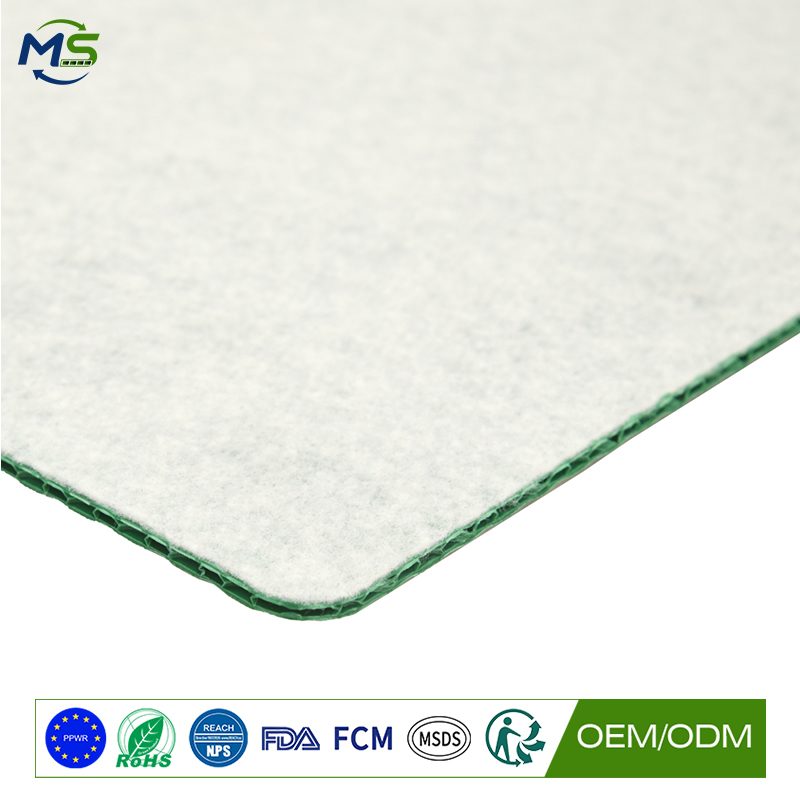
Water treatment facilities are permanently wet, often corrosive and full of drainage and channels that must keep working during any works. Protection has to cope with constant moisture without making damp or drainage worse. This article looks at protecting floors and routes in water and wastewater facilities. The focus is moisture, drainage and working around live process equipment.
In a treatment works, wet is the normal condition rather than an exception, so any absorbent protection is saturated within a day and then holds water against the floor indefinitely.
A PP honeycomb protection board does not absorb water, so it can sit in a wet environment without becoming the problem, and it can be lifted, rinsed and re-laid.
Because the panels are light, they can be moved between work fronts without heavy handling equipment in a confined plant.
Treatment works carry maintenance traffic, equipment and occasional plant replacement, so the middle to upper part of the 2 mm to 12 mm range is typical.
For pedestrian routes a mid thickness is enough. Where pumps and equipment are moved, thicker boards spread the loads that would otherwise damage coatings and channels.
| Board group | Typical thickness | Where it earns its place | Watch-outs |
|---|---|---|---|
| Light-duty panel | 2-3 mm | Pedestrian walkways away from plant | Not for equipment moves |
| General walkway panel | 4-6 mm | Maintenance routes in wet areas | Keep channels clear; rinse between zones |
| Heavy-duty panel | 8-10 mm | Pump and equipment moves | Check coating tolerance |
| Maximum protection | 12 mm | Plant replacement in confined areas | Confirm slab capacity |
Keep all drainage channels, gullies and overflows clear. In a treatment works, covering drainage does not just cause ponding, it can affect the process.
Confirm chemical and biological compatibility where relevant, and rinse panels before moving them between zones so contamination is not carried.
Keep walkways at their required width and confirm the fire performance needed for enclosed plant areas.
Plywood is quickly ruined in a wet environment: it absorbs, delaminates and becomes a handling hazard.
Matting can work in specific walkways but is heavy and semi-permanent. Plastic sheeting traps water and is slippery underfoot on a wet floor.
A PP honeycomb board is non-absorbing, rinseable and re-usable, which suits a facility where everything is wet all the time.
Protect one route and leave a comparable route on the current method. Inspect at each shift, checking both the panels and the drainage.
Run a wet test: leave panels in place through normal washdown, then lift and check for trapped water and any effect on the floor.
Record drainage performance and how the panels handled repeated wetting, because in a treatment works those are the decisive measures.
State the floor and coating type, the drainage layout, the expected loads and any chemical exposure. Ask for the recommended thickness and confirm that the board is non-absorbing.
Ask for guidance on keeping channels clear and on rinsing between zones, plus custom sizes for standard walkway widths.
For a quotation or sample panel, contact service@mingplastics.com or WhatsApp +86 189 3887 1524. Include the surface type, floor area, trades on site and expected duration so the recommended thickness, facing and fire performance can be confirmed before you order.
In treatment works, use non-absorbing protection, keep every channel and gully clear, and rinse panels when moving them between zones.


