Address
Building 1, No. 22, Shexi Yongping Road,
Dongguan, Guangdong, China
Work Hours
Monday to Friday: 7AM - 7PM
Weekend: 10AM - 5PM
Address
Building 1, No. 22, Shexi Yongping Road,
Dongguan, Guangdong, China
Work Hours
Monday to Friday: 7AM - 7PM
Weekend: 10AM - 5PM
Warehouse floors take their worst loads during racking and re-fit. This guide covers thickness from 2 mm to 12 mm, aisle planning, wheeled point loads and a warehouse trial plan.
Warehouse floors take the heaviest wheeled loads of any interior surface, and the damage usually appears during changes rather than during normal operation: racking installation, mezzanine work and re-fit all concentrate loads that routine traffic never applies. This article looks at warehouse floor protection during installation work. The focus is wheeled point loads, aisle planning and protecting a slab that is already in service.
A warehouse slab is designed for its normal traffic pattern. During a re-fit, that pattern changes: pallet trucks detour, mezzanine components are dragged, and racking legs are set down on points rather than spread along aisles. Those are the loads that damage a slab.
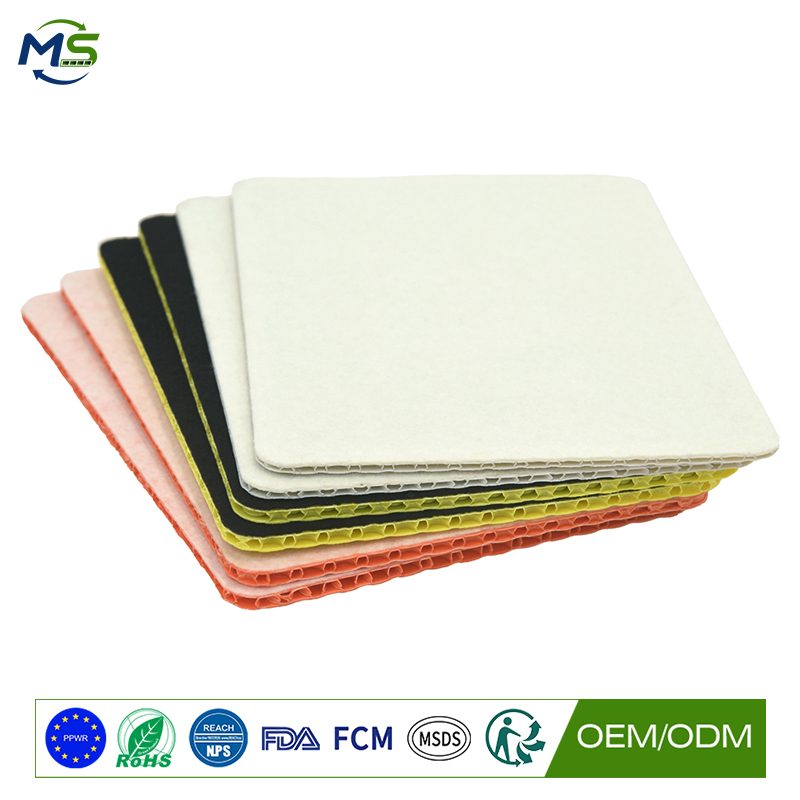
A rigid PP honeycomb protection board spreads a concentrated wheel or leg load over a wider area, which is what protects the slab surface and any applied coating. Because it is a panel, it also stays where it is laid rather than being pushed ahead of a wheel.
Panels that do not absorb water also suit warehouse work, where cleaning, spills and dock moisture are part of normal operations.
Warehouse work usually justifies the upper-middle part of the 2 mm to 12 mm range, because wheeled point loads are far higher than in a fit-out interior. Specify for the heaviest wheeled load that will actually cross the protected area.
For pedestrian diversions around a work zone, a mid thickness is sufficient. Where pallet trucks, scissor lifts or racking components are moved, thicker boards protect both the slab and the coating from concentrated damage.
| Board group | Typical thickness | Where it earns its place | Watch-outs |
|---|---|---|---|
| Light-duty panel | 2-3 mm | Pedestrian diversions around work zones | Unsuitable for any wheeled load |
| General floor panel | 4-6 mm | Light trolley routes over warehouse slab | Seams taped; edges finished at crossings |
| Heavy-duty panel | 8-10 mm | Pallet trucks, racking legs, scissor lifts | Heavier placement; plan manual handling |
| Maximum protection | 12 mm | Mezzanine steel, plant moves, long heavy routes | More than pedestrian diversion needs |
Plan the protected route before work starts and keep it separate from the operating aisles wherever possible. Mixing construction routes with live MHE traffic is where both safety and floor damage problems begin.
Tape seams and finish edges, especially where a route crosses a live aisle. A lifted panel edge in front of a pallet truck is a trip and a floor hazard at the same time.
Where the slab has an applied coating, confirm the coating’s tolerance to point loads and choose thickness accordingly, then inspect the coating at each lift.
Steel plate protects absolutely but is heavy, slow to place and a manual-handling risk. Plywood is lighter but absorbs water and crushes at the edges under wheeled loads.
Film and paper are unsuitable for wheeled traffic: they tear and are pushed ahead of the wheel, which exposes the slab exactly where the load lands.
A PP honeycomb board sits between them: rigid enough for wheeled loads, light enough to place quickly, and non-absorbing. On a working warehouse those handling properties matter as much as the protection itself.
Choose one aisle and protect it, leaving a comparable aisle on the current method. Inspect the slab and any coating at set intervals, photographing the same wheel paths.
Run a loaded pallet truck over a sample panel repeatedly and then lift and check both the panel and the slab. That test is the fastest way to confirm the thickness choice.
Record placement time per metre and how the panels handled cleaning and spills, because in a live warehouse the protection has to fit around operations.
State the slab type and coating, the heaviest wheeled load, the route length and duration, and whether the area is live. Ask for the recommended thickness, facing, panel size and fire performance.
Ask for written guidance on seams, edges and trip-risk where routes cross live aisles, and about custom sizes for regular racking grids. Colour options help where routes need to be marked.
For a quotation or sample panel, contact service@mingplastics.com or WhatsApp +86 189 3887 1524. Include the surface type, floor area, trades on site and expected duration so the recommended thickness, facing and fire performance can be confirmed before you order.
Warehouse slabs are damaged during change, not normal running. Specify thickness for the heaviest wheeled load, separate construction routes from live aisles, and inspect the coating at each lift.


