Address
Building 1, No. 22, Shexi Yongping Road,
Dongguan, Guangdong, China
Work Hours
Monday to Friday: 7AM - 7PM
Weekend: 10AM - 5PM
Address
Building 1, No. 22, Shexi Yongping Road,
Dongguan, Guangdong, China
Work Hours
Monday to Friday: 7AM - 7PM
Weekend: 10AM - 5PM
Station works run overnight beside passengers. This guide covers thickness from 2 mm to 12 mm, fire standards, nightly clearance and a station trial plan.
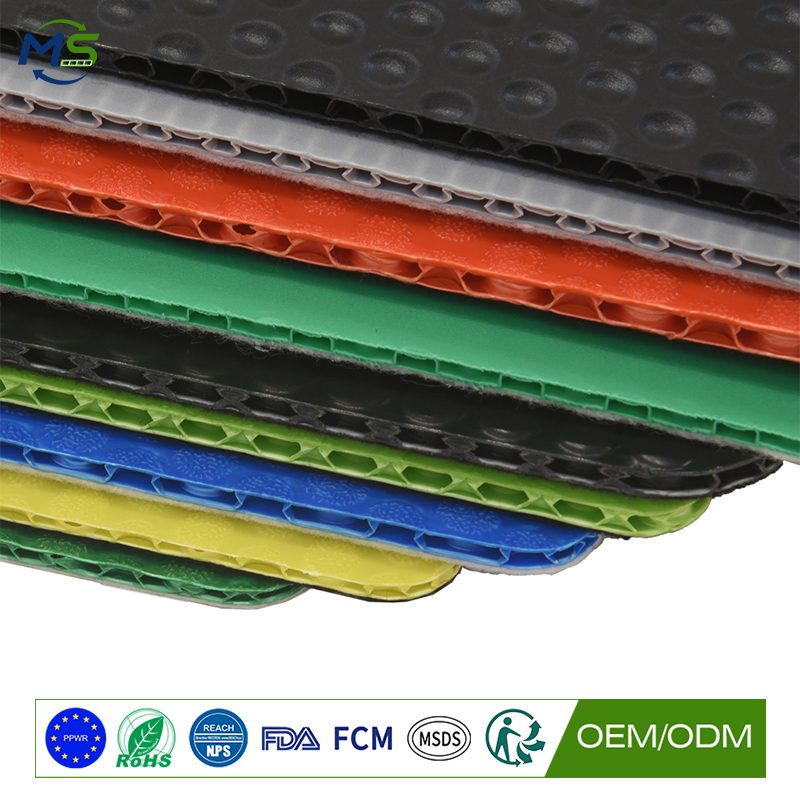
Station works happen beside passengers, under strict fire and safety rules, often overnight. Protection must be safe underfoot, fire-compliant and removable before the first train. This article looks at protecting station floors and routes. The focus is passenger safety, fire performance and working to a nightly close-down.
Station works run in engineering hours, which means protection has to be placed and cleared within a window that ends before service resumes. Anything slow to handle is a risk to service.
A PP honeycomb protection board is light and quick to place and lift, which suits a nightly cycle better than heavy sheet materials.
Because the panels lie flat and can be edge-finished, they can be used on routes that passengers will use within hours.
Station routes carry passenger footfall, luggage and maintenance trolleys, so the middle part of the 2 mm to 12 mm range is typical.
For passenger diversions a mid thickness is enough. Where maintenance equipment and materials cross the route, thicker boards protect the floor from wheeled loads.
| Board group | Typical thickness | Where it earns its place | Watch-outs |
|---|---|---|---|
| Light-duty panel | 2-3 mm | Short passenger diversions | Not for maintenance equipment |
| General concourse panel | 4-6 mm | Concourse routes with luggage and foot traffic | Clear before service resumes |
| Heavy-duty panel | 8-10 mm | Maintenance equipment and material routes | Heavier to move in a short window |
| Maximum protection | 12 mm | Plant and equipment installation overnight | Confirm floor capacity |
Confirm the fire performance required for the station before ordering, because transport operators usually have strict material standards for anything in the passenger environment.
Finish every edge and seam, inspect before service resumes each night, and remove anything that has shifted rather than leaving it for the next shift.
Sign and light any narrowing, and keep the protected route as direct as the obvious one so passengers do not bypass it onto unprotected floors.
Plywood is heavy to carry into a station and slow to place and clear in a short window, and it may not meet transport fire standards without treatment.
Films and runners curl and slide under luggage wheels, which is unsafe in a crowded concourse and needs constant attention.
A PP honeycomb board is light, fire-performance options are part of the range, and it can be cleared quickly before service resumes.
Protect one route for a full engineering shift and keep a comparable route on the current method. Inspect before handback each night.
Time the full clearance: record how long it takes to remove protection and make the route safe for passengers.
Record fire performance documentation and the inspection log, because transport operators will ask for both.
State the floor type, the route length, the passenger volumes and the operator’s material and fire standards. Ask for the recommended thickness and for fire performance documentation.
Ask for guidance on edge finishing and on rapid clearance, plus custom sizes for standard concourse widths.
For a quotation or sample panel, contact service@mingplastics.com or WhatsApp +86 189 3887 1524. Include the surface type, floor area, trades on site and expected duration so the recommended thickness, facing and fire performance can be confirmed before you order.
For station works, choose light protection that can be cleared before service, confirm fire performance to the operator’s standard, and finish every edge before handback.


