Address
Building 1, No. 22, Shexi Yongping Road,
Dongguan, Guangdong, China
Work Hours
Monday to Friday: 7AM - 7PM
Weekend: 10AM - 5PM
Address
Building 1, No. 22, Shexi Yongping Road,
Dongguan, Guangdong, China
Work Hours
Monday to Friday: 7AM - 7PM
Weekend: 10AM - 5PM
Fine art moves follow surveyed routes with heavy cases. This guide covers thickness from 2 mm to 12 mm, set-down planning and an art handling trial plan.
Fine art handling moves crates and cases along routes that pass through finished and often historic interiors, with every movement planned in advance. Floor damage is a claim; object damage is worse. This article looks at protecting routes during art handling. The focus is crate routes, load planning and reversible protection.
Art moves are surveyed, sequenced and rehearsed, which means protection can be planned precisely rather than improvised. That is an advantage: the route is known before anything moves.
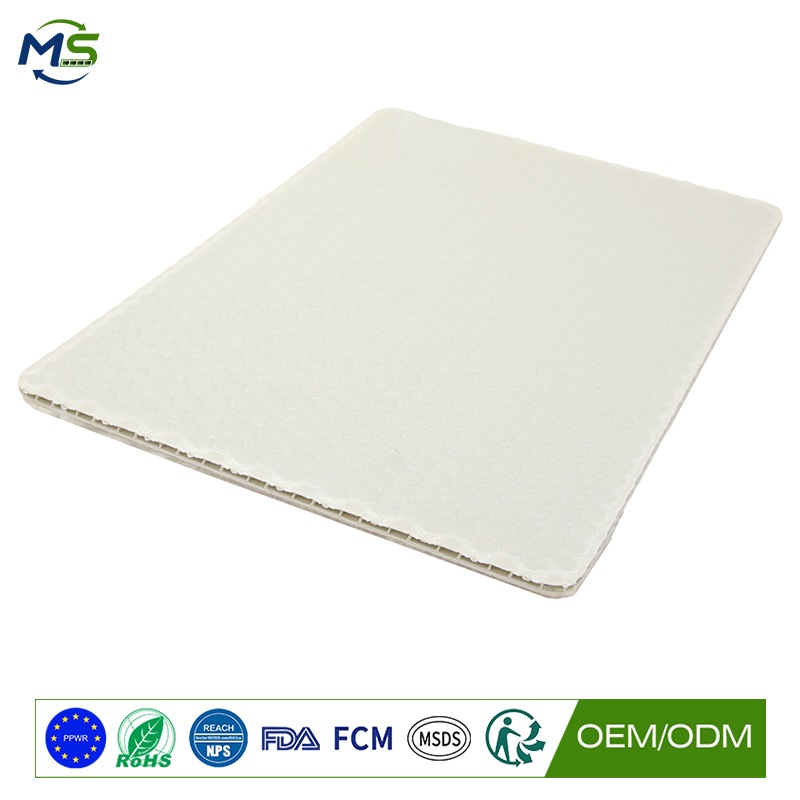
A rigid PP honeycomb protection board spreads crate and case loads and protects finished floors along a surveyed route.
Because it is loose-laid, it is reversible, which is often a condition of working in historic or collection interiors.
Crate loads are high and often applied at the corners of a case, so the middle to upper part of the 2 mm to 12 mm range is typical.
For pedestrian routes a mid thickness is enough. Under crate corners and set-down points, the thicker boards give the spreading that protects stone, parquet and marble.
| Board group | Typical thickness | Where it earns its place | Watch-outs |
|---|---|---|---|
| Light-duty panel | 2-3 mm | Pedestrian routes alongside the move | Not for crate or case loads |
| General handling panel | 4-6 mm | Surveyed routes under foot and trolley traffic | Mark set-down points in advance |
| Heavy-duty panel | 8-10 mm | Crate corners and case set-down | Protect thresholds and lift sills |
| Maximum protection | 12 mm | Heaviest cases and sculpture moves | Confirm floor capacity along the route |
Mark the route and every set-down point before the move, and protect the set-down points as carefully as the path, because that is where load is applied repeatedly.
Check clearances at doorways, lifts and turns, and protect thresholds and lift sills where cases are wheeled across.
Confirm reversibility: lift a test panel after a period and check for residue or marking before the move begins.
Moving blankets protect objects but do nothing for floors, and they collect dust in collection environments.
Plywood protects but is heavy to carry through historic interiors and may need fixings that are not permitted.
Carpet runners slide under crate wheels and hold grit. A PP honeycomb board is light, reversible and spreads load.
Survey the route, then protect it and rehearse the move with a representative load. Inspect at each set-down point after the rehearsal.
Run a case set-down test on a sample panel, then lift and check the floor beneath.
Record reversibility and any marking, because in a collection environment that is the condition of approval.
State the floor types, the crate weights, the route and lift constraints and any conservation requirements. Ask for the recommended thickness for crate corner loads.
Confirm that the system is loose-laid and reversible, and ask about custom sizes for repeated gallery routes.
For a quotation or sample panel, contact service@mingplastics.com or WhatsApp +86 189 3887 1524. Include the surface type, floor area, trades on site and expected duration so the recommended thickness, facing and fire performance can be confirmed before you order.
For art handling, survey and protect every set-down point, use reversible loose-laid protection, and rehearse the move before the real one.


